Senator William Allen
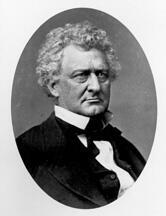
Here you will find contact information for Senator William Allen, including email address, phone number, and mailing address.
| Name | William Allen |
| Position | Senator |
| State | Ohio |
| Party | Democratic |
| Status | Former Representative |
| Term Start | December 2, 1833 |
| Term End | March 3, 1849 |
| Terms Served | 3 |
| Born | December 27, 1803 |
| Gender | Male |
| Bioguide ID | A000150 |
About Senator William Allen
William Allen was born on December 18, 1803, in Edenton, Chowan County, North Carolina. Orphaned at an early age, he was taken in by relatives and, as a young man, moved west to the state of Ohio, which was then part of the rapidly developing Old Northwest. He eventually settled in Chillicothe, Ross County, a community that would remain central to his personal and political life. Drawn to public affairs and the law, Allen’s early experiences on the frontier shaped his Jacksonian Democratic sympathies, emphasizing expansion, states’ rights, and suspicion of concentrated economic power.
Allen received a basic formal education in North Carolina before continuing his studies in Ohio. In Chillicothe he read law in the traditional manner of the period, apprenticing under established attorneys rather than attending a formal law school. He was admitted to the bar in Ohio in the mid-1820s and began practicing law in Chillicothe. His legal practice, combined with his oratorical ability and alignment with the rising Democratic movement, quickly brought him into the orbit of state and national politics. Through his legal and political work, he established a reputation as a forceful advocate of Democratic principles and a defender of what he regarded as the interests of the common citizen.
Allen’s political career began in the U.S. House of Representatives. He was elected as a Democrat from Ohio and served a single term in the Twenty-Third Congress from March 4, 1833, to March 3, 1835. During this period he supported the policies of President Andrew Jackson, including opposition to the recharter of the Second Bank of the United States and a general commitment to limited federal government. After leaving the House, Allen remained active in Democratic politics in Ohio and continued his legal practice, positioning himself for higher office as the state’s population and political influence grew.
William Allen served as a Senator from Ohio in the United States Congress from March 4, 1837, to March 3, 1849. A member of the Democratic Party, he contributed to the legislative process during three terms in office. His service in Congress occurred during a significant period in American history, encompassing the presidencies of Martin Van Buren, William Henry Harrison, John Tyler, James K. Polk, and Zachary Taylor. As a member of the Senate, Allen participated in the democratic process and represented the interests of his Ohio constituents. He was a prominent advocate of territorial expansion and supported the annexation of Texas and the Polk administration’s hard line in the Oregon boundary dispute, earning him a reputation as a leading “manifest destiny” Democrat. In debates over the Mexican–American War (1846–1848), Allen backed the war effort and generally aligned with the pro-expansion wing of his party, while also reflecting the era’s sectional tensions over the extension of slavery into newly acquired territories.
After leaving the Senate in 1849, Allen retired for a time to his estate, “Fruit Hill,” near Chillicothe, where he devoted himself to agriculture and local affairs. He remained an influential figure in Ohio Democratic politics, and his name continued to carry weight in party councils. In 1873, in the aftermath of the Civil War and during the turbulent Reconstruction era, Allen returned to high office when he was elected the 31st Governor of Ohio. He served a single two-year term from January 12, 1874, to January 10, 1876. As governor, he maintained his long-standing Democratic positions, including opposition to certain centralizing tendencies of the federal government and advocacy for what he viewed as the rights of the states and the working population, though his traditional Jacksonian outlook sometimes put him at odds with emerging industrial and reform currents in Ohio.
In his later years, Allen withdrew again to private life at Fruit Hill. Although no longer in office, he remained a respected elder statesman within the Ohio Democratic Party and a symbol of the state’s antebellum and Reconstruction-era political traditions. William Allen died on July 11, 1879, at his estate near Chillicothe, Ohio. He was interred on the grounds of Fruit Hill. His career, spanning service in the U.S. House of Representatives, the United States Senate, and the Ohio governorship, reflected the evolution of Jacksonian Democracy into the complex partisan landscape of the mid-nineteenth century, and his long tenure in public life marked him as one of the most prominent Ohio Democrats of his generation.