Representative William Henry Andrews
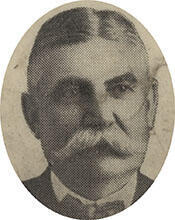
Here you will find contact information for Representative William Henry Andrews, including email address, phone number, and mailing address.
| Name | William Henry Andrews |
| Position | Representative |
| State | New Mexico |
| District | -1 |
| Party | Republican |
| Status | Former Representative |
| Term Start | December 4, 1905 |
| Term End | March 3, 1913 |
| Terms Served | 4 |
| Born | January 14, 1846 |
| Gender | Male |
| Bioguide ID | A000252 |
About Representative William Henry Andrews
William Henry “Bull” Andrews (January 14, 1846 – January 16, 1919) was an American politician and businessman who served as a Republican representative in the Pennsylvania General Assembly and later as a delegate from the New Mexico Territory to the United States Congress. A member of the Republican Party, he represented New Mexico in the U.S. House of Representatives from 1905 to 1913, contributing to the legislative process during four terms in office and playing a prominent role in the politics of both Pennsylvania and the New Mexico Territory.
Andrews was born in Youngsville, Warren County, Pennsylvania, on January 14, 1846. He was educated in the public schools and entered the workforce at an early age, engaging in mercantile pursuits and later in the railroad industry. These early business activities provided him with experience in finance, transportation, and development that would shape his later political and entrepreneurial endeavors. He eventually became associated with Titusville, Pennsylvania, which he regarded as his home and to which he would later be returned for burial.
Andrews’s political career began in Pennsylvania, where he quickly rose within Republican Party ranks. He was elected to the Pennsylvania House of Representatives, serving from 1889 to 1893, and during this period he became a key party organizer. From 1889 to 1890 he served as chair of the Pennsylvania Republican State Central Committee, a position that gave him statewide influence and valuable connections in national Republican circles. In 1895 he was elected to the Pennsylvania State Senate, further consolidating his status as a significant figure in state politics. His tenure in Pennsylvania public life continued into the early twentieth century, but in 1902, after voters “retired him from office,” his career in that state came to an end.
Following his electoral defeat, Andrews moved in 1902 to Sierra County, New Mexico, then still a U.S. territory. There he managed a gold mine in a remote mining camp northeast of Hillsboro that would later become the ghost town of Andrews, New Mexico, named in his honor. Seeking to reestablish himself politically, he relocated to Albuquerque, New Mexico, where he resumed active participation in Republican politics. Within a year of his arrival in the territory, he was elected to the New Mexico Territorial Council, quickly becoming an astute and dominant political figure in territorial affairs and using his organizational skills and Eastern connections to shape the region’s political development.
Andrews’s prominence in territorial New Mexico led to his election as the territory’s delegate to Congress. In 1905 he was elected to the U.S. House of Representatives, narrowly defeating Octaviano Ambrosio Larrazolo. He was reelected twice, serving in the 59th, 60th, and 61st Congresses from 1905 to 1911, and he continued to be identified with New Mexico’s representation in Congress through 1913, encompassing four terms in office during a significant period in American history. As a nonvoting delegate from the New Mexico Territory, he participated in debates, introduced legislation, and represented the interests of his constituents, even though he lacked a formal vote on the House floor. His service coincided with the broader national debates over western development, resource use, and the transition of territories to statehood.
During his congressional service, Andrews worked closely with long-standing contacts in the federal government and the Republican Party that he had cultivated during his Pennsylvania years. He was particularly influential in the campaign to secure statehood for New Mexico, using his position and relationships in Washington to advance enabling legislation and to promote the territory’s readiness for admission to the Union. He expected that his efforts would be rewarded by election to the United States Senate once New Mexico achieved statehood. However, an alliance between powerful New Mexico Republicans Thomas B. Catron and Albert B. Fall thwarted his ambitions, and he was denied the Senate seat he had long sought.
Parallel to his political activities, Andrews remained deeply involved in railroad and development enterprises. He organized and promoted the Pennsylvania Development Company, which was responsible for building the New Mexico Central Railroad, a key line intended to spur economic growth in the territory. While in office, he became embroiled in controversy when he was blamed for a $300,000 shortage in a Pennsylvania bank, funds that were allegedly used to finance the Santa Fe Central Railway. The episode damaged his financial standing and reputation and contributed to the personal fortune he expended in pursuit of political influence and higher office, particularly his unfulfilled aspiration to serve in the U.S. Senate.
In his later years, Andrews’s fortunes declined. Having spent much of his wealth on politics and development schemes, he died virtually penniless in Carlsbad, New Mexico, on January 16, 1919. His body was returned to Titusville, Pennsylvania, his long-time home, where he was buried in Woodlawn Cemetery. His career left a complex legacy: he was remembered as a dominant territorial politician and a driving force behind New Mexico’s quest for statehood, yet also as a man whose relentless pursuit of a Senate seat ultimately went unrewarded. In a posthumous reflection on his influence, Albert B. Fall, after being appointed to a Cabinet position in 1921, remarked that if Andrews had still been alive, he would have persuaded the governor of New Mexico to appoint Andrews to Fall’s vacated Senate seat, underscoring the enduring recognition of Andrews’s political skill and determination.