Representative William Augustus Ayres
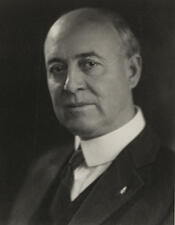
Here you will find contact information for Representative William Augustus Ayres, including email address, phone number, and mailing address.
| Name | William Augustus Ayres |
| Position | Representative |
| State | Kansas |
| District | 5 |
| Party | Democratic |
| Status | Former Representative |
| Term Start | December 6, 1915 |
| Term End | January 3, 1935 |
| Terms Served | 9 |
| Born | April 19, 1867 |
| Gender | Male |
| Bioguide ID | A000354 |
About Representative William Augustus Ayres
William Augustus Ayres (April 19, 1867 – February 17, 1952) was an American lawyer, Democratic politician, and long-serving member of the United States House of Representatives from Kansas who later became a commissioner of the Federal Trade Commission. His congressional career, spanning from 1915 to 1935, placed him at the center of major national developments in the early twentieth century, including World War I, the interwar period, and the early years of the New Deal.
Ayres was born on April 19, 1867, and came of age in the post–Civil War era, a time of rapid expansion and political realignment in the American Midwest. He eventually settled in Kansas, a state that was still consolidating its political institutions and economic base. Details of his early family life and upbringing are less extensively documented than his public career, but his later professional accomplishments indicate that he received a solid education and legal training that prepared him for work in both the law and public service.
Before entering national politics, Ayres established himself professionally in Kansas, where he built a reputation that would support his eventual election to Congress. As a lawyer and Democratic Party activist in a predominantly Republican region, he operated within a challenging political environment, which made his subsequent electoral successes particularly notable. His growing involvement in public affairs and party activities laid the groundwork for his first successful campaign for the U.S. House of Representatives.
Ayres was first elected as a Democrat to the Sixty-fourth Congress and took his seat in the House of Representatives on March 4, 1915. He was subsequently reelected to the Sixty-fifth and Sixty-sixth Congresses, serving continuously through the close of the Sixty-sixth Congress on March 3, 1921. During these early terms, he represented Kansas in Washington, D.C., participating in the legislative process at a time when the United States entered and fought in World War I and then confronted the challenges of demobilization and postwar adjustment. As a member of the House, he contributed to the democratic process and represented the interests of his Kansas constituents in national debates.
In 1920 Ayres was an unsuccessful candidate for reelection to the Sixty-seventh Congress, temporarily interrupting his service in the House. However, he returned to national office when he was elected to the Sixty-eighth Congress, beginning a second, longer phase of his congressional career. He was then reelected to the five succeeding Congresses, serving continuously from the opening of the Sixty-eighth Congress on March 4, 1923, until his resignation on August 22, 1934. Over the course of these nine terms in office, from 1915 to 1935, he served during a significant period in American history that encompassed the Roaring Twenties, the onset of the Great Depression, and the early implementation of New Deal policies. Throughout this time, Ayres remained a loyal Democrat and a consistent representative of Kansas interests, contributing to legislative deliberations on economic, social, and regulatory issues that confronted the nation.
Ayres’s long tenure in Congress culminated in his appointment to a major federal regulatory body. On June 30, 1934, while still serving in the House, he was appointed a member of the Federal Trade Commission. To assume this new role, he resigned his seat in Congress effective August 22, 1934. As a Federal Trade Commissioner, Ayres participated in the enforcement of federal laws governing fair competition, trade practices, and consumer protection during a period when the federal government was expanding its oversight of economic activity in response to the Great Depression. He continued in this capacity for the remainder of his life, providing continuity and experience to the commission’s work through the late New Deal, World War II, and the early postwar years.
William Augustus Ayres died in Washington, D.C., on February 17, 1952, while still serving as a member of the Federal Trade Commission. His death marked the close of a public career that had spanned nearly four decades at the national level. He was interred in Old Mission Cemetery in Wichita, Kansas, symbolically returning to the state he had represented in Congress and served in federal office for so many years.