Representative William Henry Baker
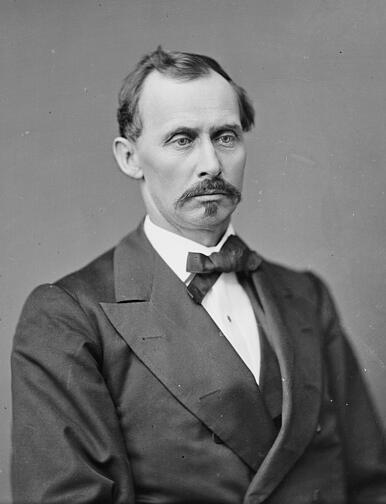
Here you will find contact information for Representative William Henry Baker, including email address, phone number, and mailing address.
| Name | William Henry Baker |
| Position | Representative |
| State | New York |
| District | 24 |
| Party | Republican |
| Status | Former Representative |
| Term Start | December 6, 1875 |
| Term End | March 3, 1879 |
| Terms Served | 2 |
| Born | January 17, 1827 |
| Gender | Male |
| Bioguide ID | B000077 |
About Representative William Henry Baker
William Henry Baker (January 17, 1827 – November 25, 1911) was an American politician, lawyer, and farmer who served as a Republican Representative from New York in the United States Congress from 1875 to 1879. Over two terms in the House of Representatives, he contributed to the legislative process during a significant period in American history, representing the interests of his constituents in New York’s twenty‑fourth congressional district.
Baker was born on January 17, 1827, in Lenox, Madison County, New York. In 1829 he moved with his parents to Oswego County, New York, where he was raised. He attended the common schools of the area and later pursued further studies at Red Creek Academy and Mexico Academy, both in upstate New York. These institutions provided him with a classical and preparatory education that laid the groundwork for his later legal and political career.
After completing his academic studies, Baker read law and prepared for admission to the bar. He was admitted to the bar in Syracuse, New York, in November 1851. Shortly thereafter he commenced the practice of law in Cleveland, a village in Oswego County. In 1853 he moved to Constantia, New York, where he established himself more permanently. His legal practice in Constantia and the surrounding region brought him increasing professional recognition and led to his entry into public service.
Baker’s first major public office was in county government. He served as district attorney for Oswego County from January 1863 to January 1870, a period that spanned the latter years of the Civil War and the beginning of Reconstruction. In this capacity he was responsible for prosecuting criminal cases on behalf of the county, gaining experience in public law and administration and building a reputation as a capable attorney and public official.
Elected as a Republican to the Forty‑fourth and Forty‑fifth Congresses, Baker served as a U.S. Representative from New York from March 4, 1875, to March 3, 1879. His tenure in Congress thus encompassed two full terms. As a member of the House of Representatives during a transformative era in national politics, he participated in the democratic process and contributed to legislative deliberations on issues arising in the post–Civil War and Reconstruction period. Throughout his service he represented the twenty‑fourth district of New York, advocating for the needs and interests of his constituents within the broader framework of Republican Party policies of the time.
In 1878 Baker declined to be a candidate for renomination, thereby concluding his congressional career at the end of his second term in March 1879. He returned to Constantia and resumed the practice of law, remaining active in public affairs at the state level. He served as a delegate to the New York State constitutional conventions of 1884 and 1894, participating in the consideration of revisions to the state’s fundamental law. In addition to his legal work, he engaged in agricultural pursuits, reflecting the mixed professional and agrarian character common among rural upstate New York leaders of his generation.
William Henry Baker spent his later years in Constantia, where he continued to be regarded as a prominent local figure and veteran public servant. He died in Constantia, New York, on November 25, 1911, at the age of 84 years and 312 days. He was interred at Trinity Church Cemetery, leaving a legacy of service in county office, state constitutional deliberations, and two terms in the United States House of Representatives.