Senator William Warren Barbour
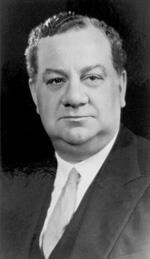
Here you will find contact information for Senator William Warren Barbour, including email address, phone number, and mailing address.
| Name | William Warren Barbour |
| Position | Senator |
| State | New Jersey |
| Party | Republican |
| Status | Former Representative |
| Term Start | December 7, 1931 |
| Term End | December 31, 1943 |
| Terms Served | 3 |
| Born | July 31, 1888 |
| Gender | Male |
| Bioguide ID | B000132 |
About Senator William Warren Barbour
William Warren Barbour (July 31, 1888 – November 22, 1943) was an American Republican Party politician, industrialist, and former amateur heavyweight boxing champion who represented New Jersey in the United States Senate from 1931 to 1937 and again from 1938 until his death in office in 1943. Over the course of three terms in the Senate, he participated actively in the legislative process during a period marked by the Great Depression, the New Deal, and the Second World War, representing the interests of his New Jersey constituents while also emerging as an early and outspoken advocate for victims of Nazi persecution.
Barbour was born on July 31, 1888, in Monmouth Beach, Monmouth County, New Jersey, the third of four sons of Colonel William Barbour and Julia Adelaide Sprague Barbour. His father, known as “The Colonel,” was the founder and president of the Linen Thread Company, Inc., a major thread manufacturing concern with extensive business interests on both sides of the Atlantic. The family was prominent and well connected; Barbour’s eldest brother, Thomas Barbour, became a noted naturalist and herpetologist and later served as director of the Museum of Comparative Zoology at Harvard University. Raised in an environment that combined business enterprise with public service and intellectual pursuits, William Warren Barbour’s early life foreshadowed his later career in both industry and politics.
Barbour attended public schools before enrolling at the Browning School in New York City, from which he graduated in 1906. He briefly attended Princeton University but left after one semester to join the family business, the Linen Thread Company. As a teenager he had suffered from tuberculosis, a condition he overcame through intensive physical exercise and participation in sports. This regimen led him to boxing, where he excelled as an amateur. In 1910 he won the amateur heavyweight boxing championship of the United States by defeating Joseph Burke, and in 1911 he captured the amateur heavyweight title of Canada. His prowess in the ring attracted the attention of former President Theodore Roosevelt and former heavyweight champion “Gentleman Jim” Corbett, both of whom encouraged him to become a “great white hope” to challenge Jack Johnson, the reigning professional heavyweight champion. Although the idea appealed to Barbour and his father, his mother opposed a professional boxing career and the plan was abandoned. Barbour nonetheless remained connected to the sport, serving as timekeeper for the Jess Willard–Jack Dempsey heavyweight championship bout in 1919.
Barbour’s early adult years combined military, business, and local civic engagement. He served for ten years in the New York National Guard, including duty on the Mexican border in 1916, and attained the rank of captain. Within the family firm, he rose rapidly, becoming president of the Linen Thread Company in 1917 upon the death of his father. On June 7, 1921, he married Elysabeth Cochran Carrere; the couple had three children and, in time, ten grandchildren. Shortly after his marriage, Barbour entered public life at the local level in New Jersey. He served on the Rumson Borough Council in 1922 and was elected mayor of Rumson, serving from 1923 to 1928. By 1930, he and his family had established their official residence at Locust Point in Monmouth County, New Jersey, while maintaining a home in New York City. During this period he continued to direct the family’s industrial enterprises, particularly the thread manufacturing business, and began to build the political connections that would lead to statewide office.
Barbour’s congressional career began in the context of national economic crisis. On December 1, 1931, New Jersey Governor Morgan F. Larson appointed him, as a Republican, to the United States Senate to fill the vacancy caused by the death of Senator Dwight W. Morrow. In the election of November 8, 1932, he narrowly secured the seat in his own right with 49 percent of the vote, an especially notable achievement in a year when Franklin D. Roosevelt and the Democratic Party won a sweeping national victory and more than half of the Republican incumbents seeking reelection to the Senate were defeated. Barbour served in the Senate from December 1931 until January 3, 1937, completing Morrow’s unexpired term. During these years he took part in debates over responses to the Great Depression and the early New Deal, contributing to the legislative process as a member of the Republican minority. He was, however, unsuccessful in his bid for reelection in 1936 and left office at the expiration of his term.
After his initial Senate service, Barbour returned to private pursuits and public service at the state level. He resumed leadership of his business interests and in 1937 served as a member of the New Jersey unemployment compensation commission, reflecting his continued engagement with economic and labor issues during a period of ongoing national recovery. His absence from the Senate proved brief. On November 8, 1938, he was elected to the United States Senate to fill the vacancy created by the resignation of Senator A. Harry Moore. Having completed Moore’s unexpired term, Barbour stood again before the voters and was popularly elected in 1940 to a full term. From his return to the Senate in 1938 until his death in 1943, he represented New Jersey during the critical prewar and wartime years, participating in deliberations over defense preparedness, wartime mobilization, and foreign policy while continuing to represent the interests of his state’s citizens.
In his final years in office, Barbour became particularly noted for his concern over the fate of European Jews under Nazi rule. The plight of victims of Nazi genocide affected him deeply. In April 1943, along with many other members of Congress, he is believed to have attended “We Will Never Die,” a pageant written by Ben Hecht and produced by the Bergson Group to commemorate the two million European Jews who had already been murdered. In the fall of 1943, shortly before Yom Kippur, he was among a small group of senators and representatives, together with the vice president, who met with approximately 400 rabbis that marched in Washington, D.C., under the auspices of the Bergson Group. While President Franklin D. Roosevelt declined to meet with the delegation, Barbour and a handful of congressional colleagues greeted the rabbis on the steps of the United States Capitol and expressed their support for efforts to secure American action on behalf of the persecuted. On October 14, 1943, despite strong public and political resistance to increased immigration, he introduced a bill that would have permitted up to 100,000 victims of the Holocaust, “who are now being persecuted either because of racial or religious belief,” to enter the United States and remain as visitors for the duration of the war. This proposal represented a significant departure from existing immigration law, which limited annual immigration from any country to 2 percent of the number of its nationals residing in the United States as of the 1890 census. Although Barbour’s death a few weeks later prevented him from advancing the measure, his advocacy helped heighten political and public awareness of the Nazi genocide and the need for a humanitarian response.
Senator Barbour died in office of a cerebral hemorrhage on November 22, 1943, at the age of 55, at his home in Washington, D.C. At the time of his death he was divorced from Elysabeth Cochran (née Carrere) Barbour, who later married Sir William Lawrie Welsh in 1947. He was survived by his three children and, subsequently, ten grandchildren. Barbour was interred with his parents and his brother Robert Barbour at Cedar Lawn Cemetery in Paterson, New Jersey. His name appears among the members of the United States Congress who died in office between 1900 and 1949, and his life and career have been documented in congressional biographical records and family histories, reflecting his dual legacy as a business leader, athlete, and public servant who played a notable role in New Jersey and national affairs during one of the most turbulent periods in American history.