Senator William Brimage Bate
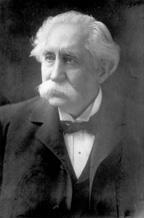
Here you will find contact information for Senator William Brimage Bate, including email address, phone number, and mailing address.
| Name | William Brimage Bate |
| Position | Senator |
| State | Tennessee |
| Party | Democratic |
| Status | Former Representative |
| Term Start | December 5, 1887 |
| Term End | March 3, 1905 |
| Terms Served | 3 |
| Born | October 7, 1826 |
| Gender | Male |
| Bioguide ID | B000227 |
About Senator William Brimage Bate
William Brimage Bate (October 7, 1826 – March 9, 1905) was a Tennessee planter and slaveholder, Confederate major general, and Democratic politician who served as the twenty‑third governor of Tennessee from 1883 to 1887 and as a United States Senator from Tennessee from 1887 until his death. Over the course of three full terms and the beginning of a fourth in the Senate, he represented his state during a significant period in American history, contributing to the legislative process and participating in the broader realignment of national politics in the late nineteenth and early twentieth centuries.
Bate was born at Bledsoe’s Lick, now Castalian Springs, in Sumner County, Tennessee, the son of James H. Bate and Amanda Weatherred Bate. He attended a local log schoolhouse known as the “Rural Academy.” When he was fifteen, his father died, and Bate left home to seek work. He was eventually hired as a clerk on the steamboat Saladin, which traveled the Cumberland, Ohio, and Mississippi rivers between Nashville and New Orleans. While the steamboat was docked in New Orleans in 1848, news arrived of the outbreak of the Mexican–American War, and Bate enlisted in a Louisiana regiment. When that enlistment ended a few months later, he reenlisted as a lieutenant in Company I of the 3rd Tennessee Volunteer Infantry and accompanied General Joseph Lane on several raids in pursuit of Antonio López de Santa Anna toward the end of the war.
After the Mexican–American War, Bate returned to his family farm in Sumner County and entered public life. He established a pro‑Democratic newspaper, the Tenth Legion, in nearby Gallatin and was elected to the Tennessee House of Representatives in 1849. He pursued legal studies and obtained a law degree from Cumberland University in Lebanon, Tennessee, in 1852, after which he was admitted to the bar. Following the 1854 amendment of the Tennessee constitution to allow direct election of judicial officers, he was elected attorney general for the Nashville district. A committed Democrat, he campaigned for Andrew Johnson in the 1855 gubernatorial race and served as a presidential elector for Southern Democratic candidate John C. Breckinridge in 1860. He was offered his district’s nomination for Congress in 1859 but declined. In the years leading up to the Civil War, he was a staunch supporter of secession.
With the outbreak of the Civil War following the Battle of Fort Sumter in April 1861, Bate enlisted in a private company in Gallatin and was elected its captain. In early May 1861, after Tennessee aligned with the Confederacy, he was elected colonel of the 2nd Tennessee Infantry. His regiment was dispatched to Virginia and assigned to guard the Richmond, Fredericksburg and Potomac Railroad. He was present at the Battle of Aquia Creek on May 30, 1861, and at the First Battle of Bull Run (First Manassas) in July 1861, where his unit served in the reserve brigade of Theophilus Holmes in the Confederate Army of the Potomac. In February 1862, at his request, the 2nd Tennessee was transferred to the Western Theater and attached to General Albert Sidney Johnston’s Army of Mississippi. Bate marched north with this army to confront Ulysses S. Grant at the Battle of Shiloh in April 1862, where he was severely wounded in the leg on the first day of fighting. When an army surgeon proposed amputation to save his life, Bate reportedly drew his pistol and threatened to shoot the surgeon, thereby keeping his leg. The wound incapacitated him for several months, left him with a permanent limp, and several of his relatives were killed at Shiloh, while his horse was shot from under him.
After recuperating for several months in Columbus, Mississippi, Bate was promoted to brigadier general on October 2, 1862. Initially assigned to duties away from the front in North Alabama, he pressed for a return to combat, and General Braxton Bragg organized an infantry brigade for him in the Army of Tennessee. He participated in the Tullahoma Campaign and saw action at the Battle of Hoover’s Gap in June 1863. During this period, Confederate leaders in Tennessee offered him the gubernatorial nomination to succeed term‑limited Governor Isham G. Harris, but he declined, preferring to remain with his troops. At the Battle of Chickamauga in September 1863, Bate’s brigade engaged in a skirmish that opened the fighting on the evening of September 18, and in the heavy combat the following day three of his horses were shot from under him. In the subsequent reorganization of the Army of Tennessee, he was given command of John C. Breckinridge’s former division and led it at the Battle of Missionary Ridge in November 1863.
In recognition of his service in the Chattanooga campaign, Bate was promoted to major general on February 24, 1864. His division took part in the Atlanta Campaign, fighting at Resaca, New Hope Church, Kennesaw Mountain, Peachtree Creek, and the main Battle of Atlanta on July 22, 1864. On August 6, at the Battle of Utoy Creek, he employed a deception plan that helped foil the principal Union assault. He was shot in the knee in a skirmish at Willis’ Grist Mill near Atlanta on August 10 and was bedridden for several weeks in Barnesville, Georgia. He rejoined his division in time to participate in General John B. Hood’s invasion of Tennessee in late 1864. At the Battle of Franklin on November 30, he lost nearly 20 percent of his division and again had his horse shot from under him, and he commanded General Benjamin F. Cheatham’s right flank at the Battle of Nashville two weeks later. Bate’s division remained with Cheatham’s Corps during the Carolinas Campaign of 1865, where he saw action at the Battle of Bentonville in March. He and his men surrendered at Bennett Place near Greensboro, North Carolina. Over the course of the war, he was wounded three times and had six horses shot and killed beneath him.
Following the Confederacy’s defeat, Bate returned to Tennessee and resumed his legal career in Nashville, practicing in partnership with Colonel Frank Williams. He remained active in Democratic politics, serving on the State Democratic Committee and the National Democratic Executive Committee in the late 1860s. He was nominated unsuccessfully for the United States Senate in 1875, 1877, and 1881, and served as a presidential elector for Democratic candidate Samuel J. Tilden in 1876. During the 1870s and early 1880s, Tennessee’s state government was mired in a severe debt crisis stemming from decades of bond issues for internal improvements and railroad construction and the collapse of property tax revenues after the Panic of 1873. The state defaulted on its bond debt in 1875, and the Democratic Party split into “high tax” or “state credit” Democrats, who favored full repayment, and “low tax” Democrats, who advocated partial settlement. In the 1880 gubernatorial election, rival Democratic factions nominated separate candidates, splitting the vote and enabling Republican Alvin Hawkins to win.
In the 1882 gubernatorial race, Tennessee’s Bourbon Democratic faction, led by former Governor Isham G. Harris, rallied behind the “low tax” Democrats, who nominated Bate for governor. He advanced a compromise plan to pay 50 percent on bonds held by railroads—some of which were believed to have been obtained fraudulently during the Brownlow administration—while making full payment on bonds held by schools, charities, and Sarah Childress Polk, widow of President James K. Polk. The “high tax” Democrats nominated Joseph Fussell, while Hawkins sought reelection and a Greenback candidate, John Beasley, also entered the race. In the general election, Bate prevailed with 120,637 votes to 93,168 for Hawkins, 9,660 for Beasley, and 4,814 for Fussell. After his inauguration as the twenty‑third governor of Tennessee in 1883, he signed his debt settlement plan into law, bringing formal resolution to the long‑running state debt controversy, though lingering resentment over its terms threatened his reelection prospects. In 1884, Republican candidate Frank T. Reid, a Nashville judge, mounted a strong challenge, but Bate won a second term by a vote of 132,201 to 125,246. During his first term he approved legislation creating the State Railroad Commission to regulate freight rates, a measure popular with farmers but opposed by railroad interests; the act was repealed in 1885, angering many agrarian supporters and weakening Democratic prospects in the 1886 gubernatorial contest.
Bate’s gubernatorial tenure ended in 1887, but his influence in state and national politics continued. When United States Senator Howell Jackson resigned in 1886, Bate, as governor, appointed Washington C. Whitthorne to complete the term, which was set to expire in March 1887. The Tennessee General Assembly then elected Bate himself to the United States Senate to succeed Jackson. He took his seat in 1887 and was reelected in 1893, 1899, and again in 1905, serving continuously until his death. As a Senator from Tennessee and a member of the Democratic Party, he participated actively in the legislative process over three full terms and into a fourth, representing the interests of his constituents during a period marked by industrial expansion, sectional reconciliation, and debates over currency, tariffs, and territorial expansion. He served as chairman of the Committee on the Improvement of the Mississippi River and Its Tributaries in the 53rd Congress and later chaired the Committee on Public Health and National Quarantine. In the Senate he supported lower taxes and favored federal funding for common schools, the United States Weather Bureau, and the Army Signal Corps, and he voted for the admission of Oklahoma, Arizona, and New Mexico as states.
Bate married Julia Peete in 1856. She was the daughter of Samuel Peete, a prominent lawyer and scholar of Huntsville, Alabama, and was educated in Alabama and in Philadelphia, Pennsylvania. As first lady of Tennessee during her husband’s two consecutive gubernatorial terms, she presided over the State Executive Mansion with what contemporaries described as grace and dignity. After Bate’s election to the Senate, she accompanied him to Washington, D.C., in 1889 and generally resided there during congressional sessions, taking part in the social life associated with senatorial families. The couple had four daughters, two of whom survived to adulthood: a daughter who married Thomas F. Mastin of Texas, and Susie, who married O. D. Childs of Los Angeles and had been a much‑admired young woman in Washington society. Julia Peete Bate was a member of the Methodist Church and active in several charitable organizations.
Bate came from a prominent Sumner County family. His paternal grandfather, Colonel Humphrey Bate (1779–1856), was an early settler in the region. William’s middle name, Brimage, was the surname of his paternal grandmother, Elizabeth Brimage, Colonel Humphrey Bate’s first wife. After Elizabeth’s death, Colonel Bate married Anna Weatherred, sister of William’s mother, Amanda Weatherred Bate. Several of Bate’s relatives, including his brother, Captain Humphrey Bate (1828–1862), were killed or wounded at the Battle of Shiloh. A later cousin, Dr. Humphrey Bate (1875–1936), became a noted harmonica player and string band leader and was among the first musicians to perform at the Grand Ole Opry in the 1920s, reflecting the family’s continued prominence in Tennessee public and cultural life.
Shortly after being elected to his fourth Senate term, Bate traveled to Washington to attend the inauguration of President Theodore Roosevelt on March 4, 1905. He was believed to have contracted a cold during the ceremonies, which developed into pneumonia. William Brimage Bate died in Washington, D.C., on March 9, 1905, while still serving in the United States Senate. His body was returned to Nashville on a specially chartered train and interred in Mount Olivet Cemetery. At his graveside, members of the Frank Cheatham Bivouac, an organization of surviving Confederate veterans, fired the final salute in honor of the former Confederate general, governor, and long‑serving Senator from Tennessee.