Representative William Henry Bates
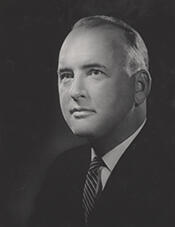
Here you will find contact information for Representative William Henry Bates, including email address, phone number, and mailing address.
| Name | William Henry Bates |
| Position | Representative |
| State | Massachusetts |
| District | 6 |
| Party | Republican |
| Status | Former Representative |
| Term Start | January 3, 1949 |
| Term End | January 3, 1971 |
| Terms Served | 11 |
| Born | April 26, 1917 |
| Gender | Male |
| Bioguide ID | B000239 |
About Representative William Henry Bates
William Henry Bates (April 26, 1917 – June 22, 1969) was a Republican member of the United States House of Representatives from Massachusetts who served from 1949 until his death in 1969, completing 11 terms in Congress. Notable for his staunch support of the United States Navy and a strong national defense posture, he represented the 6th Congressional District of Massachusetts, the same district once held by his father, and became a prominent voice on military and atomic energy issues during a significant period in American history.
Bates was born in Salem, Massachusetts, the son of Nora (Jennings) Bates and George J. Bates, a Republican congressman from the 6th Massachusetts Congressional District who also served as mayor of Salem. He attended local public schools in Salem and then Worcester Academy, from which he graduated in 1936. He went on to Brown University in Providence, Rhode Island, receiving his undergraduate degree in 1940. His upbringing in a politically active family and his New England education helped shape his later career in public service and national defense policy.
Following his graduation from Brown, Bates enlisted in the United States Navy in July 1940 as the nation was preparing for possible entry into World War II. He was commissioned an ensign in the Naval Reserve on January 30, 1941. Bates received instruction at the Naval Reserve Supply Officer’s School at the Naval Medical Center in Washington, D.C., and subsequently served at the Washington Navy Yard and aboard the historic sailing ship Constellation (IX-20). Remaining in the Naval Reserve after the war, he advanced to the rank of lieutenant commander and, by 1949, was serving as supply officer for the 4th Naval District. His naval experience and continuing reserve service deeply informed his later legislative focus on naval affairs and the welfare of servicemembers.
Bates’s entry into Congress was precipitated by tragedy. On November 1, 1949, his father, Representative George J. Bates, was killed in a plane crash at Washington National Airport. At that time William Bates was still on active reserve duty. He resigned his reserve commission on February 14, 1950, having attained the rank of lieutenant commander, in order to fill his late father’s seat in the United States House of Representatives. Elected as a Republican, he took office representing Massachusetts in 1949 and went on to serve continuously until 1969. Throughout his tenure, he participated actively in the legislative process and represented the interests of his constituents during a period that spanned the early Cold War, the Korean War, and the Vietnam era.
During nearly two decades in the House of Representatives, Bates became one of the chamber’s leading advocates for a strong U.S. Navy and robust national defense. Serving on the House Armed Services Committee and the Joint Congressional Committee on Atomic Energy, he vigorously supported the development and expansion of nuclear-powered naval vessels, viewing them as essential to American security in the nuclear age. He also championed incentive pay programs, improved housing, and better living conditions for servicemen and their families, consistently seeking to enhance the training, caliber, and morale of military personnel. His legislative work reflected both his professional naval background and his belief in maintaining a powerful, technologically advanced military.
Although best known for his defense and naval advocacy, Bates also played a role in major domestic policy debates of his time. He voted in favor of the Civil Rights Acts of 1957, 1960, 1964, and 1968, supporting federal efforts to combat racial discrimination. He supported the 24th Amendment to the United States Constitution, which abolished the poll tax in federal elections, and he voted for the Voting Rights Act of 1965, aimed at enforcing the voting rights guaranteed by the Fourteenth and Fifteenth Amendments. These votes placed him among those Republicans who backed key civil rights measures during a transformative period in American social and political life.
Bates died of stomach cancer on June 22, 1969, while still serving in Congress, becoming one of the members of the United States Congress who died in office between 1950 and 1999. His death prompted tributes that emphasized his long-standing commitment to the Navy and to the men and women of the armed forces. In recognition of his service and advocacy, the U.S. Navy renamed an attack submarine in his honor: the vessel originally planned as USS Redfish was redesignated USS William H. Bates (SSN-680) immediately upon his death, before construction began. In Massachusetts, the Bates Bridge, which crosses the Merrimack River between Groveland and Haverhill, was also named in his honor, commemorating his regional and national contributions. His family’s public legacy has extended into later generations; his great-nephew is comedian John Mulaney, whose maternal grandmother was Bates’s sister.