Representative William Stiles Bennet
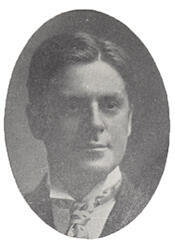
Here you will find contact information for Representative William Stiles Bennet, including email address, phone number, and mailing address.
| Name | William Stiles Bennet |
| Position | Representative |
| State | New York |
| District | 23 |
| Party | Republican |
| Status | Former Representative |
| Term Start | December 4, 1905 |
| Term End | March 3, 1917 |
| Terms Served | 4 |
| Born | November 9, 1870 |
| Gender | Male |
| Bioguide ID | B000370 |
About Representative William Stiles Bennet
William Stiles Bennet (November 9, 1870 – December 1, 1962) was an American lawyer and politician who served as a Republican U.S. Representative from New York in the early twentieth century, holding office for five terms between 1905 and 1917. A member of the Republican Party, he contributed to the legislative process during a significant period in American history and was known for his work on immigration policy and civil rights questions. He was the father of Augustus Witschief Bennet, who would later also serve in Congress.
Bennet was born in Port Jervis, Orange County, New York, the son of James Bennet and Alice Leonora (Stiles) Bennet. He attended the common schools of Port Jervis and completed his secondary education at Port Jervis Academy, from which he graduated in 1889. He then studied law at Albany Law School in Albany, New York, earning his degree in 1892. After being admitted to the bar, he began the practice of law. On June 30, 1896, he married Gertrude Witschief, with whom he later had a family that included their son Augustus.
Beginning his professional career as a lawyer, Bennet engaged in private practice and quickly became involved in local government. From 1892 to 1893 he served as the official reporter of the Orange County Board of Supervisors, gaining early experience with public administration and legislative procedure. Relocating his political base to New York City, he was elected to the New York State Assembly from New York County’s 21st District, serving in 1901 and 1902. In 1903 he held judicial office as a justice of the municipal court of New York City, further broadening his experience in public service and the law.
Bennet was elected as a Republican to the Fifty-ninth Congress and to the two succeeding Congresses, serving as U.S. Representative for New York’s seventeenth congressional district from March 4, 1905, to March 3, 1911. During these four consecutive terms in the House of Representatives, he participated actively in the democratic process and represented the interests of his constituents at a time marked by Progressive Era reforms and growing national debate over immigration, labor, and civil rights. He was an unsuccessful candidate for reelection to the Sixty-second Congress in 1910. While in Congress, he served as a member of the United States Immigration Commission from 1907 to 1910, where he was one of only two of the fourteen commissioners who generally opposed restrictive immigration measures. He also spoke out against the denial of civil rights to African Americans in southern states, criticizing the fact that those states benefited from increased representation in Congress based on their Black populations while simultaneously preventing many Black citizens from voting.
After his initial congressional service, Bennet remained an influential Republican figure. He served as a delegate to the Republican National Convention in 1908 and again in 1916, and he was chosen as the official parliamentarian of the Republican National Convention held in Chicago in 1916. He returned to Congress when he was elected as a Republican to the Sixty-fourth Congress to fill the vacancy caused by the death of Representative Joseph A. Goulden of New York’s twenty-seventh congressional district. In this capacity he served from November 2, 1915, to March 3, 1917. He was an unsuccessful candidate for reelection to the Sixty-fifth Congress in 1916, bringing his total House service to five terms between 1905 and 1917.
In the years following his final term in Congress, Bennet combined public service with business pursuits. He worked as a business executive and continued to engage in public affairs at the state, national, and international levels. In 1923 he served as a United States delegate to the Seventeenth International Congress Against Alcoholism held in Copenhagen, reflecting his involvement in contemporary social and public health issues. He sought a return to Congress as an unsuccessful candidate for election to the Seventy-fifth Congress in 1936. Two years later, in 1938, he served as a delegate to the New York State Constitutional Convention, contributing to the revision and modernization of the state’s fundamental law. He again attempted to reenter the House of Representatives as an unsuccessful candidate in a 1944 special election to fill a vacancy in the Seventy-eighth Congress.
William Stiles Bennet died at Falkirk Hospital in Central Valley, Orange County, New York, on December 1, 1962, at the age of 92. He was cremated, and his ashes were interred at Laurel Grove Cemetery in his hometown of Port Jervis, New York. His long career in law, state government, and national politics, including his five terms in Congress and his service on the United States Immigration Commission, left a record of engagement with some of the central political and social questions of his era.