Representative William Markle Berlin
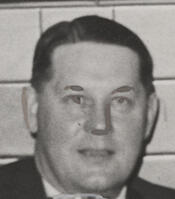
Here you will find contact information for Representative William Markle Berlin, including email address, phone number, and mailing address.
| Name | William Markle Berlin |
| Position | Representative |
| State | Pennsylvania |
| District | 28 |
| Party | Democratic |
| Status | Former Representative |
| Term Start | March 9, 1933 |
| Term End | January 3, 1937 |
| Terms Served | 2 |
| Born | March 29, 1880 |
| Gender | Male |
| Bioguide ID | B000409 |
About Representative William Markle Berlin
William Markle Berlin (March 29, 1880 – October 14, 1962) was an American businessman and politician who served as a Democratic member of the United States House of Representatives from Pennsylvania for two terms from 1933 to 1937. Born on a farm near Delmont, Westmoreland County, Pennsylvania, he spent his early years in a rural setting that shaped his familiarity with agricultural and industrial life in western Pennsylvania. He attended local schools and graduated from the Laird Institute at Murrysville, Pennsylvania, in 1896, completing his formal education as a teenager.
Following his education, Berlin entered private business and built a career in several key industries that were central to the regional economy. He became engaged as an automobile distributor at a time when motor vehicles were transforming transportation and commerce in the United States. In addition, he worked in the wholesale oil and gas business and in coal mining, gaining experience in energy and extractive enterprises that were particularly significant in Pennsylvania. In 1916 he moved to Greensburg, Pennsylvania, a growing commercial and governmental center of Westmoreland County, where he continued his business pursuits and became more deeply involved in local politics.
Berlin’s political career began at the county level. In 1916, the same year he relocated to Greensburg, he served as chairman of the Democratic County Committee, a position that placed him at the center of party organization and candidate support in Westmoreland County. Through this role he helped shape Democratic strategy and mobilize voters during a period of shifting political alignments in the early twentieth century. His work as a party leader, combined with his prominence as a businessman, laid the groundwork for his eventual election to national office.
William Markle Berlin was elected as a Democrat to the Seventy-third and Seventy-fourth Congresses, serving as a Representative from Pennsylvania in the United States Congress from March 4, 1933, to January 3, 1937. His service in Congress occurred during a significant period in American history, coinciding with the early years of President Franklin D. Roosevelt’s administration and the implementation of New Deal legislation in response to the Great Depression. As a member of the House of Representatives, Berlin participated in the legislative process, contributed to debates over economic recovery and social policy, and represented the interests of his Pennsylvania constituents. A member of the Democratic Party, he took part in the broader effort to address unemployment, stabilize industry, and reform financial institutions during this transformative era. He was an unsuccessful candidate for renomination in 1936, bringing his two-term congressional career to a close at the beginning of 1937.
After leaving Congress, Berlin continued his public service at the county level. From 1937 to 1941 he served as clerk of the court of Westmoreland County, Pennsylvania, administering court records and supporting the operation of the local judicial system. In 1941 he returned to private enterprise and resumed the mining of coal in Pennsylvania and West Virginia, drawing on his earlier experience in the coal industry and maintaining his longstanding connection to the region’s industrial base.
Berlin remained active in partisan politics even after his congressional service. He was a delegate to the 1944 Democratic National Convention in Chicago, participating in the renomination of President Roosevelt during World War II. Later in his career, he sought to return to Congress under a different party banner, becoming an unsuccessful candidate for the Republican congressional nomination in 1950, an indication of his evolving political affiliations and continued interest in national legislative service.
In the later phase of his life, Berlin returned to the institutional setting of the federal legislature in a non-elective capacity. On February 1, 1957, he was appointed assistant librarian of the United States House of Representatives, a position that involved the management and preservation of legislative documents and reference materials. In 1961 he was promoted to librarian of the House of Representatives and served in that capacity until his death. William Markle Berlin died in Greensburg, Pennsylvania, on October 14, 1962, concluding a long career that spanned business, local and national politics, county administration, and congressional institutional service.