Senator William Wyatt Bibb
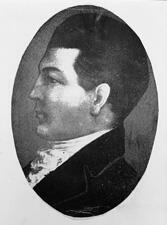
Here you will find contact information for Senator William Wyatt Bibb, including email address, phone number, and mailing address.
| Name | William Wyatt Bibb |
| Position | Senator |
| State | Georgia |
| Party | Republican |
| Status | Former Representative |
| Term Start | January 26, 1807 |
| Term End | November 9, 1816 |
| Terms Served | 6 |
| Born | October 2, 1781 |
| Gender | Male |
| Bioguide ID | B000434 |
About Senator William Wyatt Bibb
William Wyatt Bibb (October 2, 1781 – July 10, 1820) was a United States Senator from Georgia, the first governor of the Alabama Territory, and the first Governor of the U.S. state of Alabama. A member of the Democratic-Republican (often called Republican) Party, he served in the United States Congress during a significant period in early American history and later oversaw the transition of Alabama from territory to statehood. He is the first of only three people in U.S. history to have been elected a U.S. Senator from one state and governor of another. Bibb County, Alabama, and Bibb County, Georgia, are named in his honor.
Bibb was born in Amelia County, Virginia, to Captain William Bibb and Sally (Wyatt) Bibb. His father served as an officer in the Continental Army during the American Revolutionary War and later as a member of the Virginia General Assembly. Around 1784, the elder Bibb moved his family from Virginia to Georgia as part of a migration of Virginians who accompanied General George Mathews, a hero of the Battle of Brandywine, to newly opened lands in the South. Many of these settlers, including the Bibbs, were veterans who took advantage of federal land bounties in lieu of pay. They established tobacco farms on fertile lands near the confluence of the Broad and Savannah Rivers in what became northeastern Georgia, and the Bibb family is recorded as one of the earliest pioneer families in Elbert County.
Bibb was probably privately educated in his youth before pursuing formal higher education. He attended the College of William & Mary in Williamsburg, Virginia, and subsequently enrolled in the medical department of the University of Pennsylvania in Philadelphia. He was awarded the Doctor of Medicine (M.D.) degree in 1801. After completing his medical training, he returned to Georgia and began practicing medicine in the town of Petersburg. In 1803, he married Mary Freeman, establishing a household in the growing frontier region where he combined his medical practice with emerging political interests.
Bibb entered public life at a notably young age. In 1802, at the age of 21, he was elected to the Georgia House of Representatives, taking office in 1803 and serving one two-year term. His state legislative service led quickly to national office. In 1806 he was elected as a Democratic-Republican to the Ninth Congress to fill the U.S. House of Representatives vacancy caused by the resignation of Thomas Spalding. He was subsequently re-elected four times and served in the House from 1807 until November 6, 1813. During this period he participated actively in the legislative process at a time marked by rising tensions with Great Britain and the approach and onset of the War of 1812, representing the interests of his Georgia constituents in the national arena.
Upon leaving the House, Bibb moved to the United States Senate. As was then the practice, he was elected by the Georgia state legislature to fill the Senate vacancy created by the resignation of William H. Crawford, a prominent national political figure and presidential contender. Bibb served as a Senator from Georgia from November 6, 1813, until November 9, 1816, completing what contemporary accounts describe as six terms of service in Congress when his House and Senate tenures are considered together. As a member of the Senate during a formative period in American political development, he participated in debates over constitutional structure and representation. In 1816 he opposed an early proposal to abolish the Electoral College and elect the president by direct popular vote, arguing on the Senate floor that such a change would disadvantage the slaveholding states. He stated that under a popular vote system those states “would lose the privilege the Constitution now allows them, of votes upon three-fifths of their population other than freemen. It would be deeply injurious to them,” a remark that reflected both the political calculations and the entrenched system of slavery in the early republic.
After his Senate service, Bibb’s career shifted from national legislator to territorial and then state executive. In 1817, President James Monroe appointed him the first governor of the newly created Alabama Territory, which had been formed from the eastern portion of the former Mississippi Territory. His primary duties as territorial governor included organizing a functioning civil administration, overseeing land policies, and managing relations with a rapidly growing settler population and Native American nations. When Alabama was admitted to the Union as the 22nd state on December 14, 1819, Bibb became its first state governor. In the first state election he defeated Marmaduke Williams, receiving 8,342 votes to Williams’s 7,140. Under his leadership, Huntsville was designated as the site of the constitutional convention that framed Alabama’s first state constitution, and the new capital was located at the frontier town of Cahawba in 1820, before later moves to Tuscaloosa in 1826 and Montgomery in 1846.
As governor of the Alabama Territory and then of the state, Bibb oversaw the establishment of the basic institutions of government. During his tenure the Alabama state militia was organized, and the foundations of the state judicial system were laid, including the creation and staffing of the Supreme Court of Alabama. Henry Hitchcock was elected the first Attorney General of Alabama and initially also served as Secretary of State, before Thomas A. Rodgers was chosen as the second Secretary of State. The first session of the Alabama state legislature met from October 25, 1819, to December 17, 1819, during which William R. King and John W. Walker were selected as Alabama’s first United States Senators. Bibb’s role in guiding these developments placed him at the center of Alabama’s transition from frontier territory to organized state government.
Bibb’s life and career were cut short in 1820. On July 10 of that year, during a violent thunderstorm, he was thrown from his horse and suffered fatal internal injuries. He died in office at the age of 38, having served as governor of Alabama until his death. Under the provisions of the state constitution, his brother Thomas Bibb, who was then president of the Alabama State Senate, succeeded him and completed the gubernatorial term. William Wyatt Bibb was buried in Coosada, Alabama. His likeness later appeared on the Alabama Centennial half dollar minted in 1921, commemorating his role in the state’s early history. In addition to his political career, he authored a medical treatise, “An inquiry into the modus operandi of medicines upon the human body,” published in Philadelphia in 1801, reflecting his formal training and early professional work as a physician.