Senator William Bigler
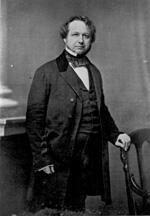
Here you will find contact information for Senator William Bigler, including email address, phone number, and mailing address.
| Name | William Bigler |
| Position | Senator |
| State | Pennsylvania |
| Party | Democratic |
| Status | Former Representative |
| Term Start | January 1, 1856 |
| Term End | March 3, 1861 |
| Terms Served | 1 |
| Born | January 1, 1814 |
| Gender | Male |
| Bioguide ID | B000459 |
About Senator William Bigler
William Bigler (January 1, 1814 – August 9, 1880) was an American politician from Pennsylvania who served as a Democrat as the 12th governor of Pennsylvania from 1852 to 1855 and as a United States Senator from Pennsylvania from 1855/1856 to 1861. A member of the Democratic Party, he contributed to the legislative process during one term in the Senate, representing the interests of his constituents during a significant period in American history leading up to the Civil War. His older brother, John Bigler, simultaneously served as governor of California, making them the first brothers to serve as governors of two states at the same time. As of 2023, he is the last Democratic incumbent to lose reelection as governor of Pennsylvania.
Bigler was born in Sherman Valley, Perry County, Pennsylvania, to Jacob and Susan Dock Bigler. He attended public schools and entered the printing trade as a youth, working as a printer’s apprentice and journalist. He joined the staff of the Centre County Democrat newspaper, edited by his elder brother John Bigler, where he was introduced to Jacksonian Democratic politics and the mechanics of party organization and public advocacy. This early experience in journalism and political commentary shaped his later career in public life.
In 1833, at the urging of friends that included future Pennsylvania governor Andrew Curtin, Bigler founded his own political newspaper, the Clearfield Democrat, in Clearfield, Pennsylvania. The paper strongly supported Jacksonian democracy and helped establish him as a leading Democratic voice in the region. In 1836 he married Maria Jane Reed; the couple had five children. After several years in journalism, he sold the newspaper and entered his father‑in‑law’s lumber business as a co‑partner. Between 1845 and 1850, this enterprise became the largest producer of building supplies on the West Branch of the Susquehanna River, earning him the nickname “The Clearfield Raftsman” and providing both wealth and prominence that further advanced his political prospects.
Bigler’s formal political career began in the Pennsylvania General Assembly. He served as a Jackson Democrat member of the Pennsylvania Senate for the 20th district from 1841 to 1846 and was elected Speaker of the Senate from 1845 to 1846. During his tenure in the state senate, he played a key role in the abolition of imprisonment for debt in Pennsylvania and supported the establishment and development of two state insane asylums, one in Philadelphia and one in Harrisburg, reflecting contemporary reform movements in mental health and debtor law. He was also a strong proponent of a central railroad line from Philadelphia to Pittsburgh to compete with the Baltimore & Ohio Railroad. His efforts contributed to the authorization of a cross‑state line in 1847 that was eventually sold and became part of the Pennsylvania Railroad. In 1849 he served as Pennsylvania revenue commissioner, further enhancing his reputation in matters of state finance and infrastructure.
In 1851, Bigler was elected the 12th governor of Pennsylvania, defeating incumbent Whig governor William F. Johnston. Taking office in 1852, he governed during a period of rapid economic expansion and intensifying national conflict over slavery. As governor, he vigorously opposed “wildcat” banking practices and repeatedly vetoed bank charters and bank‑related bills that he believed were unsound, seeking to stabilize the state’s financial system. However, his support for the low‑tariff policies associated with the Walker Tariff, his defense of the right of southern states to retain slavery, his backing of the Kansas–Nebraska Act, and his enforcement of the 1850 Fugitive Slave Act proved deeply unpopular with many Pennsylvanians, particularly in the increasingly anti‑slavery regions of the state. In 1855, he was defeated for reelection in a landslide by James Pollock, the candidate of the newly formed Republican Party. As of 2023, he remains the last Democratic incumbent governor of Pennsylvania to lose a bid for reelection.
After leaving the governor’s office in 1855, Bigler entered the railroad industry and became president of the Philadelphia and Erie Railroad, reflecting his long‑standing interest in transportation and internal improvements. His federal legislative career began soon thereafter. The Pennsylvania legislature failed to elect a U.S. senator in 1855, leaving the seat vacant; in 1856, Bigler was elected to fill the position as a Democrat and served in the United States Senate from Pennsylvania from 1855/1856 until 1861. During his single term in the Senate, he participated actively in the legislative debates of the tumultuous pre–Civil War years and aligned himself with pro‑southern and pro‑slavery positions within the Democratic Party. In 1857 he visited Kansas Territory and, following that visit, advocated for Kansas statehood under the pro‑slavery Lecompton Constitution. He was a delegate to the 1860 Democratic National Convention, where he opposed the nomination of Stephen A. Douglas, reflecting the deep sectional and ideological divisions within the party. During the secession crisis of 1860–1861, he supported the compromise proposals advanced by Kentucky Senator John J. Crittenden as a last‑ditch effort to avert the secession of southern states and the outbreak of civil war.
In his later years, Bigler remained active in Pennsylvania public affairs after leaving the Senate in 1861. He continued to be involved in Democratic Party politics and served as a delegate to the Pennsylvania constitutional convention of 1873, contributing to the revision of the state’s fundamental law. He also played a prominent civic role as a key organizer of the 1876 Centennial Exposition in Philadelphia, the nation’s official celebration of the hundredth anniversary of American independence, which showcased industrial, technological, and cultural achievements of the United States and its states, including Pennsylvania.
William Bigler died on August 9, 1880, in Clearfield, Pennsylvania, where he had long resided, and was interred in Hillcrest Cemetery. His name endures in several Pennsylvania place names and institutions: Biglerville, in Adams County, is named in his honor; Bigler Hall on the University Park campus of Pennsylvania State University bears his name, as do Bigler Street in Philadelphia, Bigler Township in Clearfield County, and Bigler Avenues in both Clearfield and Northern Cambria, Pennsylvania.