Representative William Wallace Blackney
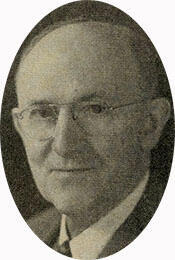
Here you will find contact information for Representative William Wallace Blackney, including email address, phone number, and mailing address.
| Name | William Wallace Blackney |
| Position | Representative |
| State | Michigan |
| District | 6 |
| Party | Republican |
| Status | Former Representative |
| Term Start | January 3, 1935 |
| Term End | January 3, 1953 |
| Terms Served | 8 |
| Born | August 28, 1876 |
| Gender | Male |
| Bioguide ID | B000515 |
About Representative William Wallace Blackney
William Wallace Blackney (August 28, 1876 – March 14, 1963) was a Republican politician from the U.S. state of Michigan who served eight terms in the United States House of Representatives. Over the course of his congressional career, he represented Michigan’s 6th congressional district from 1935 to 1953, contributing to the legislative process during a significant period in American history and participating in the democratic process on behalf of his constituents.
Blackney was born in Clio, Genesee County, Michigan, on August 28, 1876. He attended the public schools in Clio and pursued further education at Olivet College in Olivet, Michigan. He also studied at the Ferris School in Big Rapids, an institution that later became Ferris State University. These early educational experiences laid the groundwork for his later professional training in law and his long engagement in public service.
In 1904, Blackney moved to Flint, Michigan, which would remain his principal place of residence for the rest of his life. He entered public life soon after his arrival, serving as county clerk of Genesee County from 1905 to 1912. During this period, he also advanced his formal education, graduating from the law department of the University of Michigan in 1912. That same year he was admitted to the bar and commenced the practice of law in Flint, establishing himself as an attorney while maintaining close ties to local government and civic affairs.
Blackney’s early legal and civic career included service as assistant prosecuting attorney of Genesee County from 1913 to 1917, where he gained experience in criminal law and public administration. He later became a member of the Flint School Board, serving from 1924 to 1934, which reflected his interest in public education and local governance. At the state party level, he was a member of the Republican State Central Committee from 1925 to 1930, helping to shape Republican strategy and organization in Michigan. In addition to his legal and political work, he served for sixteen years as an instructor in the General Motors Company technical night school, contributing to the education and training of industrial workers in Flint’s growing automotive sector. He was also active in national party politics, serving as a delegate to the 1932 Republican National Convention.
Blackney entered national office in the context of the New Deal era. In the 1934 election, he defeated incumbent Democrat Claude E. Cady to win a seat as a Republican from Michigan’s 6th congressional district in the U.S. House of Representatives. He served in the 74th Congress from January 3, 1935, to January 3, 1937. In the 1936 election he was defeated by Democrat Andrew J. Transue, temporarily interrupting his congressional service. However, Blackney regained the seat in the 1938 election, defeating Transue and returning to Washington for the 76th Congress.
Following his return to the House, Blackney was subsequently re-elected to six succeeding Congresses, serving continuously from January 3, 1939, to January 3, 1953. His eight terms in Congress spanned the late New Deal period, World War II, and the early Cold War, a time of major domestic and international change. During these years he participated in debates and votes on legislation affecting economic recovery, wartime mobilization, and postwar policy. A report prepared for President Harry S. Truman in September 1948 characterized Blackney as having a “reactionary record in Congress,” reflecting contemporary criticism of his voting record and positions from within the Truman administration and its allies. Nonetheless, he remained a consistent Republican voice for his district throughout his long tenure.
After deciding not to seek re-election in 1952, Blackney concluded his congressional service on January 3, 1953, and retired from public office. He returned to Flint, Michigan, where he resided in retirement. William Wallace Blackney died in Flint on March 14, 1963, at the age of 86. He was interred in Woodlawn Cemetery in his birthplace of Clio, Michigan, thus closing a life closely tied to the communities of Genesee County that he had served at the local, county, and national levels.