Senator William Arvis Blakley
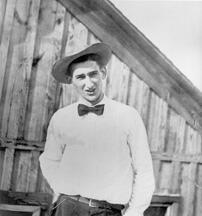
Here you will find contact information for Senator William Arvis Blakley, including email address, phone number, and mailing address.
| Name | William Arvis Blakley |
| Position | Senator |
| State | Texas |
| Party | Democratic |
| Status | Former Representative |
| Term Start | January 15, 1957 |
| Term End | December 31, 1961 |
| Terms Served | 2 |
| Born | November 17, 1898 |
| Gender | Male |
| Bioguide ID | B000536 |
About Senator William Arvis Blakley
William Arvis “Dollar Bill” Blakley (November 17, 1898 – January 5, 1976) was an American politician, attorney, and businessman from Texas who twice served as an interim United States Senator. A member of the Democratic Party and a leader of its conservative “Shivercrat” wing in Texas, he was appointed to the Senate in 1957 following the resignation of Price Daniel and again in 1961 after the resignation of Lyndon B. Johnson. Though he contributed to the legislative process during these two appointed terms, he was twice unsuccessful in seeking election to the Senate in his own right, losing to Ralph Yarborough in 1958 and to John Tower in 1961.
Blakley was born in Miami Station, Missouri, and shortly thereafter moved with his parents to Arapaho, Custer County, Oklahoma. As a young man he worked as a ranch hand, earning the nickname “Cowboy Bill,” an early indication of the Western persona he later invoked in public life. During the First World War he served in the United States Army. After the war he pursued legal studies, and he was admitted to the bar in 1933. He subsequently moved to Dallas, Texas, where he joined a law firm and began building the legal and business career that would make him one of the wealthiest men in the state.
In Dallas, Blakley rapidly expanded his interests beyond the practice of law into real estate development, ranching, banking, and insurance. By the mid‑1950s he had become a prominent figure in Texas business circles, and by 1957 his fortune was estimated at approximately $300 million. He was involved in large-scale commercial projects, including the construction of a $125 million shopping center and a 1,000‑room hotel in Dallas. He also became a major investor in Braniff International Airways and, before 1961, was its largest single shareholder. With fellow businessman Thomas Elmer Braniff, he helped endow the University of Dallas through the Blakley Braniff Foundation, to which he contributed $100 million; in recognition of this support, a university library was named in his honor.
Blakley’s political identity developed alongside his business success. He aligned himself with the conservative faction of the Texas Democratic Party associated with Governor Allan Shivers and Senator Price Daniel and was known as an “Eisenhower Democrat” for supporting Republican Dwight D. Eisenhower for president over Democratic nominee Adlai Stevenson in both 1952 and 1956. In 1956, Shivers declined to seek a fourth term as governor, and Price Daniel was elected to succeed him, thereby creating a vacancy in the U.S. Senate. Governor Shivers, who had considered appointing a Republican to the seat, instead selected Blakley, whose business prominence and conservative views appealed to the state’s Democratic establishment.
Blakley was appointed to the United States Senate from Texas on January 15, 1957, to fill Daniel’s vacated seat until a special election could be held. His first period of congressional service was brief, lasting fewer than four months, from January 15 to April 28, 1957. Pressured by party leaders who sought to ease intraparty tensions following the gubernatorial contest, Blakley did not run in the special election to complete Daniel’s term. In that election, liberal Democrat Ralph Yarborough won with a plurality in a three‑way conservative split against Republican Thad Hutcheson and Democrat Martin Dies, Jr., who together drew a majority of the vote. In response to this outcome, Texas law was later amended to require a runoff between the top two candidates in special elections if no one received a majority. Upon leaving the Senate after this first appointment, Blakley remarked that he would “go back to [his] boots and saddle and ride toward the Western sunset,” underscoring his intention to return to private life.
Despite that declaration, Blakley soon reentered electoral politics. When Yarborough’s seat came up again in the regular 1958 election cycle, Blakley challenged him in the Democratic primary as the conservative “Shivercrat” candidate. He ran with the backing of Governor Price Daniel, Senate Majority Leader Lyndon B. Johnson, and a bloc of Southern senators who opposed Yarborough’s progressive, anti‑segregation platform. Speaker of the House Sam Rayburn, another powerful Texas Democrat who had supported Blakley’s 1957 appointment, sided with Yarborough in the primary, and his support proved decisive. Blakley lost the primary, with Yarborough receiving approximately 680,000 votes to Blakley’s 486,000, and Yarborough retained his Senate seat.
Blakley’s second period of congressional service began in 1961. When Lyndon B. Johnson resigned from the Senate after being elected Vice President of the United States, Blakley was again appointed to fill the resulting vacancy. His appointment occurred at a time of renewed conflict between the liberal and conservative wings of the Texas Democratic Party in anticipation of the special election to complete Johnson’s term. Blakley emphasized his opposition to President John F. Kennedy’s “New Frontier” program, which was unpopular among many Texas conservatives, and he did not receive the endorsement of Ralph Yarborough. In the special election, held without party labels and featuring an unusually large field of 71 candidates, Blakley finished a weak second with 191,818 votes (18.1 percent), behind Republican John Tower, who led with 327,308 votes (30.9 percent). Several other major Democratic candidates, including future Speaker of the U.S. House Jim Wright of Fort Worth, divided the remaining vote.
Because no candidate received a majority, a runoff was held between Blakley and Tower. In that contest, ideological divisions within the Texas electorate proved decisive. Some liberals declined to support Blakley, whom they viewed as nearly as conservative as the Republican nominee, while some conservatives questioned whether Blakley was sufficiently steadfast in his conservatism. Age and image also played a role: Blakley, at 62, faced the 35‑year‑old Tower, who presented a younger, more dynamic profile. In the runoff, Tower defeated Blakley by a narrow margin, receiving 448,217 votes (50.6 percent) to Blakley’s 437,872 (49.4 percent), a difference of 10,343 votes. This defeat made Blakley the first Democratic senator from Texas in more than eighty years to lose a seat to a Republican and marked a significant turning point in the state’s political realignment. Overall, Blakley’s service in Congress, from his two appointed terms between 1957 and 1961, took place during a period of major national and regional change, and he participated in the democratic process as a representative of Texas’s conservative Democratic constituency.
After his 1961 defeat, Blakley withdrew from electoral politics and returned full‑time to his extensive business enterprises in Texas. He continued to be active in real estate, ranching, finance, and aviation interests, including his involvement with Braniff International Airways and philanthropic activities through the Blakley Braniff Foundation. William Arvis Blakley died in Dallas, Texas, on January 5, 1976. He was buried in Restland Memorial Park in Dallas alongside his wife, the former Villa W. Darnell, a native of Washita County, Oklahoma. The couple had five children, and his legacy in Texas includes both his brief but historically notable Senate service and his substantial contributions to the state’s economic and educational development.