Senator William Blount
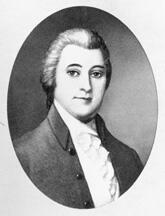
Here you will find contact information for Senator William Blount, including email address, phone number, and mailing address.
| Name | William Blount |
| Position | Senator |
| State | Tennessee |
| Party | Republican |
| Status | Former Representative |
| Term Start | January 1, 1796 |
| Term End | December 31, 1797 |
| Terms Served | 1 |
| Born | March 26, 1749 |
| Gender | Male |
| Bioguide ID | B000570 |
About Senator William Blount
William Blount served as a Senator from Tennessee in the United States Congress from 1795 to 1797. A member of the Republican Party, William Blount contributed to the legislative process during 1 term in office.
William Blount’s service in Congress occurred during a significant period in American history. As a member of the Senate, William Blount participated in the democratic process and represented the interests of constituents.
William Blount ( BLUNT; April 6, 1749 – March 21, 1800) was an American politician, landowner and Founding Father who was one of the signers of the Constitution of the United States. He was a member of the North Carolina delegation at the Constitutional Convention of 1787 and led the efforts for North Carolina to ratify the Constitution in 1789 at the Fayetteville Convention. He then served as the only governor of the Southwest Territory and played a leading role in helping the territory gain admission to the union as the state of Tennessee. He was selected as one of Tennessee’s initial United States Senators in 1796, serving until he was expelled for treason in 1797. Born to a prominent North Carolina family, Blount served as a paymaster during the American Revolutionary War. He was elected to the North Carolina legislature in 1781, where he remained in one role or another for most of the decade, except for two terms in the Continental Congress in 1782 and 1786. Blount pushed efforts in the legislature to open the lands west of the Appalachians to settlement. As governor of the Southwest Territory, he negotiated the Treaty of Holston in 1791, bringing thousands of acres of Indian lands under U.S. control. An aggressive land speculator, Blount gradually acquired millions of acres in Tennessee and the Trans-Appalachian West. His risky land investments left him in debt, and in the 1790s, he conspired of his own accord to have Great Britain take over Spanish-controlled Louisiana and Florida in the hope of boosting local land prices. When the conspiracy was uncovered in 1797, he was expelled from the Senate and became the first federal official to face impeachment. However, Blount remained popular in Tennessee and served in the state senate during the last years of his life.