Senator William Edgar Borah
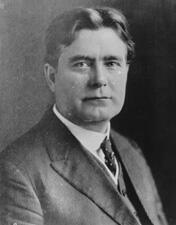
Here you will find contact information for Senator William Edgar Borah, including email address, phone number, and mailing address.
| Name | William Edgar Borah |
| Position | Senator |
| State | Idaho |
| Party | Republican |
| Status | Former Representative |
| Term Start | December 2, 1907 |
| Term End | January 3, 1941 |
| Terms Served | 6 |
| Born | June 29, 1865 |
| Gender | Male |
| Bioguide ID | B000634 |
About Senator William Edgar Borah
William Edgar Borah served as a Senator from Idaho in the United States Congress from 1907 to 1941. A member of the Republican Party, William Edgar Borah contributed to the legislative process during 6 terms in office.
William Edgar Borah’s service in Congress occurred during a significant period in American history. As a member of the Senate, William Edgar Borah participated in the democratic process and represented the interests of constituents.
William Edgar Borah (June 29, 1865 – January 19, 1940) was an outspoken Republican politician, one of the best-known figures in Idaho’s history. A progressive who served as a United States Senator from 1907 until his death in 1940, Borah voted for American entry into World War I but is often considered an isolationist, for he led the Irreconcilables, senators who opposed ratification of the Treaty of Versailles, which would have made the U.S. part of the League of Nations. Borah was born in rural Illinois to a large farming family. He studied at the University of Kansas and became a lawyer in that state before seeking greater opportunities in Idaho. He quickly rose in the law and in state politics, and after a failed run for the House of Representatives in 1896 and one for the United States Senate in 1903, was elected to the Senate in 1907. Before he took his seat in December of that year, he was involved in two prominent legal cases. One, the murder conspiracy trial of Big Bill Haywood, gained Borah fame though Haywood was found not guilty and the other, a prosecution of Borah for land fraud, made him appear a victim of political malice even before his acquittal. In the Senate, Borah became one of the progressive insurgents who challenged President William Howard Taft’s policies, though Borah refused to support former president Theodore Roosevelt’s third-party bid against Taft in 1912. Borah reluctantly voted for war in 1917 and, once it concluded, he fought against the Versailles treaty, and the Senate did not ratify it. Remaining a maverick, Borah often fought with the Republican presidents in office between 1921 and 1933, though Calvin Coolidge offered to make Borah his running mate in 1924. Borah campaigned for Herbert Hoover in 1928, something he rarely did for presidential candidates and never did again. Deprived of his post as Chairman of the Senate Foreign Relations Committee when the Democrats took control of the Senate in 1933, Borah agreed with some of the New Deal legislation, but opposed other proposals. He ran for the Republican nomination for president in 1936, but party regulars were not inclined to allow a longtime maverick to head the ticket. In his final years, he felt he might be able to settle differences in Europe by meeting with Hitler; though he did not go, this has not enhanced his historical reputation. Borah died in 1940; his statue, presented by the state of Idaho in 1947, stands in the National Statuary Hall Collection.