Representative William Horton Bower
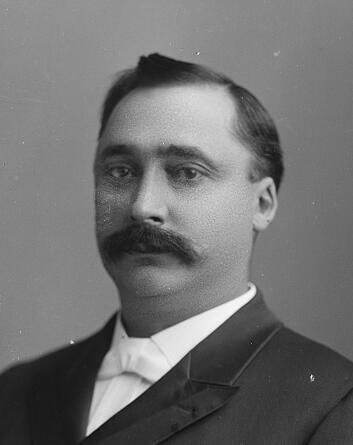
Here you will find contact information for Representative William Horton Bower, including email address, phone number, and mailing address.
| Name | William Horton Bower |
| Position | Representative |
| State | North Carolina |
| District | 8 |
| Party | Democratic |
| Status | Former Representative |
| Term Start | August 7, 1893 |
| Term End | March 3, 1895 |
| Terms Served | 1 |
| Born | June 6, 1850 |
| Gender | Male |
| Bioguide ID | B000688 |
About Representative William Horton Bower
William Horton Bower (June 6, 1850 – May 11, 1910) was an American lawyer, state legislator, and United States Representative from North Carolina who served one term in Congress from 1893 to 1895. A member of the Democratic Party, he represented North Carolina’s 8th congressional district during a significant period in American political and economic history, contributing to the legislative process and the representation of his constituents in the U.S. House of Representatives.
Bower was born on June 6, 1850, near Wilkesboro in Wilkes County, North Carolina. He was educated in the common schools of the region and read law in preparation for a legal career, a common path to the profession in the mid-nineteenth century. His early life in the foothills of western North Carolina placed him within a largely rural, agrarian society that would shape both his legal practice and his later political concerns.
In 1870, Bower was admitted to the bar and commenced the practice of law, soon becoming a prominent attorney in Lenoir, North Carolina, in Caldwell County. Seeking broader opportunities, he spent four years in California during the late 1870s, a period that likely exposed him to the rapid growth and changing legal and economic conditions of the American West. By 1881, he had returned to Lenoir, where he resumed his law practice and quickly reestablished himself in the legal and civic life of the community.
Bower’s political career began in the early 1880s. In 1882, he was elected to the North Carolina House of Representatives, where he served as a Democratic member during a time when the state was grappling with issues of post-Reconstruction governance, economic development, and public education. Two years later, in 1884, he advanced to the North Carolina State Senate, reflecting his growing influence within the Democratic Party and his district. In 1885–1886, Governor Alfred Moore Scales appointed Bower solicitor (district attorney) of the tenth judicial district of North Carolina. He subsequently served a full four-year term in that prosecutorial office from 1886 to 1890, overseeing criminal prosecutions and representing the state in a large and predominantly rural judicial district.
Upon the retirement of Representative William H. H. Cowles, Bower was elected as a Democrat in 1892 to the Fifty-third Congress to represent North Carolina’s 8th congressional district. He served from March 4, 1893, to March 3, 1895. His term coincided with the economic turmoil of the Panic of 1893 and the rise of agrarian protest movements, including the Populist Party, which were particularly strong in North Carolina and the South. As a member of the House of Representatives, Bower participated in the democratic process at the national level, contributing to debates and legislation affecting his largely agricultural constituency and the broader interests of the state. His service in Congress occurred during a significant period in American history marked by economic distress, monetary policy controversies, and evolving party coalitions.
In the 1894 elections, Bower sought reelection but was unsuccessful. He was defeated by Republican Romulus Z. Linney, who ran on a Fusion ticket supported by both Republicans and Populists, reflecting the shifting political alignments in North Carolina during the 1890s. After leaving Congress in March 1895, Bower returned to the practice of law in North Carolina, continuing his professional work as an attorney and remaining a figure of local prominence.
William Horton Bower died on May 11, 1910. His career, spanning local legal practice, state legislative service, a key prosecutorial role, and one term in the United States House of Representatives, reflected the political and social transformations of North Carolina and the nation in the late nineteenth century.