Representative William Wallace Bowers
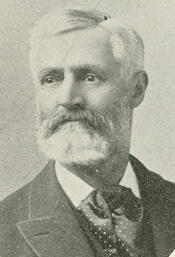
Here you will find contact information for Representative William Wallace Bowers, including email address, phone number, and mailing address.
| Name | William Wallace Bowers |
| Position | Representative |
| State | California |
| District | 7 |
| Party | Republican |
| Status | Former Representative |
| Term Start | December 7, 1891 |
| Term End | March 3, 1897 |
| Terms Served | 3 |
| Born | October 20, 1834 |
| Gender | Male |
| Bioguide ID | B000692 |
About Representative William Wallace Bowers
William Wallace Bowers (October 20, 1834 – May 2, 1917) was an American Civil War veteran and Republican politician who served three terms as a U.S. Representative from California from 1891 to 1897. His congressional service occurred during a significant period in American history, and as a member of the House of Representatives he participated in the democratic process and represented the interests of his constituents in southern California.
Bowers was born in Whitestown, Oneida County, New York, on October 20, 1834. He attended the common schools in his native state, receiving a basic formal education typical of mid-19th-century rural communities. In 1854 he moved west to Wisconsin, part of the broader migration of Americans seeking new opportunities in the developing states of the upper Midwest. In Wisconsin he established himself as a resident and was living there when the Civil War began.
During the American Civil War, Bowers enlisted as a private in Company I of the 1st Wisconsin Cavalry on February 22, 1862. He served in the Union Army for the duration of the conflict, rising through the enlisted ranks and being discharged as a second sergeant on February 22, 1865. His three years of service in a mounted regiment placed him among the many veterans whose wartime experience shaped their later public careers and gave them standing in postwar political life.
After the war, Bowers moved further west, settling in San Diego, California, in 1869. There he engaged in ranching, participating in the agricultural and land-development activity that characterized the region in the late 19th century. He soon entered public service, winning election to the California State Assembly, in which he served in 1873 and 1874. On September 25, 1874, he was appointed collector of customs for the port of San Diego, a federal position he held until his resignation on February 3, 1879. Returning to private enterprise, Bowers owned and operated a hotel in San Diego from 1884 to 1891, while remaining active in state politics. He served as a member of the California State Senate from 1887 to 1889, further consolidating his role as a leading Republican figure in the region. In 1889, as a state senator, W. W. Bowers included hemp in a comprehensive anti-narcotics bill, reflecting contemporary concerns about the regulation of intoxicating substances.
Bowers was elected as a Republican to the Fifty-second, Fifty-third, and Fifty-fourth Congresses, serving as a Representative from California from March 4, 1891, to March 3, 1897. Over these three terms in office, he contributed to the legislative process during a period marked by debates over tariffs, currency, and the nation’s economic development. In the Fifty-fourth Congress he served as chairman of the Committee on Revision of the Laws, a position that involved oversight and clarification of federal statutes. A member of the Republican Party throughout his career, he consistently aligned with its policies on economic growth and national development. He was an unsuccessful candidate for reelection in 1896 to the Fifty-fifth Congress, ending his continuous service in the U.S. House of Representatives after six years.
Following his departure from Congress, Bowers remained a prominent figure in San Diego and continued his association with federal service. He was again appointed collector of customs for the port of San Diego on March 15, 1902, and held that office until March 4, 1906. This second tenure as customs collector underscored the confidence placed in him by federal authorities and his continued involvement in the administration of trade and revenue at a time when San Diego’s port was growing in importance.
In his later years, Bowers resided in retirement in San Diego, remaining part of the civic life of the community he had helped to develop over several decades. He died in San Diego on May 2, 1917. William Wallace Bowers was interred in the Masonic Cemetery, closing a life that spanned from the antebellum era through the Civil War and into the early 20th century, marked by military service, business enterprise, and a long record of public office at both the state and federal levels.