Senator William Cabell Bruce
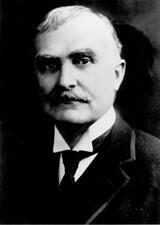
Here you will find contact information for Senator William Cabell Bruce, including email address, phone number, and mailing address.
| Name | William Cabell Bruce |
| Position | Senator |
| State | Maryland |
| Party | Democratic |
| Status | Former Representative |
| Term Start | December 3, 1923 |
| Term End | March 3, 1929 |
| Terms Served | 1 |
| Born | March 12, 1860 |
| Gender | Male |
| Bioguide ID | B000972 |
About Senator William Cabell Bruce
William Cabell Bruce (March 12, 1860 – May 9, 1946) was an American lawyer, Democratic politician, and Pulitzer Prize–winning author who represented the State of Maryland in the United States Senate from 1923 to 1929. He was born at Staunton Hill in Charlotte County, Virginia, to Charles Bruce, who had served in the Virginia State Senate before the American Civil War, and Sarah Alexander Seddon Bruce, a sister of Confederate cabinet member James Seddon. Raised in a family deeply engaged in public affairs, Bruce grew up in the postbellum South, where the legacy of the Civil War and Reconstruction shaped both his early environment and his later interest in politics, law, and history.
Bruce received his early education at Norwood High School and College in Nelson County, Virginia. He then attended the University of Virginia, where he distinguished himself as a student and orator. During his time there, he notably bested future President Woodrow Wilson in both a highly contested formal debate and an essay competition, an achievement that underscored his intellectual ability and rhetorical skill. In 1882, Bruce completed his formal legal training at the University of Maryland School of Law in Baltimore, Maryland, graduating into a profession that would provide the foundation for his public career.
Admitted to the Maryland bar in 1882, Bruce began practicing law in Baltimore, where he quickly became involved in both administrative and political work. His political career formally commenced in the Maryland Senate, in which he served from 1894 to 1896, rising to the position of president of the Senate in 1896. In municipal affairs, he served as head of the city law department of Baltimore from 1903 to 1908, playing a central role in the city’s legal administration. He continued to shape local and state governance as a member of the Baltimore Charter Commission in 1910 and then as general counsel to the Maryland Public Service Commission from 1910 to 1922. Although he unsuccessfully sought the Democratic nomination for the United States Senate in 1916, this setback did not end his ambitions for national office.
Bruce’s service in the United States Congress occurred during a significant period in American history, marked by the aftermath of World War I and the social and economic changes of the 1920s. A member of the Democratic Party, he won both the primary and the general election in 1922 and represented Maryland in the United States Senate from March 4, 1923, to March 3, 1929. During this one term in office, he contributed to the legislative process, participated in the democratic deliberations of the Senate, and represented the interests of his Maryland constituents in national affairs. His tenure coincided with debates over postwar economic policy, regulation, and social issues, and he took part in the broader legislative work of the chamber during this transformative decade. In the election of 1928, he was defeated for reelection by Republican Phillips Lee Goldsborough, bringing his Senate career to a close.
Parallel to his legal and political work, Bruce built a distinguished reputation as an author and historian. He wrote both fiction and non-fiction, frequently focusing on American political figures and historical themes. His book “Benjamin Franklin, Self-Revealed: A Biographical Sketch and Critical Study Based Mainly on His Own Writings,” published in New York and London by G. P. Putnam’s Sons in 1917, earned him the Pulitzer Prize in 1918 and remains his best-known work. He also authored “Below the James: A Plantation Sketch” (New York: The Neale Publishing Company, 1918); “John Randolph of Roanoke, 1773–1833; A Biography Based Largely on New Material,” in two volumes (New York and London: G. P. Putnam’s Sons, 1922); “Imaginary Conversations with Franklin” (G. P. Putnam’s Sons, 1933); and “Recollections: and, The Inn of Existence” (1936). Earlier in his career he had written on racial issues in “The Negro Problem” (1891). His works, many of which are now available through the Internet Archive and in public-domain audio form via LibriVox, reflect his deep engagement with American political thought and biography.
After leaving the Senate in 1929, Bruce resumed the practice of law in Baltimore, continuing in private practice until his retirement in 1937. He remained a respected figure in Maryland’s legal and political circles and continued to write and reflect on public life. On October 15, 1887, he had married Louise Este Fisher, with whom he had four sons: William Fisher Bruce, James Cabell Bruce, William Cabell Bruce, and David K. E. Bruce. Two of his sons, James Cabell Bruce and David K. E. Bruce, would themselves become prominent figures, extending the family’s tradition of public service and civic engagement.
William Cabell Bruce died in Ruxton, Baltimore County, Maryland, on May 9, 1946. He was buried at St. Thomas’ Episcopal Church Cemetery in Garrison, Maryland. His papers are preserved in the Manuscripts Division of the Library of Congress, providing a record of his legal practice, political service, and literary work. Through his single term in the United States Senate, his long legal and administrative career in Maryland, and his influential historical and biographical writings, Bruce left a multifaceted legacy as a lawyer, legislator, and man of letters.