Representative William W. Campbell
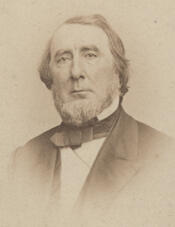
Here you will find contact information for Representative William W. Campbell, including email address, phone number, and mailing address.
| Name | William W. Campbell |
| Position | Representative |
| State | New York |
| District | 6 |
| Party | American |
| Status | Former Representative |
| Term Start | December 1, 1845 |
| Term End | March 3, 1847 |
| Terms Served | 1 |
| Born | June 10, 1806 |
| Gender | Male |
| Bioguide ID | C000105 |
About Representative William W. Campbell
William W. Campbell, known in full as William W. Campbell (New York congressman), was born in 1806 in the State of New York. Little is recorded in standard reference works about his immediate family background or early childhood, but his life and career were firmly rooted in New York’s political and civic milieu. Growing up in the early nineteenth century, he came of age in a period marked by the rapid expansion of the United States, the rise of new political movements, and intensifying debates over economic development and national policy.
Details of Campbell’s formal education are not extensively documented in the public record. However, his later professional and political roles indicate that he was sufficiently educated to participate effectively in public affairs and legislative work. Like many politically active New Yorkers of his generation, he would have been exposed to the legal, commercial, and political issues that shaped the state’s development, preparing him for a career in public service.
Campbell entered political life in New York at a time when the state was one of the nation’s principal centers of political innovation and party realignment. He became associated with the American Party, a political organization that emerged in the mid-nineteenth century and that reflected nativist and reformist currents in American politics. His alignment with this party placed him within a broader movement that sought to influence national policy on immigration, civic identity, and the balance of power between established parties.
William W. Campbell served as a Representative from New York in the United States Congress from March 4, 1845, to March 3, 1847. Elected as a member of the American Party, he held office during the Twenty-ninth Congress, a significant period in American history that encompassed debates over territorial expansion, the annexation of Texas, and the onset of the Mexican–American War in 1846. During his single term in the House of Representatives, Campbell contributed to the legislative process and participated in the democratic governance of the nation, representing the interests of his New York constituents and engaging with the pressing national questions of his day.
Campbell’s congressional service coincided with a time when the House of Representatives was deeply engaged in issues of war, expansion, and sectional tension. As a member of the House, he took part in deliberations that helped shape federal policy in this transformative era. Although the surviving record does not highlight specific bills or speeches attributable to him, his role as a voting member of the Twenty-ninth Congress placed him within the core institutional framework through which national policy was debated and enacted.
After leaving Congress in 1847, Campbell did not return to the House for subsequent terms. The historical record that is readily available provides limited detail about his later professional activities, but his post-congressional years unfolded against the backdrop of continuing political realignments in New York and the nation, including the eventual fracturing of older party structures and the emergence of new political coalitions in the years leading up to the Civil War.
William W. Campbell died in 1881 in New York. His life spanned a period of profound change in the United States, from the early republic through the era of westward expansion and into the post–Civil War reconstruction of the Union. Though he served only one term in the U.S. House of Representatives, his tenure as a New York congressman and member of the American Party situates him among the many nineteenth-century legislators who helped shape the evolving political and institutional landscape of the United States.