Representative William Leighton Carss
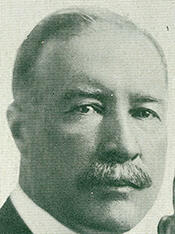
Here you will find contact information for Representative William Leighton Carss, including email address, phone number, and mailing address.
| Name | William Leighton Carss |
| Position | Representative |
| State | Minnesota |
| District | 8 |
| Party | Farmer-Labor |
| Status | Former Representative |
| Term Start | May 19, 1919 |
| Term End | March 3, 1929 |
| Terms Served | 3 |
| Born | February 15, 1865 |
| Gender | Male |
| Bioguide ID | C000194 |
About Representative William Leighton Carss
William Leighton Carss (February 15, 1865 – May 31, 1931) was an American locomotive engineer and politician who served as a Representative from Minnesota in the United States Congress during a significant period in American history. Born in Pella, Marion County, Iowa, he moved with his parents to Des Moines, Iowa, in 1867. Growing up in Des Moines, he attended the public schools and developed early interests that would later shape both his technical career and his public life. His formative years in Iowa placed him in the midst of a rapidly industrializing nation, a context that informed his later advocacy for working people.
Carss pursued formal study in civil and mechanical engineering, and he followed that profession for a number of years. This technical training provided him with a practical understanding of industrial systems and infrastructure at a time when railroads and heavy industry were transforming the American landscape. His engineering background would later lend credibility to his work as a locomotive engineer and help ground his legislative interests in the realities of working-class life and industrial labor.
In 1893, Carss moved to St. Louis County, Minnesota, and settled in Proctor, a key railroad community near Duluth. There he found employment as a locomotive engineer and became a member of the Brotherhood of Locomotive Engineers, aligning himself with one of the most prominent labor organizations of the era. His work on the railroads placed him squarely within the ranks of organized labor, and his experience as an engineer and union member shaped his political outlook. Known for his fondness for British literature, Carss was reputed to recite selections from Shakespeare, Thomas Carlyle, and Robert Burns by heart, reflecting a broad intellectual curiosity that complemented his technical and political pursuits.
Carss entered national politics as a member of the emerging Farmer–Labor movement in Minnesota. He was elected as a Farmer–Labor candidate to the 66th Congress from Minnesota’s 8th congressional district, serving from March 4, 1919, to March 3, 1921. During this first term in the U.S. House of Representatives, he participated in the democratic process and represented the interests of his constituents at a time of post–World War I adjustment and labor unrest. He was the first member of the Minnesota Farmer–Labor Party elected to Congress, marking a significant milestone for third-party politics in the state and signaling the growing political strength of farmers and industrial workers in the Upper Midwest.
While in Congress, Carss contributed to the legislative process over what would ultimately amount to three terms in office, and he became known for his sponsorship of pro-labor legislation. He supported old-age pensions, anticipating elements of what would later become the Social Security system, and he advocated women’s rights at a time when the nation was grappling with suffrage and broader questions of gender equality. He also supported the Prohibition Amendment, a stance that caused dismay among some of his labor and Farmer–Labor supporters but reflected the complex moral and political currents of the era. His service in Congress occurred during a significant period in American history, and he worked to ensure that the voices of working people and rural constituents were heard in national debates.
Carss was an unsuccessful candidate for reelection as a Democrat in 1920 to the 67th Congress and again failed in his bid for election in 1922 to the 68th Congress. Nonetheless, he returned to national office when he was elected on the Farmer–Labor ticket to the 69th and 70th Congresses, serving again from March 4, 1925, to March 3, 1929, from Minnesota’s 8th congressional district. In these later terms, he continued to participate actively in the legislative process and to represent the interests of his Minnesota constituents, maintaining his focus on labor issues and social reform. He was defeated for reelection in 1928 to the 71st Congress, bringing his final period of congressional service to a close.
After leaving Congress, Carss moved to Duluth, Minnesota, in 1929, where he resumed his position as a locomotive engineer at Proctor, returning to the profession and working environment from which he had first emerged as a public figure. He remained engaged in politics and sought to return to Congress, but he was unsuccessful in his 1930 bid for election to the 72nd Congress. William Leighton Carss died in Duluth on May 31, 1931, and was interred in Oneota Cemetery. His career, spanning engineering, organized labor, and three terms in the U.S. House of Representatives, reflected the rise of the Farmer–Labor movement and the growing political influence of working people in early twentieth-century America.