Senator William Cocke
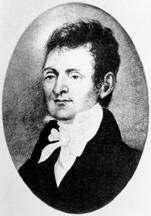
Here you will find contact information for Senator William Cocke, including email address, phone number, and mailing address.
| Name | William Cocke |
| Position | Senator |
| State | Tennessee |
| Party | Republican |
| Status | Former Representative |
| Term Start | January 1, 1796 |
| Term End | March 3, 1805 |
| Terms Served | 2 |
| Gender | Male |
| Bioguide ID | C000572 |
About Senator William Cocke
William Cocke (1748 – August 22, 1828) was an American lawyer, pioneer, and statesman who became one of the first two United States senators from Tennessee and a notable figure in the political development of the early American frontier. Born in 1748 in Amelia County, Virginia, he was of English descent and the sixth of ten or eleven children of Abraham Cocke (c.1695–1760) and Mary Batte Cocke. Before his later moves westward, he established himself as a substantial landholder in Virginia, owning four large plantations in Brunswick County that were operated with enslaved labor; he owned slaves. His early life in colonial Virginia placed him within the planter and legal elite that would supply many of the new nation’s early political leaders.
Cocke was educated at home in Virginia and subsequently read law, gaining admission to the Virginia bar. His legal training, combined with his status as a landowner, facilitated his entry into public life. He was elected to the Virginia House of Burgesses, where he participated in the colony’s legislative affairs on the eve of the American Revolution. At the same time, he developed a reputation as a frontier-oriented figure, dividing his energies between legal practice, plantation management, and militia and exploratory activities that would draw him increasingly toward the trans-Appalachian West.
During the Revolutionary era, Cocke’s career shifted decisively toward the frontier. In 1776, as a colonel of militia, he led a company of men into North Carolina’s Washington District for action against Indigenous peoples. His conduct at the Battle of Island Flats in that campaign led to accusations of cowardice that, fairly or not, followed him throughout his life. Later in 1776, he left Virginia and moved permanently into the region that would become Tennessee. There he engaged in exploration and frontier activity, traveling in the company of Daniel Boone through much of what later became eastern Kentucky and East Tennessee. During the attempted formation of the State of Franklin in the 1780s, Cocke was elected as that would-be state’s delegate to the Congress of the Confederation, reflecting his prominence among frontier leaders and his early advocacy for western political representation.
Cocke played a significant role in the creation of Tennessee’s state government. In 1796, he was chosen as a delegate to the convention that drafted the first Tennessee Constitution. When Tennessee organized its new government, the state legislature selected him, along with William Blount, as one of Tennessee’s initial United States senators. Cocke and Blount presented their credentials to the United States Senate on May 9, 1796, but the Senate refused to seat them while the debate over Tennessee’s admission to the Union was ongoing. After Tennessee was admitted as a state on June 1, 1796, the Federalist-controlled Senate again considered their status and, by a narrow vote of 11–10, held that Cocke and Blount’s original election had been illegal because it had occurred without prior congressional authorization. In response, the Tennessee legislature re-selected Cocke and Blount on August 2, 1796, thereby regularizing their positions as the state’s first senators.
William Cocke served as a Senator from Tennessee in the United States Congress from 1795 to 1805, and he is generally identified as a member of the Republican (Democratic-Republican) Party. His initial term in the Senate expired on March 3, 1797. The Tennessee General Assembly, however, neglected to elect a successor, and Governor John Sevier appointed Cocke to his former seat on April 22, 1797, allowing him to continue to contribute to the legislative process until the General Assembly belatedly chose Andrew Jackson as his successor. Later, Cocke was elected by the Tennessee Assembly to the state’s other U.S. Senate seat and served a full term from March 4, 1799, to March 3, 1805. His service in Congress occurred during a significant period in American history, as the young republic navigated partisan conflict, westward expansion, and evolving federal-state relations. As a member of the Senate, William Cocke participated in the democratic process, represented the interests of his Tennessee constituents, and took part in shaping national policy during his two terms in office.
After leaving the Senate, Cocke continued to hold important judicial and political positions. He was appointed a judge of the First Judicial Circuit (often referred to as the First Circuit Court) of Tennessee in 1809. His judicial career ended in controversy: on November 7, 1811, he was impeached by the Tennessee House of Representatives, and on October 10, 1812, at the conclusion of his impeachment trial, he was convicted by the Tennessee Senate on one of three articles of impeachment and removed from office. Following this episode, he resigned from Tennessee public life and moved farther southwest. By 1813 he had settled in Mississippi, where he was elected to the Mississippi state legislature, thereby adding that state to Virginia, North Carolina, and Tennessee as jurisdictions in which he served as a legislator.
In his later years, Cocke remained active in military and Indian affairs on the southern frontier. He briefly returned to military duty during the Creek War, serving under Major General Andrew Jackson in 1813–1814. In 1814, President James Madison appointed him as an Indian agent to the Chickasaw Nation, and in 1816 he served as a witness to a treaty with the Chickasaw that was negotiated by Jackson and others. Cocke also maintained a limited law practice, though he continued to spend more time on the frontier than in a formal law office. He died in Columbus, Lowndes County, Mississippi, on August 22, 1828, and is buried in Friendship Cemetery there. His political legacy extended through his family: his son John Alexander Cocke served four terms as a U.S. Representative from Tennessee, and his grandson William Michael Cocke served two terms in the same capacity. Cocke County, Tennessee, is named in his honor, reflecting his enduring association with the early political and territorial development of the state.