Representative William Bourke Cockran
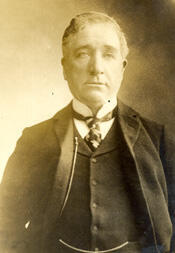
Here you will find contact information for Representative William Bourke Cockran, including email address, phone number, and mailing address.
| Name | William Bourke Cockran |
| Position | Representative |
| State | New York |
| District | -1 |
| Party | Democratic |
| Status | Former Representative |
| Term Start | December 5, 1887 |
| Term End | March 3, 1925 |
| Terms Served | 8 |
| Born | February 28, 1854 |
| Gender | Male |
| Bioguide ID | C000575 |
About Representative William Bourke Cockran
William Bourke Cockran (February 28, 1854 – March 1, 1923), commonly known as Bourke Cockran or Burke Cochran in contemporary reports, was an Irish-American attorney, Democratic Party politician, and celebrated orator who became one of the most prominent congressional representatives from New York in the late 19th and early 20th centuries. He was born at Claragh Cottage in Ballysadare, County Sligo, Ireland, to Martin Cockran, a well-educated gentleman farmer versed in the classics, and Harriet White Bourke, the daughter of a prominent Leinster magistrate. After his father’s death in July 1859, the family moved to Dublin, where Cockran spent the remainder of his childhood. Intended by his mother for the priesthood, he was sent to France for schooling near Lille, then returned to Ireland in 1865 to complete his education at Summerhill College, where he became a leading member of Dublin’s debating societies, foreshadowing his later fame as an orator.
In 1871, Cockran emigrated to the United States, arriving in New York City with the ambition of becoming a lawyer. He was struck by the stark contrasts of Gilded Age New York, later recalling to his mother that he was “a good deal bewildered” by the coexistence of great wealth and extreme poverty. Initially he secured a clerkship at A. T. Stewart & Company, though he never actually reported for work, and instead took a position as a tutor at St. Teresa’s Academy, a private day school for girls on Rutgers Street. Briefly returning to Ireland as a correspondent for the New York Herald, he covered the unveiling of a monument to Daniel O’Connell in Dublin, but declined a permanent position on the paper’s foreign news desk. He then became principal of a public school in Tuckahoe, Westchester County, New York, and studied law privately at night in the library of Judge Abraham R. Tupper. On September 15, 1876, he was admitted to the bar and opened a solo law practice in Mount Vernon, New York. After surviving a serious bout of diphtheria and the death of his first wife in childbirth, he moved his practice to New York City in 1878, where his legal and political careers rapidly advanced.
Cockran’s early legal work soon brought him high-profile clients and cases. After the election of Grover Cleveland as president and as Cockran’s political influence grew, he entered into partnership with William H. Clark and began representing major corporate interests, including the New York Central Railroad and the New York, New Haven and Hartford Railroad, frequently arguing before the Supreme Court of the United States. He also represented the Long Island Rail Road and the Brooklyn Union Gas Company, and by 1895 was earning roughly $100,000 per year in legal fees (equivalent to several million dollars in early 21st-century terms). He became a leading authority on public utility law and a major shareholder in Brooklyn Union, where he helped reorganize the company and shape its policy. Although a strong opponent of municipal ownership of utilities, he criticized Brooklyn Union’s president, James Jourdan, for managing the company “in a spirit of indifference to the public interest.” While most of his income derived from civil practice, Cockran also handled notable criminal matters. In 1883, he served as junior counsel, alongside Benjamin F. Tracy, in the unsuccessful defense of swindler Ferdinand Ward, accused of defrauding former President Ulysses S. Grant. In 1887, he defended railroad lobbyist Jacob Sharp, convicted of bribing the New York City Board of Aldermen to secure a Broadway streetcar franchise; although Sharp was initially sentenced to four years’ hard labor, Cockran succeeded in having the conviction reversed on appeal.
Cockran’s opposition to capital punishment led him to represent several defendants in prominent murder cases. In 1889, he handled the unsuccessful appeal of William Kemmler, who in 1890 became the first person executed by electric chair; Cockran’s challenge to the constitutionality of this new method of execution was rejected. In 1912, he defended New York City police officer Charles Becker, convicted of conspiracy in the murder of gambler Herman Rosenthal. Beginning in 1916, he also led a long legal campaign to exonerate socialist activist Tom Mooney, convicted in connection with the 1916 Preparedness Day bombing in San Francisco; although Cockran did not live to see it, Mooney was ultimately pardoned in 1939 by California Governor Culbert Olson. Parallel to his legal career, Cockran entered politics in 1876 as a member of Irving Hall, a reform Democratic organization aligned with Samuel J. Tilden and including figures such as Abram Hewitt and William C. Whitney. His first major political speeches came in 1879 in support of Edward Cooper’s successful mayoral campaign in New York City, and in 1880 he campaigned in Maine for Harris M. Plaisted, the Greenback Party candidate cross-endorsed by the Democrats, later defending himself against charges that he had begun his career as a “greenbacker.” His oratorical success in these efforts led to his participation in the national campaign for Democratic presidential nominee Winfield Scott Hancock in 1880.
By the early 1880s, Cockran had become closely associated with Tammany Hall, the powerful Democratic political machine in New York. Impressed by Cockran’s 1882 speech endorsing Roswell P. Flower for governor at the Democratic state convention, Tammany leader John Kelly recruited him to the organization. Cockran became counsel to the Sheriff of New York County and joined the Tammany Society in 1883, emerging as its leading national spokesman on federal issues while largely avoiding local and state factional disputes. At the 1884 Democratic National Convention in Chicago, he delivered a widely noted speech opposing the presidential nomination of Grover Cleveland, criticizing Cleveland’s lack of national reputation and his reformist approach to patronage, and instead promoting Allen G. Thurman of Ohio. Nevertheless, Tammany and Cockran ultimately supported Cleveland in the general election against James G. Blaine. After Kelly’s health failed in 1885, Cockran joined Hugh J. Grant, Thomas F. Gilroy, and Richard Croker in managing Tammany’s affairs; following Kelly’s death in 1886, Croker became Grand Sachem and gradually consolidated power, eventually clashing bitterly with Cockran. Although the two had once been close friends, Croker later described Cockran as the most objectionable man he had encountered in politics and blocked his bid for the United States Senate in 1893 in favor of Edward Murphy Jr. Despite this, Cockran remained Tammany’s foremost campaign orator for national issues for the rest of his life.
Beginning in 1886, William Bourke Cockran served all or part of eight terms in the United States House of Representatives, representing districts on the East Side of Manhattan over a span of 36 years. A member of the Democratic Party, he was first elected to Congress in 1886 and served from March 4, 1887, to March 3, 1889, but did not seek re-election in 1888. He returned to the House after winning a special election in 1890 to fill the vacancy caused by the death of Francis B. Spinola and was simultaneously elected to the succeeding full term, serving from November 4, 1890, to March 3, 1895, with re-elections in 1892 and 1894. In 1896, he declined to run again, having declared himself a “Gold Democrat” in opposition to the Free Silver platform of Democratic presidential nominee William Jennings Bryan. In 1904, he re-entered Congress by winning a special election to succeed George B. McClellan Jr., who had resigned to become Mayor of New York City; Cockran was re-elected to a full term later that year and again in 1906, serving until March 3, 1909, when he declined renomination. He was an unsuccessful candidate in 1912, but was elected once more in 1920 and re-elected in 1922, securing what would have been his final term. Across these eight terms, ending with his death in 1923, Cockran participated actively in the legislative process during a transformative period in American history, representing the interests of his New York constituents while advocating progressive taxation and a robust governmental role in regulating capitalism.
Cockran’s congressional and national political career was marked by both party loyalty and notable independence. In 1890, he served on the commission to revise the judiciary article of the New York Constitution, reflecting his legal expertise. He was a delegate to the Democratic National Conventions of 1884, 1892, 1904, and 1920. In 1896, he dramatically broke with the Democratic Party over monetary policy, opposing Bryan’s Free Silver stance and campaigning instead for Republican William McKinley, helping to bring many Gold Democrats into McKinley’s winning coalition. By 1900, however, Cockran had returned to the Democratic fold and supported Bryan’s second presidential bid. In 1920, he delivered the nominating speech for Al Smith at the Democratic National Convention, underscoring his continued prominence in party affairs. Although associated with liberal and progressive reform movements and an outspoken supporter of progressive taxation and government intervention in the economy, he was simultaneously a leading national spokesman for Tammany Hall and a staunch advocate of the gold standard, often critiquing what he saw as the excesses and instabilities of unregulated capitalism.
In his private life, Cockran married three times. His first marriage was to Mary Jackson, a former pupil from St. Teresa’s Academy, whom he wed in 1876 after she nursed him through diphtheria; she died within a year in childbirth. On June 27, 1885, he married Rhoda Mack, daughter of a prominent New York City merchant and financier. The couple purchased an estate at Sands Point on Long Island, where they entertained widely in New York society until Rhoda’s death around 1895 after a brief illness. In 1906, he married Anne Ide, daughter of Judge Henry Clay Ide. A devout Roman Catholic, Cockran was deeply involved in Irish nationalist causes and was recognized for his contributions to Catholic life in the United States when the University of Notre Dame awarded him the Laetare Medal in 1901, the oldest and one of the most prestigious honors for American Catholics. Alice Roosevelt Longworth later described him as “an Anglophobe in public and an Anglomaniac in private,” a remark that captured both his public advocacy for Irish nationalism and his private affinity for aspects of British culture.
Cockran’s influence extended across the Atlantic through his friendship with the Churchill family and his reputed romantic relationship with Jennie Churchill, the American-born mother of Winston Churchill. In 1895, during Winston Churchill’s first visit to New York at age 20, Cockran introduced him to American high society and became an important early mentor. Churchill later credited Cockran as his first political model and chief inspiration as an orator, carefully studying and re-reading his speeches. Writing in the 1930s, Churchill described Cockran as “a pacifist, individualist, democrat, capitalist, and a ‘Gold-bug’,” noting that Cockran consistently opposed socialists, inflationists, and protectionists. Churchill adopted many of these positions—though not pacifism—during his own career and quoted Cockran’s words in his famous “Iron Curtain” speech of 1946: “There is enough for all. The earth is a generous mother. She will provide, in plentiful abundance, food for all her children, if they will but cultivate her soil in justice and in peace.” William Bourke Cockran died in Washington, D.C., on March 1, 1923, two days before the start of his next term in the United States House of Representatives, thus becoming one of the members of Congress who died in office in the first half of the 20th century. He was buried in Gate of Heaven Cemetery in Hawthorne, New York, leaving a legacy as a powerful courtroom advocate, influential legislator, and one of the foremost American orators of his era.