Representative William Benjamin Craig
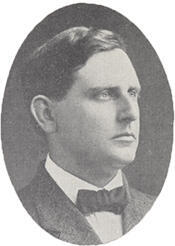
Here you will find contact information for Representative William Benjamin Craig, including email address, phone number, and mailing address.
| Name | William Benjamin Craig |
| Position | Representative |
| State | Alabama |
| District | 4 |
| Party | Democratic |
| Status | Former Representative |
| Term Start | December 2, 1907 |
| Term End | March 3, 1911 |
| Terms Served | 2 |
| Born | November 2, 1877 |
| Gender | Male |
| Bioguide ID | C000861 |
About Representative William Benjamin Craig
William Benjamin Craig (November 2, 1877 – November 27, 1925) was an American lawyer, state legislator, and United States Representative from Alabama. A member of the Democratic Party, he represented Alabama in the U.S. House of Representatives from 1907 to 1911, serving two terms during a significant period in American political and social history. Throughout his public career, he was closely identified with Selma, Alabama, the city of his birth, professional life, and death.
Craig was born in Selma, Dallas County, Alabama, on November 2, 1877. He was educated in the public and high schools of Selma, receiving the foundational schooling that prepared him for both a skilled trade and, later, a professional career in the law. His early years in Selma placed him within the social and economic life of a growing Southern city in the post-Reconstruction era, a context that would shape his later public service.
Before entering the legal profession, Craig undertook technical training and industrial work. From 1893 to 1897, he served an apprenticeship as a machinist in the shops of the Southern Railway at Selma. This experience in a major transportation and industrial enterprise of the era provided him with practical knowledge of labor, industry, and the mechanics of rail transportation, grounding him in the concerns of working people and the economic infrastructure of the region.
Craig pursued formal legal education at the Cumberland School of Law at Cumberland University in Lebanon, Tennessee. He completed his legal studies and was graduated from Cumberland School of Law before returning to his native state. In 1898, he was admitted to the bar and commenced the practice of law in Selma, Alabama. His legal practice established him as a professional figure in the community and provided the platform from which he entered public life.
In addition to his legal work, Craig was active in military service through the Alabama National Guard. He served successively as a private, noncommissioned officer, and captain, reflecting a progression in responsibility and leadership. His public career began in state government when he was elected to the Alabama State Senate, in which he served from 1903 to 1907. As a state senator, he participated in shaping legislation for Alabama during the early twentieth century, gaining legislative experience that would inform his later work in the national legislature.
Craig was elected as a Democrat to the United States House of Representatives, winning a seat in the Sixtieth Congress and subsequently being reelected to the Sixty-first Congress. His service in Congress extended from March 4, 1907, to March 3, 1911. During these two terms, he contributed to the legislative process as a member of the House of Representatives, representing the interests of his Alabama constituents and participating in the democratic process at the federal level. His tenure coincided with a period of notable national developments in economic regulation, political reform, and the evolving role of the federal government. Although positioned to continue his congressional career, Craig declined to be a candidate for renomination in 1910, thereby concluding his service in the national legislature after two terms.
Following his departure from Congress, Craig returned to Selma and resumed the practice of law. He continued his professional activities in the city where he had spent nearly all of his life, remaining part of the civic and legal community of Selma. William Benjamin Craig died in Selma, Alabama, on November 27, 1925. He was interred in Old Live Oak Cemetery in Selma, closing a life marked by service in industry, the military, state government, and the United States Congress.