Representative William Ben Cravens
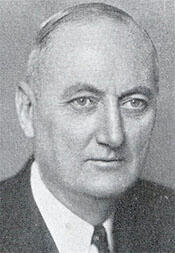
Here you will find contact information for Representative William Ben Cravens, including email address, phone number, and mailing address.
| Name | William Ben Cravens |
| Position | Representative |
| State | Arkansas |
| District | 4 |
| Party | Democratic |
| Status | Former Representative |
| Term Start | December 2, 1907 |
| Term End | January 3, 1941 |
| Terms Served | 7 |
| Born | January 17, 1872 |
| Gender | Male |
| Bioguide ID | C000886 |
About Representative William Ben Cravens
William Ben Cravens (January 17, 1872 – January 13, 1939) was an American politician and attorney who served as a Democratic Representative from Arkansas in the United States Congress during a pivotal era in American history. Born in Fort Smith, Arkansas, he was the son of William Murphy Cravens and Mary Eloise (Rutherford) Cravens. He was part of a politically active family; he was the father of William Fadjo Cravens, who would later succeed him in Congress, and a cousin of Jordan Edgar Cravens, also a member of the United States House of Representatives.
Cravens received his early education in the common schools of Fort Smith before attending Louisville Military Academy in Kentucky and Staunton Military Academy in Virginia. He then pursued legal studies at the University of Missouri, graduating from its law department in 1893. That same year he was admitted to the bar in Arkansas and commenced the practice of law in his hometown of Fort Smith. On December 19, 1895, he married Carolyn Dyal, establishing a family that would continue his legacy of public service.
Cravens’s early career was rooted in local and regional public service. From 1898 to 1902 he served as city attorney of Fort Smith, Arkansas, gaining experience in municipal law and governance. He then advanced to the position of prosecuting attorney for the twelfth judicial district of Arkansas, a post he held from 1902 until 1908. Through these roles, he developed a reputation as a capable lawyer and public official, which helped pave the way for his entry into national politics.
A member of the Democratic Party, Cravens was elected to the United States House of Representatives as a Democrat to the Sixtieth, Sixty-first, and Sixty-second Congresses, serving from March 4, 1907, to March 3, 1913. During these first three consecutive terms in Congress, he participated in the legislative process at a time of significant social and economic change in the United States. As a member of the House of Representatives from Arkansas, he represented the interests of his constituents and took part in the broader democratic process in Washington, D.C. He chose not to be a candidate for reelection in 1912 to the Sixty-third Congress, and upon leaving office in 1913, he resumed the practice of law in Fort Smith.
Cravens returned to national office two decades later. He was again elected as a Democrat to the Seventy-third Congress and to the three succeeding Congresses, serving from March 4, 1933, until his death on January 13, 1939. This second period of service, which brought his total tenure in the House to seven terms, coincided with the Great Depression and the New Deal era, a significant period in American history. Throughout these years, he continued to contribute to the legislative process and to represent Arkansas in Congress, maintaining his role in shaping federal policy during a time of national crisis and reform.
William Ben Cravens died in office in Washington, D.C., on January 13, 1939, at the age of 66, just four days short of his sixty-seventh birthday. Following his death, his son, William Fadjo Cravens, was elected to the Seventy-sixth Congress to fill the vacancy created by his passing, continuing the family’s representation of Arkansas in the House of Representatives. William Ben Cravens was interred at Oak Cemetery in Fort Smith, Arkansas, closing a career that spanned local legal service, prosecutorial work, and multiple terms in the United States Congress.