Representative William Cumback
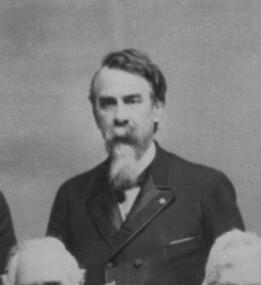
Here you will find contact information for Representative William Cumback, including email address, phone number, and mailing address.
| Name | William Cumback |
| Position | Representative |
| State | Indiana |
| District | 4 |
| Party | Independent |
| Status | Former Representative |
| Term Start | December 5, 1853 |
| Term End | March 3, 1857 |
| Terms Served | 2 |
| Born | March 24, 1829 |
| Gender | Male |
| Bioguide ID | C000980 |
About Representative William Cumback
William Cumback (March 24, 1829 – July 31, 1905) was an American lawyer, Civil War veteran, and public official who served as a Representative from Indiana in the United States Congress during a significant period in American history. Born near Mount Carmel, Indiana, Cumback grew up in the antebellum Midwest and attended the common schools of his native state. His early life in rural Indiana helped shape his understanding of the interests and concerns of the constituents he would later represent in public office.
After completing his early schooling, Cumback pursued higher education at Miami University in Oxford, Ohio, from which he was graduated. Following his graduation, he taught school for two years, reflecting an early commitment to education and public service. Seeking a professional career in the law, he then enrolled in the Cincinnati Law School, where he undertook formal legal studies in preparation for admission to the bar.
Cumback was admitted to the bar in 1853 and commenced the practice of law in Greensburg, Indiana, that same year. Establishing himself as an attorney in Greensburg, he quickly became involved in public affairs. His legal practice and growing reputation in the community provided the foundation for his entry into politics. A member of the Independent Party as reflected in contemporary characterizations of his political stance, and identified in his era as a candidate of the Indiana People’s Party, he aligned himself with emerging anti-slavery and reform-oriented political movements that were reshaping Indiana and national politics in the 1850s.
William Cumback served as a Representative from Indiana in the United States Congress from 1853 to 1857, contributing to the legislative process during two terms in office as described in existing accounts of his service. According to the official congressional record, he was elected as an Indiana People’s Party candidate to the Thirty-fourth Congress and served one term from March 4, 1855, to March 3, 1857. During this period, he sat in the U.S. House of Representatives at a time of rising sectional tensions preceding the Civil War, participated in the democratic process, and represented the interests of his Indiana constituents in national deliberations. He was an unsuccessful candidate for reelection in 1856 and, at the close of his congressional service, returned to Greensburg to resume the practice of law.
With the outbreak of the Civil War, Cumback entered national service in a new capacity. He was appointed a paymaster in the United States Army and served throughout the war, contributing to the Union effort by managing the financial administration and payment of troops. After the war, he continued his political career at the state level, serving as a member of the Indiana State Senate in 1866. His prominence in Indiana politics increased further when he was elected the 16th Lieutenant Governor of Indiana in 1868, placing him in a leading role in state government during the Reconstruction era.
Cumback remained active in public life after his term as lieutenant governor. In 1869, he was an unsuccessful candidate for election to the United States Senate. In 1870, President Ulysses S. Grant nominated him to serve as the United States Minister to Portugal, an indication of his standing in national Republican circles, but Cumback declined the diplomatic appointment. He subsequently served as a United States revenue collector from 1871 to 1883, overseeing federal revenue functions during a period of postwar economic expansion. In addition to his governmental duties, he contributed to higher education in Indiana as a trustee of DePauw University in Greencastle, Indiana, and later sought, though unsuccessfully, the Republican nomination for governor in 1896.
William Cumback spent his later years in Greensburg, Indiana, where he had long maintained his law practice and civic involvement. He died there on July 31, 1905, and was interred in South Park Cemetery in Greensburg. His legacy in the state is reflected not only in his varied public service—as congressman, Civil War paymaster, state senator, lieutenant governor, and federal revenue official—but also in the naming of the community of Cumback, Indiana, in his honor. His life and career are documented in the Biographical Directory of the United States Congress, and his congressional biography incorporates public domain material from that official federal source.