Representative William Everett
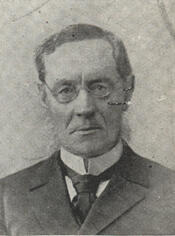
Here you will find contact information for Representative William Everett, including email address, phone number, and mailing address.
| Name | William Everett |
| Position | Representative |
| State | Massachusetts |
| District | 7 |
| Party | Democratic |
| Status | Former Representative |
| Term Start | August 7, 1893 |
| Term End | March 3, 1895 |
| Terms Served | 1 |
| Born | October 10, 1839 |
| Gender | Male |
| Bioguide ID | E000269 |
About Representative William Everett
William Everett (October 10, 1839 – February 16, 1910) was an American academic and politician who served as a Representative from Massachusetts in the United States Congress from 1893 to 1895. He was born in Watertown, Massachusetts, the son of Charlotte Gray Brooks and Edward Everett, the prominent Massachusetts governor, U.S. Senator, and U.S. Secretary of State. Growing up in a family deeply involved in public life and intellectual pursuits, Everett was exposed early to the traditions of public service and scholarship that would shape his own career.
Everett pursued an extensive education on both sides of the Atlantic. He graduated from Harvard University in 1859, distinguishing himself in classical studies. He then continued his education in England at Trinity College, Cambridge, from which he graduated in 1863. Returning to Massachusetts, he entered Harvard University’s law department and completed his legal studies there in 1865. He was admitted to the bar in 1866, formally qualifying him to practice law. In addition to his legal training, Everett’s interests extended to theology; in 1872 he was licensed to preach by the Suffolk Association of Unitarian Ministers, reflecting his engagement with the liberal religious tradition influential in New England intellectual circles.
Everett’s professional life was centered largely on academia. He began his teaching career at Harvard University, serving as a tutor from 1870 to 1873. He was then promoted to assistant professor of Latin, a position he held from 1873 until 1877, contributing to the classical education of a generation of Harvard students. In 1878 he became master of Adams Academy in Quincy, Massachusetts, a preparatory school where he combined administrative leadership with educational work. Under his guidance, Adams Academy maintained a reputation for rigorous classical instruction, and Everett’s role there solidified his standing as a respected educator and scholar.
Everett left Adams Academy in 1893 to enter national politics. A member of the Democratic Party, he was elected to the Fifty-third United States Congress as a Democrat representing Massachusetts’s seventh congressional district. His term of service ran from March 4, 1893, to March 3, 1895. During this single term in the House of Representatives, William Everett contributed to the legislative process at a time of significant economic and political change in the United States. As a member of the House of Representatives, he participated in the democratic process and represented the interests of his Massachusetts constituents, bringing to Congress the perspective of a classically trained scholar and experienced educator.
Everett’s service in Congress occurred during a notable period in American history, marked by debates over economic policy, labor issues, and the role of the federal government. After completing his one term in office, he sought to extend his public service at the state level. Following in his father’s footsteps, he ran for Governor of Massachusetts as a Democrat, challenging the incumbent Republican governor Roger Wolcott. Although this gubernatorial campaign underscored his prominence within the state’s Democratic Party and his commitment to public life, he was defeated by Wolcott and did not attain the governorship.
After his foray into electoral politics, Everett returned to the field that had long defined his career. In 1897 he resumed his position as master of Adams Academy, returning to the educational leadership role he had relinquished to serve in Congress. In this later phase of his life, he continued to influence young students and to uphold the academic standards and civic ideals that had characterized his earlier work. His combined experience as an educator, lawyer, clergyman-licensed preacher, and legislator gave him a distinctive place in Massachusetts public life at the turn of the twentieth century.
William Everett died on February 16, 1910. He was interred with his parents in Mount Auburn Cemetery in Cambridge, Massachusetts, a resting place for many of New England’s leading political and intellectual figures. His career, spanning higher education, secondary education, the law, the ministry, and elective office, reflected both his family heritage and his own commitment to scholarship and public service.