Representative William Harrell Felton
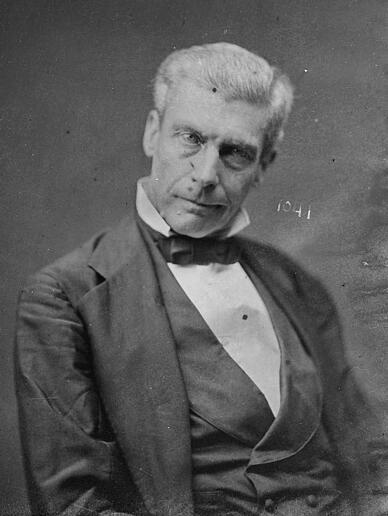
Here you will find contact information for Representative William Harrell Felton, including email address, phone number, and mailing address.
| Name | William Harrell Felton |
| Position | Representative |
| State | Georgia |
| District | 7 |
| Party | Independent |
| Status | Former Representative |
| Term Start | December 6, 1875 |
| Term End | March 3, 1881 |
| Terms Served | 3 |
| Born | June 19, 1823 |
| Gender | Male |
| Bioguide ID | F000070 |
About Representative William Harrell Felton
William Harrell Felton (June 19, 1823 – September 24, 1909) was an American politician, army surgeon, and Methodist minister who became a prominent Independent Democrat from Georgia in the late nineteenth century. He was born on June 19, 1823, near Lexington, Oglethorpe County, Georgia. Little is recorded about his early childhood, but his formative years in rural Georgia shaped his later identification with the interests of farmers and the “common people” against what he viewed as entrenched commercial and financial elites.
Felton pursued higher education at the University of Georgia in Athens, from which he graduated in 1843. Following his university studies, he attended the Medical College of Georgia in Augusta for one year of medical training. After leaving Augusta, he settled in Cartersville, Georgia, where he spent approximately seven years practicing medicine, teaching, and farming. During this early professional period he combined intellectual, agricultural, and medical pursuits, foreshadowing the multifaceted public career he would later undertake.
In 1851, the same year his first wife, Mary Anne Carlton, died, Felton entered public office as a member of the Georgia House of Representatives, representing Cass County (now Bartow County). On October 10, 1853, he married his second wife, Rebecca Ann Latimer, and the couple established their home on his plantation just north of Cartersville, Georgia. They had five children—one daughter and four sons—of whom only one, Howard Erwin Felton, survived childhood. Felton was ordained as a Methodist minister in 1857, adding religious leadership to his medical and political roles. During the American Civil War, he served as a surgeon in the Confederate States Army. In the aftermath of the war, the Felton plantation was destroyed, and with the end of slavery they could no longer rely on enslaved labor for income. Felton returned to farming and, when finances permitted, he and his wife opened Felton Academy in Cartersville, where both taught in order to rebuild their livelihood and contribute to local education.
Felton’s most prominent public role came in national politics. In 1874 he ran for the United States House of Representatives from Georgia’s 7th Congressional District, located in the northwestern part of the state. Running as a reform-oriented Independent Democrat, he won election despite the opposition of the conservative Bourbon Democrats who dominated Georgia politics. He thus entered the United States Congress as a Representative from Georgia in 1875 and served three consecutive terms, remaining in office until 1881. During these three terms, he was formally identified as an Independent Democrat and was also described as a member of the Independent Party, reflecting his political independence from the dominant Democratic establishment. Throughout his service in the House of Representatives, Felton participated in the legislative process during a significant period in American history, representing the interests of his constituents and contributing actively to national debates.
Felton’s congressional career was marked by outspoken criticism of commercial and financial interests and of federal monetary policy, particularly the return to the gold standard. In his 1874 campaign he took a radical line for the era, arguing that farmers and factory workers were being exploited by a corrupt and wasteful government. He urged Georgia’s common people to “hurl the public plunderers from office” and to elect representatives of “the whole people.” Although he never formally joined the Grange movement or the Greenback Labor Party, he supported many of their agrarian and monetary reform ideas while remaining within the Democratic Party framework that dominated Southern politics after Reconstruction. In November 1877 he strongly advocated repeal of the Resumption Act, which restored the gold standard, arguing that the tight-money policy turned “monopolists, corporationists, national bondholders, and the money changers” into “the unchallenged lords of the country.” He denounced the banking establishment and the broader financial system as “a deliberate conspiracy on the part of the creditor class to rob, defraud, and impoverish the debtor class.” Felton was re-elected in 1876 and 1878, serving continuously from 1875 to 1881, and in 1878 he was joined in Congress by another Independent Democrat from Georgia, attorney Emory Speer of Athens.
In 1880 Felton sought a fourth term in the House of Representatives but was defeated. His supporters alleged voting “irregularities” in Rome and possibly in Marietta, Georgia, both important county seats in his district. Despite these complaints, Felton chose not to contest the result of the 1880 election. With the conclusion of his congressional service in 1881, he returned to his farm and resumed his ministerial work, continuing to engage in public life through preaching, local leadership, and commentary on political issues. His wife, Rebecca Latimer Felton, who had played a central role in directing his campaigns and writing political commentary—often under pseudonyms—for newspapers across Georgia, continued to be an influential public figure in her own right.
Felton re-entered state politics in 1884, winning election once again to the Georgia House of Representatives. He served in the state legislature until 1890, extending his long record of public service at both the state and national levels. William Harrell Felton died on September 24, 1909, and was buried in Oak Hill Cemetery in Cartersville, Georgia. Thirteen years after his death, in 1922, his widow, Rebecca Latimer Felton, at age 87, became the first woman to serve in the United States Senate, though only for a single day, thereby adding a final notable chapter to the Felton family’s place in American political history.