Representative William Floyd
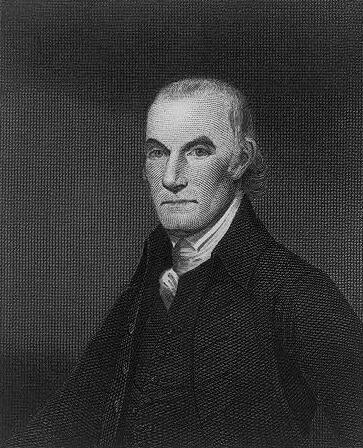
Here you will find contact information for Representative William Floyd, including email address, phone number, and mailing address.
| Name | William Floyd |
| Position | Representative |
| State | New York |
| District | 1 |
| Party | Unknown |
| Status | Former Representative |
| Term Start | March 4, 1789 |
| Term End | March 3, 1791 |
| Terms Served | 1 |
| Born | December 17, 1734 |
| Gender | Male |
| Bioguide ID | F000224 |
About Representative William Floyd
On This Page
William Floyd (December 17, 1734 – August 4, 1821) was an American Founding Father, wealthy farmer, and political leader from New York. Floyd served as a delegate to the Continental Congress and was a signer of the Continental Association and the Declaration of Independence. He later served as a member of the first United States Congress, representing New York’s 1st congressional district from 1789 to 1791.
Early Life
Floyd was born on December 17, 1734, in Brookhaven, Province of New York, on Long Island, into a family of English and Welsh origins. He was the son of Tabitha (née Smith) Floyd and Nicoll Floyd (1705–1755). His great-grandfather Richard Floyd was born in Brecknockshire, Wales, around 1620, and settled in the Province of New York around 1640. Floyd’s grandfather purchased 4,400 acres in the Mastic Neck of the Town of Brookhaven around 1688, and Floyd’s father built a house there in 1723 where William was born.
After his father’s death in 1755, Floyd took over management of the family farm at the age of 21, becoming one of the wealthiest landowners on Long Island.
Revolutionary War Service
Floyd became a member of the Suffolk County Militia in the early stages of the American Revolutionary War, eventually rising to the rank of Major General. He was elected as a delegate from New York to the Continental Congress, serving from 1774 to 1776. On August 2, 1776, Floyd was one of the 56 signers of the Declaration of Independence.
A few weeks after the Declaration was signed, British forces defeated an American army at the Battle of Long Island and confiscated Floyd’s house and estate, using the property as a base for their cavalry units over the next seven years. His family was forced to flee to Connecticut during the British occupation.
Floyd also served in the New York State Senate, representing the Southern District from 1777 to 1788. On July 4, 1787, he was elected an honorary member of the New York Society of the Cincinnati.
Congressional Career
In March 1789, Floyd was elected to the 1st United States Congress under the new Constitution as an Anti-Administration candidate, representing New York’s 1st congressional district. He served until March 3, 1791. After his congressional service, Floyd continued to be active in politics as a presidential elector in 1792 (voting for George Washington), 1800 (voting for Thomas Jefferson and Aaron Burr), and 1804 (voting for Jefferson and George Clinton).
In 1795, Floyd ran for Lieutenant Governor of New York on the Democratic-Republican ticket with Robert Yates, but they were defeated by Federalists John Jay and Stephen Van Rensselaer.
Personal Life and Legacy
In 1760, Floyd married Hannah Jones, with whom he had three children: Nicoll, Mary (who married Colonel Benjamin Tallmadge), and Catherine. After Hannah’s death in 1781, Floyd remarried Joanna Strong, with whom he had two daughters, Ann and Elizabeth. Through his son Nicoll, Floyd was the grandfather of U.S. Representative John Gelston Floyd.
Floyd died on August 4, 1821, at the age of 86 in Westernville, New York. He is buried at Westernville Cemetery in Oneida County. His family home, the William Floyd House in Mastic Beach, is now part of Fire Island National Seashore and is open to visitors. Several places are named in his honor, including the William Floyd School District and William Floyd Parkway in the Town of Brookhaven.