Representative William W. Franklin
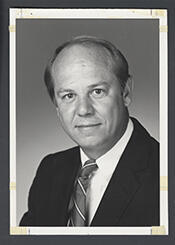
Here you will find contact information for Representative William W. Franklin, including email address, phone number, and mailing address.
| Name | William W. Franklin |
| Position | Representative |
| State | Mississippi |
| District | 2 |
| Party | Republican |
| Status | Former Representative |
| Term Start | January 3, 1983 |
| Term End | January 3, 1987 |
| Terms Served | 2 |
| Born | December 13, 1941 |
| Gender | Male |
| Bioguide ID | F000347 |
About Representative William W. Franklin
William Webster Franklin (born December 13, 1941) is an American lawyer, politician, and jurist from Mississippi. A member of the Republican Party, he served in the United States House of Representatives representing Mississippi’s 2nd congressional district from 1983 to 1987. During his two terms in office, Franklin participated in the legislative process in the U.S. House of Representatives and represented the interests of his constituents during a significant period in American political history.
Franklin was born in Greenwood, Leflore County, Mississippi, on the eastern edge of the Mississippi Delta. He was educated in the local public schools and graduated from Greenwood High School. He went on to attend Mississippi State University in Starkville, where he received a Bachelor of Arts degree in 1963. Pursuing a legal career, he enrolled at the University of Mississippi School of Law in Oxford and obtained his Bachelor of Laws degree in 1966, a credential later converted to a Juris Doctor. That same year he was admitted to the bar, formally beginning his professional career in law.
Alongside his academic and legal training, Franklin undertook military legal education and service. He attended The Judge Advocate General’s School at the University of Virginia and entered the United States Army Judge Advocate General’s Corps. From 1963 to 1970, he served in the United States Army, attaining the rank of major. By 1966, he was serving specifically within the Army’s Judge Advocate General’s Corps, where he combined his legal expertise with military service during a period marked by the Vietnam War and significant changes in military and federal legal practice.
After completing his active military service, Franklin returned to Mississippi and entered private legal practice. From 1970 to 1972, he practiced law in his hometown of Greenwood. In 1972, he transitioned into public service within the state judicial system when he became an assistant district attorney for Mississippi’s Fourth Circuit District Court. Building on this prosecutorial experience, Franklin sought judicial office and, in 1978, was elected circuit judge for the Fourth District of Mississippi. He remained in that judicial position until 1982, presiding over a range of criminal and civil matters and further establishing his reputation as a jurist.
Franklin entered national politics in the early 1980s. Running as a Republican in a district with a complex political and demographic history, he was elected to the United States House of Representatives and began his first term in Congress on January 3, 1983. Representing Mississippi’s 2nd congressional district, he served two consecutive terms, from 1983 to 1987. During his tenure in the House, Franklin contributed to the legislative process, participated in committee work, and engaged in debates and votes on domestic and foreign policy issues characteristic of the Reagan administration era. As a member of the House of Representatives, he took part in the democratic process at the federal level and worked to represent the interests and concerns of his Mississippi constituents.
Franklin’s congressional service came to an end following the 1986 election. Seeking a third term in the U.S. House of Representatives, he was defeated by Democrat Mike Espy, an African American attorney who would go on to become a prominent figure in Mississippi and national politics. Franklin’s loss in 1986 marked a notable political transition in the 2nd congressional district, reflecting broader shifts in party alignment and representation in the Mississippi Delta and the South during the late twentieth century.
Upon leaving Congress in January 1987, Franklin returned to Greenwood, Mississippi, and resumed the practice of law. Drawing on his combined experience as a military officer, prosecutor, circuit judge, and member of Congress, he continued his professional life in the legal field. His career, spanning military service, state judicial office, and federal legislative service, reflects a long-standing engagement with public service at multiple levels of government.