Senator William H. Frist
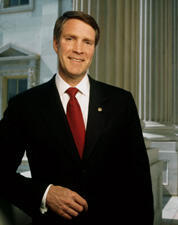
Here you will find contact information for Senator William H. Frist, including email address, phone number, and mailing address.
| Name | William H. Frist |
| Position | Senator |
| State | Tennessee |
| Party | Republican |
| Status | Former Representative |
| Term Start | January 4, 1995 |
| Term End | January 3, 2007 |
| Terms Served | 6 |
| Born | February 22, 1952 |
| Gender | Male |
| Bioguide ID | F000439 |
About Senator William H. Frist
William Harrison Frist (born February 22, 1952) is an American physician, businessman, and policymaker who represented Tennessee in the United States Senate from January 3, 1995, to January 3, 2007. A member of the Republican Party, he served two terms in the Senate and was Senate Majority Leader from 2003 to 2007, playing a central role in the legislative process during a significant period in American history. He was the first physician to serve in the Senate since the death of Senator Royal S. Copeland on June 17, 1938, and became a prominent national figure at the intersection of medicine, public policy, and politics.
Frist was born in Nashville, Tennessee, into a family deeply involved in health care; his father and brother were key figures in the development of the Hospital Corporation of America (HCA), one of the nation’s largest hospital chains. He attended Montgomery Bell Academy in Nashville and went on to Princeton University, where he studied government and health care policy, graduating in 1974. He then enrolled at Harvard Medical School, earning his Doctor of Medicine degree in 1978. Following medical school, Frist completed rigorous training in surgery and cardiothoracic surgery, including residencies and fellowships at Massachusetts General Hospital in Boston and Stanford University School of Medicine in California, where he specialized in heart and lung transplantation.
Before entering politics, Frist built a distinguished career as a cardiothoracic transplant surgeon. Returning to Nashville, he joined the faculty of Vanderbilt University and became a leading figure in transplant medicine. He founded and directed the Vanderbilt Transplant Center, which grew into one of the nation’s premier programs for heart and lung transplantation. In addition to his clinical work, he engaged in medical research, teaching, and hospital administration, and he developed a reputation for both technical skill and organizational leadership in complex surgical and health care settings. His medical background and experience in health policy would later shape his approach to legislative issues in the Senate.
Frist entered electoral politics in the 1994 United States Senate election in Tennessee, running as a Republican against three-term Democratic incumbent Senator Jim Sasser. During the campaign, he criticized Sasser for what he characterized as excessive federal spending and for seeking Senate leadership positions, arguing that his opponent would be more focused on “Senate business than Tennessee business.” Frist accused Sasser of “sending Tennessee money to Washington, DC,” contrasting that with his own work as a surgeon by saying, “While I’ve been transplanting lungs and hearts to heal Tennesseans, Jim Sasser has been transplanting Tennesseans’ wallets to Washington, home of Marion Barry.” In the context of the 1994 Republican sweep of both houses of Congress, Frist defeated Sasser by 211,062 votes. During that campaign he pledged not to serve more than two terms in the Senate, a promise he later honored.
Taking office in January 1995, Frist quickly became an influential member of the Republican Conference. He served as chairman of the National Republican Senatorial Committee, helping to direct his party’s Senate campaign strategy. In 1998, he came to national attention when two Capitol police officers were shot inside the United States Capitol by Russell Eugene Weston Jr.; as the closest physician on the scene, Frist provided immediate medical attention. Although he was unable to save the two officers, he did help save the life of the assailant. Reflecting on the incident, he said, “You’re trained to respond. … In moments like that, you are not a judge, not a jury, you are a physician. It was a tragic incident. I know almost all of the Capitol guards.” As the only physician in the Senate, he later served as a key congressional spokesman during the 2001 anthrax attacks, explaining medical and public health issues to colleagues and the public. He subsequently authored the book When Every Moment Counts: What You Need to Know About Bioterrorism from the Senate’s Only Doctor, presented in a question-and-answer format to guide responses to biological agents such as anthrax.
Frist was reelected in 2000 with 66 percent of the vote, the largest vote total ever received by a statewide candidate in Tennessee at that time. His 2000 campaign organization was later fined by the Federal Election Commission for failing to disclose a $1.44 million loan taken out jointly with his 1994 campaign organization; Frist paid a civil fine of $11,000 in a settlement with the FEC. Within the Senate, he rose rapidly in leadership. After serving as chairman of the National Republican Senatorial Committee, he was chosen by his colleagues to succeed Tom Daschle as Senate Majority Leader in 2003. In that role, he helped guide major elements of President George W. Bush’s domestic agenda through the Senate, including the Jobs and Growth Tax Relief Reconciliation Act of 2003 and the Medicare Prescription Drug, Improvement, and Modernization Act of 2003, which created Medicare Part D. He was a strong supporter of the Iraq War, backing both the initial 2003 invasion and continued U.S. engagement during the subsequent Iraqi insurgency.
During his tenure as majority leader, Frist was involved in several high-profile national debates. In 2005, he took a prominent role in the case of Terri Schiavo, a brain-damaged Florida woman whose husband sought to remove her gastric feeding tube. From the Senate floor, Frist questioned the diagnosis of Schiavo’s physicians that she was in a persistent vegetative state, stating, “I question it based on a review of the video footage which I spent an hour or so looking at last night in my office.” After Schiavo’s death, an autopsy confirmed extensive, irreversible brain damage consistent with a persistent vegetative state. Frist defended his actions, maintaining that he had acted in good faith based on the information available at the time. Throughout his Senate service, he remained engaged with health policy, bioterrorism preparedness, and global health issues, while also participating in broader Republican legislative priorities on taxes, national security, and social policy.
Honoring the pledge he made during his first campaign, Frist chose not to seek a third term and left the Senate at the conclusion of his second term in January 2007. He campaigned heavily in 2006 for Republican nominee Bob Corker, who narrowly defeated Democratic Congressman Harold Ford Jr. to succeed him in the Senate. After leaving office, Frist turned to teaching, philanthropy, and business. From 2007 to 2008, he served as the Frederick H. Schultz Class of 1951 Visiting Professor of International Economic Policy at Princeton University’s Woodrow Wilson School of Public and International Affairs, teaching alongside his longtime mentor, noted health care economist Uwe Reinhardt. From 2009 to 2010, he was a Distinguished Professor at Vanderbilt University, co-teaching with Democratic Congressman Jim Cooper of Tennessee. He also became co-chair of One Vote ’08, an initiative of the ONE Campaign with former Senate Majority Leader Tom Daschle, aimed at making global health and extreme poverty central foreign policy issues in the 2008 presidential election; in that capacity he traveled to Africa in July 2008.
In his post-Senate career, Frist has remained active in health care, conservation, and bipartisan policy work. He serves as chair of the global board of The Nature Conservancy, reflecting a long-standing interest in environmental stewardship. He is a founding partner of Frist Cressey Ventures, an investment firm focused on health care innovation, and a special partner and chairman of the Executives Council of Cressey & Company, a health services investment firm. Since 2011, he has been a senior fellow at the Bipartisan Policy Center and co-chair of its Health Project, again working with former Majority Leader Tom Daschle to advance bipartisan health policy solutions. He also hosts “A Second Opinion” podcast, which explores the intersection of health care, policy, and innovation. Outside his professional roles, Frist is a trained pilot, a skill he used during his political career to visit all 95 Tennessee counties annually, and he has been an avid runner, completing seven marathons between 1998 and 2001.