Representative William Franklin Gilmer
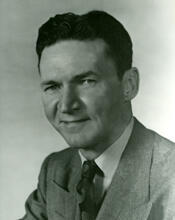
Here you will find contact information for Representative William Franklin Gilmer, including email address, phone number, and mailing address.
| Name | William Franklin Gilmer |
| Position | Representative |
| State | Oklahoma |
| District | 1 |
| Party | Democratic |
| Status | Former Representative |
| Term Start | January 3, 1949 |
| Term End | January 3, 1951 |
| Terms Served | 1 |
| Born | June 7, 1901 |
| Gender | Male |
| Bioguide ID | G000219 |
About Representative William Franklin Gilmer
William Franklin “Dixie” Gilmer (June 7, 1901 – June 9, 1954) was an American lawyer and Democratic politician who served one term as a U.S. Representative from Oklahoma from 1949 to 1951. Over the course of his career, he held a series of local, county, and state offices in Oklahoma, culminating in his service in Congress and later as Oklahoma’s state safety commissioner.
Gilmer was born on June 7, 1901, in Mount Airy, North Carolina, the son of W. F. and Emma Prather Gilmer. During his childhood he moved with his parents to Oklahoma, where the family settled in Oklahoma City. He attended the public schools there and, while still a youth, became closely acquainted with the workings of the federal government by serving as a page in the United States House of Representatives from 1911 to 1919. After returning to Oklahoma, he pursued legal studies at the University of Oklahoma in Norman, graduating from its law school in 1923.
Admitted to the bar in 1923, Gilmer commenced the practice of law in Wetumka, Oklahoma. In addition to his private practice, he quickly entered public service at the local level, serving as a police judge and later as mayor of Wetumka. His early involvement in municipal government provided him with experience in public administration and law enforcement, and it helped establish his reputation within the Democratic Party in Oklahoma.
Gilmer’s formal legislative career began when he was elected to the Oklahoma House of Representatives, in which he served as a member in 1927. The following year, in 1928, he married Ellen McClure of Celeste, Texas; the couple had no children. In 1929 he moved to Tulsa, Oklahoma, where he continued his legal career and expanded his role in public affairs. He served as assistant county attorney of Tulsa County from 1931 to 1933, and later as county attorney of Tulsa County from 1936 to 1946. In that capacity he was responsible for prosecuting criminal cases and advising county officials, and he became a prominent figure in Tulsa County politics. In 1946 he sought higher office as a candidate for the Democratic nomination for governor of Oklahoma, but his bid was unsuccessful.
Elected as a Democrat to the Eighty-first Congress, Gilmer represented Oklahoma in the U.S. House of Representatives from January 3, 1949, to January 3, 1951. His single term in Congress coincided with a significant period in American history, in the early years of the Cold War and the post–World War II era. As a member of the House of Representatives, William Franklin Gilmer participated in the legislative process, contributed to national policy debates, and represented the interests of his Oklahoma constituents. A member of the Democratic Party, he served one full term and sought to continue his service, but he was an unsuccessful candidate for reelection in 1950 to the Eighty-second Congress.
Following his departure from Congress, Gilmer remained active in public service in Oklahoma. The governor appointed him state safety commissioner, a position in which he oversaw public safety matters and state-level law enforcement functions. He served in that capacity from his appointment after the 1950 election until his death, continuing his long-standing engagement with issues of law, order, and public administration in the state.
William Franklin “Dixie” Gilmer died in Oklahoma City, Oklahoma, on June 9, 1954, at the age of 53. He was interred at Memorial Park Cemetery in Oklahoma City. His career, spanning local, county, state, and federal office, reflected more than three decades of involvement in Oklahoma public life and the national legislative process.