Senator William Grayson
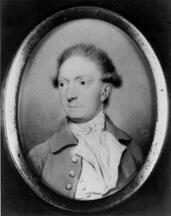
Here you will find contact information for Senator William Grayson, including email address, phone number, and mailing address.
| Name | William Grayson |
| Position | Senator |
| State | Virginia |
| Party | Anti-Administration |
| Status | Former Representative |
| Term Start | March 4, 1789 |
| Term End | March 3, 1791 |
| Terms Served | 1 |
| Gender | Male |
| Bioguide ID | G000403 |
About Senator William Grayson
William Grayson (1736 – March 12, 1790) was a planter, lawyer, military officer, and statesman from Virginia who became one of the first two United States Senators from that state and an early leader of the Anti-Federalist and Anti-Administration factions in national politics. Born in 1736 in Virginia, he was raised in the colonial gentry and became associated with the plantation economy that dominated the region. As a member of a prominent family, he entered adulthood with the social standing and connections that facilitated his later roles in law, military service, and public life.
Grayson received a substantial education for his time, which prepared him for the legal profession and public service. Trained in the law, he established himself as a lawyer in Virginia while also managing his interests as a planter. His legal background, combined with his experience in the plantation economy, informed his views on property, debt, and public finance, themes that would later appear in his political writings and speeches. He became known for his learning and for his engagement with contemporary political and philosophical thought, including the works of European theorists such as Montesquieu.
During the American Revolutionary War, Grayson entered military service and rose to prominence as an officer in the Continental Army. He led a Virginia regiment, reflecting both his leadership abilities and his commitment to the Revolutionary cause. His service placed him among the cadre of Virginia officers who contributed to the war effort at a critical moment in the struggle for independence. His name appears in standard military references of the period, including Francis Bernard Heitman’s 1914 “Historical Register of Officers of the Continental Army during the War of the Revolution,” which documents his role among the commissioned officers who served in the Continental forces.
Following the war, Grayson transitioned from military to legislative service, becoming a member of the Virginia House of Delegates. In that body he participated in the reconstruction of state government and the adjustment of Virginia’s laws and institutions to the new realities of independence. His experience as a lawyer and former Continental Army officer gave him particular authority in debates over public credit, the treatment of veterans, and the structure of republican government. He emerged during this period as a critic of centralized power and a leading figure among those Virginians wary of strengthening the national government at the expense of the states.
Grayson’s skepticism of concentrated authority shaped his stance during the debates over the ratification of the United States Constitution and the early years of the federal government. Identified with the Anti-Federalist faction, he argued that republican liberty required vigilance against both overt and subtle forms of despotism. Reflecting these concerns, he wrote critically about financial policies that, in his view, threatened property rights and fairness in the repayment of debts. In one notable reflection on public finance and paper money, he contrasted ancient candor about abolishing debts with modern efforts to achieve similar ends through inflationary measures, observing that “The Ancients were surely men of more candor than We are; they contended openly for an abolition of debts in so many Words, while we strive as hard for the same thing under the decent and specious pretense of a circulating medium.” Citing Montesquieu, he warned that “the democratical might be as tyrannical as the despotic, for where is there greater act of despotism than that of issuing paper to depreciate for the paying debts, on easy terms.” These views placed him firmly among those who feared that certain financial and monetary policies could become instruments of injustice.
With the establishment of the new federal government under the Constitution, Grayson was chosen as one of the first two United States Senators from Virginia. A member of what was then known as the Anti-Administration Party, he served in the United States Senate from 1789 to 1791, during the First Congress. In that capacity he participated in the formative legislative process of the new republic, helping to shape the early statutes and institutional practices of the federal government. As a senator, he represented the interests of his Virginia constituents while maintaining his Anti-Federalist and Anti-Administration principles, often aligning with those who opposed or sought to limit the policies of the Washington administration, particularly in matters of finance and the scope of federal authority.
Grayson’s tenure in the Senate coincided with a significant period in American history, as the new constitutional system was being tested and defined in practice. He contributed to debates over the powers of Congress, the executive branch, and the judiciary, and he remained attentive to the balance between national and state authority. Although his service in Congress lasted for only one term, his presence in the Senate reflected the continuing strength of Anti-Federalist sentiment and provided an important counterpoint to the emerging Federalist program in the early republic.
William Grayson died in office on March 12, 1790, while still serving as a United States Senator from Virginia. His death made him the first member of the United States Congress to die while holding office, an event noted at the time as a loss to both his state and the new national legislature. Remembered as a planter, lawyer, soldier, legislator, and early national statesman, Grayson’s career illustrates the intertwined military, legal, and political leadership that helped shape Virginia and the United States in the Revolutionary and early federal eras.