Representative William Raymond Green
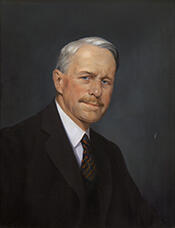
Here you will find contact information for Representative William Raymond Green, including email address, phone number, and mailing address.
| Name | William Raymond Green |
| Position | Representative |
| State | Iowa |
| District | 9 |
| Party | Republican |
| Status | Former Representative |
| Term Start | April 4, 1911 |
| Term End | March 3, 1929 |
| Terms Served | 9 |
| Born | November 7, 1856 |
| Gender | Male |
| Bioguide ID | G000422 |
About Representative William Raymond Green
William Raymond Green (November 7, 1856 – June 11, 1947) was a United States Representative from Iowa, a longtime chairman of the House Ways and Means Committee, and later a judge of the United States Court of Claims. A member of the Republican Party, he served nine terms in the United States Congress between 1911 and 1929, contributing to the legislative process during a significant period in American history. His son, William R. Green Jr., later served on the United States Board of Tax Appeals.
Green was born on November 7, 1856, in Colchester, New London County, Connecticut. During his childhood his family moved west, and he attended public schools in Malden, Illinois, before continuing his studies at Princeton High School in Princeton, Illinois. He pursued higher education at Oberlin College in Oberlin, Ohio, where he received an Artium Baccalaureus degree in 1879. After college, he prepared for a legal career by reading law with the Chicago firm of McCoy & Pratt in 1882, following the then-common practice of legal apprenticeship rather than formal law school.
Admitted to the bar in 1882, Green entered private practice in Dow City, Iowa, where he practiced law from 1882 to 1884. He then moved to Audubon, Iowa, continuing in private practice there from 1884 to 1894. His growing reputation in the legal community led to his election as a judge of the Iowa District Court for the Fifteenth Judicial District, a position he held from 1894 to 1911. During these seventeen years on the state bench, he gained extensive experience in civil and criminal matters, establishing himself as a respected jurist in Iowa and laying the groundwork for his subsequent national career.
Green entered national politics in 1911. He was elected as a Republican to the United States House of Representatives for the 62nd Congress to fill the vacancy caused by the resignation of Representative Walter I. Smith. He took his seat on June 5, 1911, and was subsequently reelected to the 63rd Congress and to the seven succeeding Congresses. In total, he served continuously in the House from June 5, 1911, until March 31, 1928, representing his Iowa constituency through World War I, the postwar period, and the early years of the 1920s. Throughout his nine terms in office, Green participated actively in the democratic process and represented the interests of his constituents while engaging with the major economic and fiscal questions of the era.
Within the House, Green rose to positions of substantial influence. He became chairman of the powerful House Ways and Means Committee in the 68th, 69th, and 70th Congresses, placing him at the center of federal tax and tariff policy. Considered a moderate Republican, he worked effectively with President Calvin Coolidge’s Secretary of the Treasury, Andrew W. Mellon. During Green’s tenure as chairman, Mellon’s primary legislative objectives involved tax reductions, and Green played a key role in shaping and advancing the administration’s tax programs through Congress. His leadership on Ways and Means made him one of the principal architects of federal revenue policy in the 1920s.
Green resigned from Congress on March 31, 1928, to accept a federal judicial appointment. He was nominated by President Calvin Coolidge on February 20, 1928, to a seat on the Court of Claims (later the United States Court of Claims) vacated by Judge James Hay. The United States Senate confirmed his nomination on March 12, 1928, and he received his commission the same day. On the Court of Claims, Green drew on his long experience with legislation and public finance to adjudicate claims against the federal government, contributing to the development of federal claims jurisprudence during a period of expanding governmental activity.
Green assumed senior status on the Court of Claims on May 29, 1940. After June 1942 he took inactive senior status, which meant that while he retained his judicial title, he no longer heard cases or participated in the business of the court. During these later years he resided in Bellport, New York, where he lived in retirement from active judicial service. His service on the Court of Claims terminated upon his death in Bellport on June 11, 1947. He was interred in Rock Creek Cemetery in Washington, D.C., closing a public career that had spanned local practice, state judicial service, congressional leadership, and federal judicial office.