Representative William Laury Greene
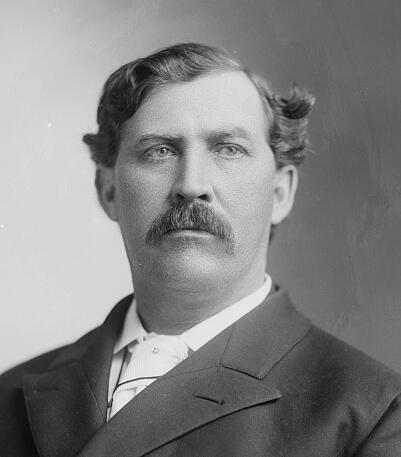
Here you will find contact information for Representative William Laury Greene, including email address, phone number, and mailing address.
| Name | William Laury Greene |
| Position | Representative |
| State | Nebraska |
| District | 6 |
| Party | Populist |
| Status | Former Representative |
| Term Start | March 15, 1897 |
| Term End | March 3, 1901 |
| Terms Served | 2 |
| Born | October 3, 1849 |
| Gender | Male |
| Bioguide ID | G000429 |
About Representative William Laury Greene
William Laury Greene (October 3, 1849 – March 11, 1899) was an American Populist Party politician who served as a Representative from Nebraska in the United States Congress from 1897 until his death in 1899. A member of the Populist, or People’s, Party, he contributed to the legislative process during two terms in office and represented the interests of his agrarian and reform-minded constituents during a significant period in American political and economic history.
Greene was born on October 3, 1849, in Pike County, Indiana, and was raised on a farm in neighboring Dubois County. He worked on the family farm while attending local schools and later graduated from Ireland Academy in Indiana. His upbringing in a rural, agricultural setting shaped his later political identification with agrarian reform movements and the concerns of farmers and small producers in the Midwest.
While still a young man, Greene began teaching school and, at the same time, studied law. He was admitted to the bar in 1876 and commenced the practice of law in Bloomington, Indiana. In addition to his legal work, he was active in the Baptist Church, pastoring congregations and delivering sermons at churches in Indiana. His religious and community involvement, combined with his legal training, helped establish him as a respected figure in the communities where he lived and worked.
In 1883, Greene moved west to Kearney, Nebraska, where he continued to practice law. Initially an adherent of the Democratic Party, he was not politically active for much of his early adult life. However, the agrarian reform and free silver movements of the late 1880s drew him into more direct political engagement. In Nebraska he became one of the founders of the Populist Party, also known as the People’s Party, and gained a reputation as an effective orator on behalf of Populist causes and candidates. His advocacy reflected the broader discontent of farmers and rural communities with prevailing economic policies and financial institutions.
Greene’s rising prominence in Nebraska politics led to his candidacy for the United States Senate in 1893. He sought the Fusion nomination, representing a coalition of Populists and Democrats, but lost to William V. Allen, who went on to win the Senate seat. Despite this setback, Greene’s standing within the Populist movement continued to grow. In 1895, he was elected judge of Nebraska’s 12th judicial district, a position he held until 1897. His judicial service further enhanced his public profile and underscored his reputation for legal competence and integrity.
In 1896, Greene was elected to the United States House of Representatives from Nebraska as a Populist. He entered Congress on March 4, 1897, and served during a period marked by intense national debate over monetary policy, agricultural distress, and political realignment. As a member of the House of Representatives, William Laury Greene participated in the democratic process, contributed to the legislative work of the chamber, and represented the interests of his Nebraska constituents and the broader Populist agenda. His service in Congress occurred during a significant era in American history, when third-party movements sought to challenge the dominance of the major parties and address the economic grievances of farmers and laborers.
Greene’s congressional career was cut short by his sudden death in office. After Congress adjourned in March 1899, he traveled to Lincoln, Nebraska, to observe the legislative election for United States Senator. On March 10, he went from Lincoln to Omaha on business. The following day, March 11, 1899, he and several friends left his Omaha hotel by carriage for the train station. Upon arrival, his companions discovered that he was lying unresponsive on the back seat. Unable to revive him, they carried him into the station and summoned medical assistance. A doctor soon arrived and determined that Greene had died, with heart failure given as the cause of death. His funeral was held at the First Baptist Church in Kearney, Nebraska, reflecting his long-standing involvement with the Baptist denomination, and he was interred in Kearney Cemetery.
In his personal life, Greene married Emma Dowell of Shoals, Indiana, in 1872. The couple were the parents of seven children. His family life, legal career, religious activity, and political service together formed the background for his role as a Populist leader and member of Congress, whose tenure in the House of Representatives from 1897 until his death in 1899 placed him among those members of the United States Congress who died in office during the nineteenth century.