Representative William Walton Griest
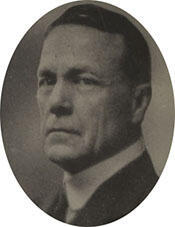
Here you will find contact information for Representative William Walton Griest, including email address, phone number, and mailing address.
| Name | William Walton Griest |
| Position | Representative |
| State | Pennsylvania |
| District | 10 |
| Party | Republican |
| Status | Former Representative |
| Term Start | March 15, 1909 |
| Term End | March 3, 1931 |
| Terms Served | 11 |
| Born | September 22, 1858 |
| Gender | Male |
| Bioguide ID | G000456 |
About Representative William Walton Griest
William Walton Griest (September 22, 1858 – December 5, 1929) was a Republican member of the U.S. House of Representatives from Pennsylvania who served as a Representative from Pennsylvania in the United States Congress from 1909 to 1931. Over the course of 11 consecutive terms in office, he contributed to the legislative process during a significant period in American history, participating in the democratic process and representing the interests of his constituents as a member of the House of Representatives.
Born on September 22, 1858, Griest came of age in the post–Civil War era, a time of rapid industrialization and political realignment in Pennsylvania and the nation. Details of his early life and family background are not extensively documented in the surviving public record, but his later career indicates that he developed an early familiarity with public affairs, business, and the needs of a growing industrial state. His formative years coincided with the expansion of railroads, manufacturing, and commerce in Pennsylvania, developments that would later shape the policy concerns of many representatives from the state.
Griest’s education prepared him for a career in public service and civic leadership. Although specific institutions and degrees are not clearly recorded in standard references, his subsequent professional responsibilities suggest a solid grounding in administration, public policy, and the workings of government. Like many politicians of his generation, he likely combined formal schooling with practical experience in local affairs, business, or journalism, building the skills and connections that would support his entry into Republican Party politics in Pennsylvania.
Before entering Congress, Griest established himself within the Republican Party and in public life in Pennsylvania. His pre-congressional career unfolded against the backdrop of the Gilded Age and Progressive Era, when questions of economic regulation, labor relations, and political reform dominated public debate. In this environment, he emerged as a reliable party man and advocate for the interests of his region, aligning with the Republican Party’s emphasis on economic development, protective tariffs, and support for industry and infrastructure. His growing prominence within the party and his reputation for steady service helped pave the way for his election to the U.S. House of Representatives.
Griest began his congressional service in 1909, entering the Sixty-first Congress as a Republican Representative from Pennsylvania. He served continuously until his death in 1929, encompassing 11 terms in office and extending, in electoral terms, into the early 1930s. During these two decades, he participated in the legislative process at a time when Congress confronted issues such as antitrust regulation, banking and currency reform, World War I and its aftermath, Prohibition, women’s suffrage, and the early stirrings of the Great Depression. As a member of the House of Representatives, he took part in debates and votes on these and other matters, contributing to the formation of national policy while representing the interests of his Pennsylvania constituents in a period of profound social and economic change.
Throughout his tenure, Griest’s role in Congress reflected the priorities of both his party and his state. Pennsylvania’s economy, heavily based on manufacturing, coal, and transportation, depended on federal policies related to tariffs, infrastructure, and commerce, and Griest’s legislative work was shaped by these concerns. His long service suggests a strong base of support at home and a reputation for reliability and continuity in Washington, D.C. He was part of the Republican majorities that dominated much of the era and also served during periods of political transition, including the Democratic administration of Woodrow Wilson and the Republican administrations of Warren G. Harding, Calvin Coolidge, and Herbert Hoover.
William Walton Griest’s congressional career came to an end with his death on December 5, 1929, while still in office. His passing occurred just weeks after the stock market crash of October 1929, at the onset of the Great Depression, marking the close of a public life that had spanned the transformation of the United States from a largely rural nation into an industrial and emerging global power. Remembered as a steadfast Republican member of the U.S. House of Representatives from Pennsylvania, Griest’s 11-term tenure stands as a testament to his sustained engagement in the democratic process and his long-standing service to his constituents and to the nation.