Representative William Wallace Grout
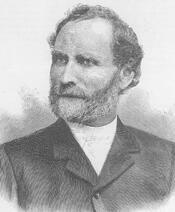
Here you will find contact information for Representative William Wallace Grout, including email address, phone number, and mailing address.
| Name | William Wallace Grout |
| Position | Representative |
| State | Vermont |
| District | 2 |
| Party | Republican |
| Status | Former Representative |
| Term Start | December 5, 1881 |
| Term End | March 3, 1901 |
| Terms Served | 9 |
| Born | May 24, 1836 |
| Gender | Male |
| Bioguide ID | G000501 |
About Representative William Wallace Grout
William Wallace Grout (May 24, 1836 – October 7, 1902) was an American politician, lawyer, and Union Army officer who served nine terms as a Republican Representative from Vermont in the United States House of Representatives between 1881 and 1901. His long congressional career spanned a significant period in American history, during which he participated actively in the legislative process and represented the interests of his Vermont constituents.
Grout was born in Compton, in Lower Canada (now Quebec), the son of Josiah and Sophronia (Ayer) Grout, both native Vermonters. He was the second of ten children and the eldest of five sons; seven of the children were born in the Compton house. The family’s early years were marked by modest circumstances, and the Compton home had no finished chambers, so that in winter it was common for the children to awaken to snow on their beds. When Grout was thirteen, his parents returned to Vermont, settling in Kirby. The Grout family would become prominent in Vermont public life: his brother Josiah Grout later served as Speaker of the Vermont House of Representatives and as the 46th Governor of Vermont, and his nephew Aaron H. Grout, Josiah’s son, served as Vermont Secretary of State from 1923 to 1927.
Grout pursued an academic education in his new home state. He attended St. Johnsbury Academy in St. Johnsbury, Vermont, and then studied law at the State and National Law School in Poughkeepsie, New York, from which he graduated in 1857. In December of that year he was admitted to the bar and commenced the practice of law in Barton, Vermont. In 1860 he married Loraine M. Smith. The couple had two children, both of whom died in infancy, and Loraine herself died in 1868, leaving Grout a widower relatively early in his adult life.
With the outbreak of the Civil War, Grout turned from local legal practice to military service. In 1862 he was nominated as State’s Attorney of Orleans County, Vermont, but declined the office in order to enter the Union Army. In July 1862 he received a commission as lieutenant colonel of the 15th Vermont Volunteer Infantry Regiment. He served with that unit during the war and subsequently attained the rank of brigadier general as commander of one of three brigades organized for border defense by the Vermont State Legislature following the St. Albans Raid in 1864, when Confederate raiders attacked the town of St. Albans, Vermont, from Canada. His military service enhanced his public standing and helped lay the groundwork for his later political career.
After the war, Grout resumed his legal and public service career in Vermont. He accepted the office of State’s Attorney of Orleans County and served in that capacity in 1865 and 1866. A committed Republican, he was a delegate from Vermont to the Republican National Convention in 1868. He served in the Vermont House of Representatives from 1868 to 1870 and again in 1874, participating in state legislative affairs during the Reconstruction era. In 1876 he was elected to the Vermont State Senate and served as president pro tempore, presiding over the Senate and helping to shape state policy in the postwar period.
Grout’s service in Congress began with his election as a Republican to the Forty-seventh Congress from Vermont’s 3rd congressional district, serving from March 4, 1881, to March 3, 1883. At the end of that term the 3rd District was eliminated in a redistricting, and he was an unsuccessful candidate in 1882 for election from Vermont’s 2nd congressional district to the Forty-eighth Congress. During this early phase of his national career, from 1881 until 1888, he also maintained a law partnership in Vermont with Willard W. Miles. Grout withdrew from the firm in 1888 in order to devote his full time to his congressional duties, after which Miles continued the practice alone.
Grout returned to Congress when he was elected from Vermont’s 2nd congressional district to the Forty-ninth Congress and to the seven succeeding Congresses, serving continuously from March 4, 1885, until March 3, 1901. Over these nine terms in the House of Representatives, he contributed to the legislative process during a period of rapid industrialization, economic change, and evolving federal policy. He served as chairman of the Committee on the District of Columbia in the Fifty-first Congress, overseeing legislation affecting the federal capital, and later sat on the Committee on Expenditures in the Department of War in the Fifty-fourth, Fifty-fifth, and Fifty-sixth Congresses, where he was involved in oversight of military spending and administration. As a member of the House, he participated in the democratic process and represented the interests of his Vermont constituents on a wide range of national issues.
After leaving Congress in March 1901, Grout returned to Vermont and resumed a more private life. He engaged in agricultural pursuits and again practiced law, maintaining his ties to the profession that had first launched his public career. William Wallace Grout died on October 7, 1902. He was interred in Grove Cemetery in St. Johnsbury, Vermont, closing a life that had encompassed service as a Civil War officer, local and state official, and long-serving member of the United States House of Representatives.