Representative William Cicero Hammer
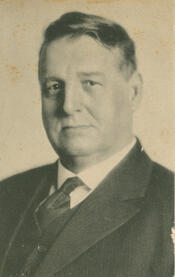
Here you will find contact information for Representative William Cicero Hammer, including email address, phone number, and mailing address.
| Name | William Cicero Hammer |
| Position | Representative |
| State | North Carolina |
| District | 7 |
| Party | Democratic |
| Status | Former Representative |
| Term Start | April 11, 1921 |
| Term End | March 3, 1931 |
| Terms Served | 5 |
| Born | March 24, 1865 |
| Gender | Male |
| Bioguide ID | H000123 |
About Representative William Cicero Hammer
William Cicero Hammer (March 24, 1865 – September 26, 1930) was a U.S. Representative from North Carolina who served in the United States Congress from 1921 to 1931. A member of the Democratic Party, he represented his constituents during a significant period in American history and contributed to the legislative process over five terms in office. His decade of service in the House of Representatives placed him among the North Carolina Democrats who helped shape national policy in the years following World War I and during the onset of the Great Depression.
Born on March 24, 1865, Hammer came of age in the post–Civil War South, a context that influenced both his outlook and his later public service. Although detailed records of his early childhood are limited, his formative years in North Carolina exposed him to the economic and social reconstruction of the region, as well as to the evolving political landscape in which the Democratic Party was reasserting its dominance in Southern politics. This environment helped prepare him for a career in law and public life.
Hammer pursued an education that equipped him for legal and political work, studying in North Carolina at a time when the state’s institutions were expanding their curricula to train a new generation of professionals. He read law and entered the legal profession, gaining admission to the bar and beginning practice in North Carolina. His legal training and early professional experience provided the foundation for his later roles in public office, where knowledge of statutory and constitutional issues was essential.
Before his election to Congress, Hammer built a career in public service and law that established his reputation in the state. As an attorney and Democratic Party figure, he became involved in local and state affairs, participating in the legal and political processes that shaped North Carolina’s governance in the late nineteenth and early twentieth centuries. Through this work he developed a familiarity with the concerns of his fellow citizens, particularly in areas related to agriculture, commerce, and local administration, which would later inform his legislative priorities in Washington.
Hammer was elected as a Democrat to the United States House of Representatives and began his congressional service in 1921. Serving continuously until his death in 1930, he completed five terms in office, during which he represented North Carolina in the national legislature. His tenure coincided with the Republican administrations of Presidents Warren G. Harding, Calvin Coolidge, and Herbert Hoover, a period marked by postwar economic expansion, debates over agricultural policy, Prohibition, and evolving federal roles in economic regulation. As a member of the House of Representatives, William Cicero Hammer participated in the democratic process and represented the interests of his constituents, working within the Democratic minority for much of his service to influence legislation affecting both North Carolina and the broader United States.
During these years in Congress, Hammer’s work reflected the concerns of a predominantly rural Southern state adjusting to modernization and national economic shifts. He contributed to the legislative process on matters that affected his district, including issues related to infrastructure, agriculture, and federal support for local communities. His role required balancing national party positions with the specific needs of North Carolinians, and he took part in committee and floor activities that shaped federal policy during a decade of significant change.
William Cicero Hammer’s congressional career ended with his death in office on September 26, 1930. His passing came just months after the onset of the Great Depression, closing a decade of service that had spanned a transformative era in American political and economic life. Remembered as a loyal Democrat and dedicated representative of North Carolina, he left a record of sustained participation in the legislative process and of consistent advocacy for the interests of his constituents in the United States House of Representatives.