Representative William Henry Hatch
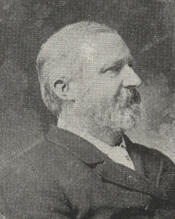
Here you will find contact information for Representative William Henry Hatch, including email address, phone number, and mailing address.
| Name | William Henry Hatch |
| Position | Representative |
| State | Missouri |
| District | 1 |
| Party | Democratic |
| Status | Former Representative |
| Term Start | March 18, 1879 |
| Term End | March 3, 1895 |
| Terms Served | 8 |
| Born | September 11, 1833 |
| Gender | Male |
| Bioguide ID | H000339 |
About Representative William Henry Hatch
William Henry Hatch was a nineteenth-century American politician who served as a Representative from Missouri in the United States Congress from 1879 to 1895. A member of the Democratic Party, he represented an agricultural district in northeastern Missouri and became nationally known for his work on agricultural policy and federal support for scientific farming. Over the course of eight consecutive terms in office, he contributed significantly to the legislative process during a period of major economic and social change in the post–Civil War United States.
William Henry Hatch (often distinguished in historical records from several other individuals named William Hatch, including William Henry Paine Hatch, an American theologian born in 1875; a seventeenth-century English bellfounder in Kent; a New Hampshire state legislator; and William Riley Hatch, an American singer and actor) was born on September 11, 1833, near Georgetown, Scott County, Kentucky. He spent his early years in Kentucky, where he attended the common schools and pursued additional studies in law. After reading law in the traditional manner of the time, he was admitted to the bar and began legal practice, laying the foundation for a career that would combine law, public service, and politics.
Hatch moved west to Hannibal, Marion County, Missouri, in the 1850s, part of a broader migration that was transforming the Mississippi Valley. In Missouri he established a law practice and became involved in local affairs. During the Civil War he served in the Confederate Army, an experience that placed him within the complex political realignments of the border states during and after the conflict. Following the war, he resumed the practice of law in Hannibal and gradually entered Democratic Party politics, aligning himself with the interests of farmers and rural communities that dominated his region.
By the late 1870s Hatch had emerged as a prominent Democratic figure in Missouri, and in 1878 he was elected to the United States House of Representatives. He took his seat in the Forty-sixth Congress on March 4, 1879, and remained in the House through the Fifty-third Congress, serving continuously until March 3, 1895. His service in Congress occurred during a significant period in American history marked by Reconstruction’s aftermath, rapid industrialization, and intense debates over tariffs, currency, and federal regulation. As a member of the House of Representatives, William Henry Hatch participated in the democratic process and represented the interests of his constituents, who were largely engaged in agriculture and river commerce along the Mississippi.
Hatch became best known nationally for his leadership on agricultural legislation. As chairman of the House Committee on Agriculture, he was a principal architect of measures to strengthen the United States Department of Agriculture and to expand federal support for agricultural research and education. He played a central role in the passage of the Hatch Act of 1887, which provided federal funding for agricultural experiment stations in connection with land-grant colleges in the states and territories. This legislation, which bore his name, was a landmark in the development of scientific agriculture in the United States and significantly enhanced the capacity of farmers to adopt new techniques and improve productivity.
During his eight terms in office, Hatch also supported improvements in river and harbor infrastructure important to his Missouri district and the broader Mississippi Valley. He participated in debates over monetary policy, transportation regulation, and the evolving role of the federal government in economic affairs. Throughout his congressional career he remained a loyal Democrat, working within his party’s caucus while also cultivating a reputation as a practical legislator focused on the concrete needs of his largely rural constituency.
After his defeat for reelection in 1894, Hatch left Congress at the close of the Fifty-third Congress in March 1895 and returned to private life in Missouri. He resumed his legal and business activities and remained a respected elder statesman in his community, noted particularly for his contributions to agricultural policy and education. William Henry Hatch died on December 23, 1896, in Hannibal, Missouri. His career is remembered for his long service in the House of Representatives from 1879 to 1895 and for the enduring impact of the agricultural legislation he championed during a transformative era in American history.