Senator William D. Hathaway
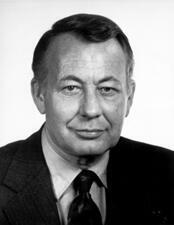
Here you will find contact information for Senator William D. Hathaway, including email address, phone number, and mailing address.
| Name | William D. Hathaway |
| Position | Senator |
| State | Maine |
| Party | Democratic |
| Status | Former Representative |
| Term Start | January 4, 1965 |
| Term End | January 3, 1979 |
| Terms Served | 7 |
| Born | February 21, 1924 |
| Gender | Male |
| Bioguide ID | H000346 |
About Senator William D. Hathaway
William Dodd Hathaway (February 21, 1924 – June 24, 2013) was an American politician, lawyer, and public servant from Maine. A member of the Democratic Party, he served as the U.S. representative for Maine’s 2nd congressional district from 1965 to 1973, as a United States senator for Maine from 1973 to 1979, and as commissioner of the Federal Maritime Commission from 1990 to 1999. His service in Congress, spanning five terms in the House and one term in the Senate, occurred during a significant period in American history, and he participated actively in the legislative process while representing the interests of his constituents.
Hathaway was born in Cambridge, Massachusetts, on February 21, 1924. During World War II he served in the United States Army Air Corps. While participating in Operation Tidal Wave, the August 1, 1943 bombing raid on the oil fields at Ploiești, Romania, his aircraft was shot down. He was captured and held as a prisoner of war for more than two months. For his wartime service and heroism he was awarded the Air Medal, the Purple Heart, and the Distinguished Flying Cross, the latter formally presented to him many years later, in June 2002, when he was 78 years old.
After the war, Hathaway pursued higher education under the G.I. Bill. He attended Harvard University, from which he graduated in 1949, and then continued at Harvard Law School, earning his law degree in 1953. Following his admission to the bar, he moved to Maine and established a law practice in Lewiston. He soon became involved in public service at the local and state levels, gaining experience that would form the foundation of his later political career.
Hathaway’s early legal and governmental work in Maine included service as Assistant County Attorney for Androscoggin County from 1955 to 1957. He then served as a Hearing Examiner for the State Liquor Commission from 1957 to 1961, roles that gave him practical exposure to regulatory and administrative law. During this period he became increasingly active in Democratic politics in a state that had long been dominated by the Republican Party, aligning himself with a new generation of Democratic leaders who were beginning to reshape Maine’s political landscape.
In 1964, Hathaway was elected to the United States House of Representatives from Maine’s 2nd congressional district, succeeding Republican Clifford McIntire, who had run unsuccessfully for the U.S. Senate. Hathaway took office on January 3, 1965, and served in the House until January 3, 1973. His tenure coincided with a resurgence of the Democratic Party in Maine, paralleling the rise of figures such as Edmund S. Muskie and Kenneth M. Curtis. As a congressman, Hathaway supported President Lyndon B. Johnson’s Great Society agenda and took part in legislative efforts that helped lay the groundwork for the establishment of the Occupational Safety and Health Administration, reflecting his interest in worker safety and regulatory reform.
In 1972, Hathaway sought higher office and ran for the United States Senate. In a closely watched race, he defeated four-term Republican incumbent Margaret Chase Smith by 27,230 votes, a notable upset in Maine’s political history. He began his Senate service on January 3, 1973. During his term, he was one of only three senators—along with Democrats Thomas Eagleton of Missouri and Gaylord Nelson of Wisconsin—to oppose the nomination of Gerald R. Ford to be Vice President of the United States in 1973. One of his Senate aides during this period was Angus King, who would later become governor of Maine and a United States senator. In response to a letter he received in 1973 from a woman rejected by the United States Military Academy at West Point solely because of her sex, Hathaway introduced legislation that led to the admission of women to West Point and the other federal service academies beginning in 1976. Despite these efforts, he was an unsuccessful candidate for reelection in 1978, losing to Republican William Cohen, his successor in the 2nd District and a future Secretary of Defense, by 84,967 votes. His Senate term concluded on January 3, 1979.
Following his departure from the Senate, Hathaway remained in the Washington, D.C., area, where he worked as a lobbyist and lawyer. In 1990, President George H. W. Bush appointed him to the Federal Maritime Commission, reflecting bipartisan confidence in his abilities. Hathaway served as a commissioner from 1990 to 1999 and was chairman of the Commission from 1993 to 1996. His work there involved oversight of maritime commerce and regulation of international ocean transportation, extending his public service into a specialized area of federal regulatory policy. He retired from the Commission in 1996 but continued to reside in the Washington, D.C., area.
Hathaway was widely regarded as personable and approachable, and he was known and well-liked by employees of the U.S. Senate, particularly the Senate elevator operators, to whom he was a constant source of humor and good will. In his personal life, he was married to Mary Lee Bird of Horse Shoe, North Carolina, and Akron, Ohio, for more than 61 years, until her death in 2007. The couple had two children, Susan and Fred. On June 24, 2013, exactly 69 years to the day after he was shot down during World War II, William Dodd Hathaway died of pulmonary fibrosis.