Representative Bill Hendon
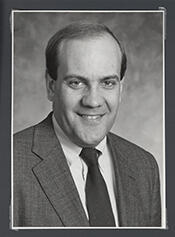
Here you will find contact information for Representative Bill Hendon, including email address, phone number, and mailing address.
| Name | Bill Hendon |
| Position | Representative |
| State | North Carolina |
| District | 11 |
| Party | Republican |
| Status | Former Representative |
| Term Start | January 5, 1981 |
| Term End | January 3, 1987 |
| Terms Served | 2 |
| Born | November 9, 1944 |
| Gender | Male |
| Bioguide ID | H000490 |
About Representative Bill Hendon
William Martin Hendon (November 9, 1944 – June 20, 2018) was an American author, POW/MIA activist, and two-term Republican U.S. Congressman from North Carolina’s 11th District. Born in Asheville, North Carolina, he came of age in the mountain region he would later represent in Congress. Details of his early family life and schooling are less widely documented, but his formative years in western North Carolina shaped his deep familiarity with the concerns of the district’s communities and laid the groundwork for his later political career.
Hendon pursued higher education in North Carolina and became active in public affairs and Republican Party politics during a period when the state and the broader South were undergoing significant political realignment. By the late 1970s he had established himself as a rising Republican figure in a region that had long been dominated by Democrats. His early professional activities, combined with his growing interest in national security and veterans’ issues, positioned him to seek federal office at a time of increasing conservative momentum nationwide.
In 1980, Hendon ran for the U.S. House of Representatives from North Carolina’s 11th Congressional District and defeated two-term Democratic incumbent V. Lamar Gudger. With this victory he became the first Republican to represent what is now the 11th District since 1929, marking a significant partisan shift in the area. He took office on January 3, 1981, serving in the 97th United States Congress (1981–1983). A member of the Republican Party, Hendon contributed to the legislative process during a period defined by the early years of the Reagan administration, focusing on the interests of his western North Carolina constituents and aligning with the broader conservative agenda of the time.
Hendon’s congressional career quickly became defined by a closely watched rivalry with Democrat James “Jamie” Clarke. In the 1982 election, Clarke narrowly defeated Hendon’s bid for re-election by fewer than 1,500 votes, ending Hendon’s first term in Congress. Two years later, in 1984, Hendon sought to reclaim the seat and succeeded, defeating Clarke by roughly two percentage points in an election widely seen as benefiting from President Ronald Reagan’s landslide national victory. Hendon thus returned to Washington as a member of the 99th United States Congress (1985–1987), again representing North Carolina’s 11th District and participating in the democratic process during a significant period in American history.
The Hendon–Clarke contest continued into a third consecutive election cycle. In 1986, Hendon and Clarke again faced each other, and Hendon was narrowly defeated, losing by approximately one percentage point (50.7 percent to 49.3 percent). Despite encouragement from supporters to challenge Clarke a fourth time in 1988, Hendon declined to run. His service in Congress from 1981 to 1983 and from 1985 to 1987 thus encompassed two nonconsecutive terms, during which he represented the interests of his constituents in western North Carolina and engaged in legislative debates characteristic of the Reagan-era Congresses.
Following his narrow defeat in 1986, Hendon remained a prominent figure in national policy circles. President Ronald Reagan appointed him to the board of directors of the Tennessee Valley Authority, reflecting continued confidence in his public service. Hendon, however, withdrew his name from consideration in the face of strong Senate Democratic opposition to his environmental record. Instead, he accepted a position with the pro-defense American Defense Institute, where he continued to advocate for robust national security policies. Over time, he became best known for his intense and sustained involvement in the issue of American prisoners of war and those missing in action (POW/MIA), particularly from the Vietnam War era.
Hendon emerged as one of the country’s most vocal POW/MIA activists, maintaining that American servicemembers had been left behind in Indochina after the end of the Vietnam War. His activism led him to work closely with veterans’ organizations, to engage with federal agencies and congressional committees, and to participate in investigations and public debates concerning the fate of missing servicemembers. His efforts intersected with official records and inquiries such as those later cataloged in archival resources on American prisoners of war and missing in action from the Vietnam War era, and he remained a persistent critic of what he viewed as inadequate government transparency and action on the issue.
In 2007, Hendon’s long-standing advocacy culminated in the publication of An Enormous Crime, co-written with attorney Elizabeth Stewart. The book, which became a New York Times bestseller, argued that American soldiers were abandoned in Vietnam and Laos following the 1973 Paris Peace Accords and that successive U.S. administrations had participated in a cover-up. Reviewers noted the work’s controversial and accusatory tone: Publishers Weekly observed that the authors contended the United States knowingly left hundreds of POWs in Indochina and that every presidential administration since had concealed the truth, while Kirkus Reviews described the volume as “a sprawling indictment of eight U.S. Administrations… A convincing, urgent argument.” One day before the book’s release, The Raleigh News & Observer highlighted a passage from historian Douglas Brinkley’s The Reagan Diaries in which President Reagan, after a briefing by then–Vice President George H. W. Bush, recorded Bush’s view that Hendon was “off his rocker” regarding his allegations about Americans held in Vietnam. Despite such criticism, Hendon continued to press his case in public forums, including appearances on C‑SPAN and in national media coverage of POW/MIA controversies.
William Martin Hendon remained an active voice on POW/MIA issues and national defense concerns well into his later years, maintaining his advocacy even as public attention to the Vietnam War era gradually receded. He continued to speak, write, and consult on matters related to missing servicemembers and U.S. policy toward Vietnam and Laos, and he was frequently cited in discussions of unresolved cases and bilateral cooperation on accounting for the missing. Hendon died on June 20, 2018, under hospice care in Forest City, North Carolina, after a long illness, at the age of 73. His career encompassed service as a two-term Republican congressman, a national security advocate, and one of the most persistent and controversial voices in the modern POW/MIA movement.