Senator William Hendricks
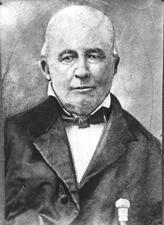
Here you will find contact information for Senator William Hendricks, including email address, phone number, and mailing address.
| Name | William Hendricks |
| Position | Senator |
| State | Indiana |
| Party | Adams |
| Status | Former Representative |
| Term Start | December 4, 1815 |
| Term End | March 3, 1837 |
| Terms Served | 6 |
| Born | November 12, 1782 |
| Gender | Male |
| Bioguide ID | H000494 |
About Senator William Hendricks
William Hendricks (November 12, 1782 – May 16, 1850) was an American lawyer, newspaper editor, and statesman who served Indiana in multiple capacities, including as a Democratic-Republican member of the United States House of Representatives from 1816 to 1822, the third governor of Indiana from 1822 to 1825, and an Anti-Jacksonian (Adams Party) member of the United States Senate from 1825 to 1837. Over the course of his public life he became one of the most prominent early leaders of Indiana, helped to establish several of the state’s core institutions, and led much of his family into politics, founding one of the largest political families in Indiana. He was the uncle of Thomas Andrews Hendricks, who later served as governor of Indiana and vice president of the United States, and Hendricks County, Indiana, was named in his honor.
Hendricks was born near Ligonier in Westmoreland County, Pennsylvania, on November 12, 1782, into a family of modest means on the western frontier. He received a basic education in local schools and, like many young men of his generation, combined farm work with study. He read law in Pennsylvania and was admitted to the bar, beginning the legal career that would underpin his later political life. Drawn by opportunities in the newly opening West, he migrated to the Indiana Territory in the early nineteenth century, settling first at Madison on the Ohio River. There he established himself as an attorney and became editor and publisher of a local newspaper, using the press to advocate for territorial development and eventual statehood, and to build a reputation as a capable spokesman for the region’s interests.
As Indiana moved toward statehood, Hendricks entered public service. After statehood in 1816, he was elected as a Democratic-Republican to the United States House of Representatives, becoming Indiana’s sole representative in Congress. He served in the House from 1816 to 1822, winning reelection by large majorities and holding the seat for three consecutive terms. His tenure in the House coincided with a formative period in national politics following the War of 1812 and during the so‑called “Era of Good Feelings.” According to contemporary accounts, including his obituary in the Indiana Gazetteer, Hendricks was regarded as one of the most attentive and industrious members of the House in handling both public and private business for his constituents. He was noted for leaving no letter unanswered and for diligently visiting federal offices and examining documents on behalf of Indiana residents, which contributed to his reputation as, for many years, the most popular man in the state.
In 1822 Hendricks ran unopposed for the governorship of Indiana, succeeding Jonathan Jennings as the state’s third governor; Jennings in turn succeeded Hendricks in his congressional seat. In that election Hendricks received 100 percent of the 18,340 votes cast, making him the only governor in Indiana history to win by such a margin. He assumed office on December 5, 1822, and served until 1825, the last governor to serve while the state capital remained at Corydon. During his tenure he occupied the Governor’s Headquarters in Corydon, a residence he purchased from Davis Floyd. When Hendricks took office, Indiana’s finances were in poor condition, largely due to the Panic of 1819, the failure of the state’s early banking institutions, and the collapse of modest internal improvement programs. The state’s bonds had been depreciated in 1821, damaging Indiana’s credit and limiting its ability to borrow, while a sparse population produced little revenue and the budget remained in deficit. Hendricks focused his administration on repairing the state’s finances, arranging for the sale of public lands to raise funds to pay down a significant portion of the outstanding debt and transferring government accounts to the Second Bank of the United States, as there were no functioning banks in Indiana at the time.
Although the state’s weakened finances prevented Hendricks from undertaking the large-scale internal improvements he envisioned, he laid important groundwork for future development. He concentrated on creating critical transportation routes, approving legislation that required residents to devote specified periods of labor to the construction and maintenance of state roads, and overseeing the clearing and improvement of existing roads and rivers. At the same time, his administration began to establish the basic framework of Indiana’s public school system, which was among the earliest state-funded systems in the nation. Under his leadership, each township was granted land on which a public school could be established, and the value of these educational improvements totaled more than $1.25 million, making education the largest single item in the state budget to that date. Construction of the State Seminary, which would later become Indiana University, began during his term, and he also contributed personally to the support of Hanover College. In 1822 Hendricks oversaw the first codification of Indiana’s laws, creating a systematic Indiana Code to bring order and clarity to the state’s legal framework.
Hendricks’s governorship also confronted issues of law, order, and relations with Native American communities. In 1824 a Seneca family was murdered near Pendleton, Indiana, by a group of white men, an event that sharply raised tensions between Native Americans in northern Indiana and settlers in the central part of the state. Determined both to maintain peace and to demonstrate that the law applied equally, Governor Hendricks ordered that the murderers be captured and tried. Although one of the accused escaped, the others were apprehended, convicted, and sentenced to death. Hendricks denied an appeal for clemency, and the executions went forward, marking the first time in United States history that white men were executed for killing Native Americans. One of the condemned was a minor who was later pardoned by Hendricks’s successor, Governor James B. Ray, but Hendricks had used the case to signal to Native communities his intention to enforce justice impartially. One of his final significant acts as governor was to approve the relocation of the state capital from Corydon to Indianapolis. Despite strong pressure to keep the capital in the more populous southern region, Hendricks signed the measure in late 1824, selecting Indianapolis, then a frontier site roughly sixty miles north of the nearest settlement, as the new seat of government.
After leaving the governorship, Hendricks entered the United States Senate as an Anti-Jacksonian, aligned with the Adams Party, and served from 1825 to 1837. His Senate service, which lasted twelve years, spanned three terms and coincided with a turbulent era in national politics that included the presidencies of John Quincy Adams, Andrew Jackson, and Martin Van Buren, the rise of the Second Party System, and intense debates over internal improvements, the national bank, tariffs, and federal–state relations. As a senator from Indiana, he participated in the legislative process during this significant period in American history, representing the interests of his constituents while maintaining his association with the Adams and Anti-Jacksonian factions that opposed many of Jackson’s policies. His combined service in Congress—from his House tenure beginning in 1816 through his Senate career ending in 1837—placed him at the center of federal policymaking for more than two decades.
In his later years Hendricks remained an influential figure in Indiana, both through his own reputation and through the extensive political network of his family. He had helped lead many relatives into public life, and the Hendricks family became one of the state’s most prominent political dynasties, culminating in the national prominence of his nephew Thomas A. Hendricks. William Hendricks died on May 16, 1850, leaving a legacy as an early architect of Indiana’s governmental, financial, and educational institutions and as a widely respected public servant whose popularity and diligence were noted by contemporaries and preserved in the historical record.