Representative William Peters Hepburn
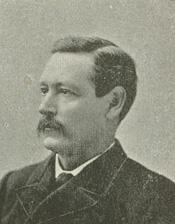
Here you will find contact information for Representative William Peters Hepburn, including email address, phone number, and mailing address.
| Name | William Peters Hepburn |
| Position | Representative |
| State | Iowa |
| District | 8 |
| Party | Republican |
| Status | Former Representative |
| Term Start | December 5, 1881 |
| Term End | March 3, 1909 |
| Terms Served | 11 |
| Born | November 4, 1833 |
| Gender | Male |
| Bioguide ID | H000523 |
About Representative William Peters Hepburn
William Peters Hepburn (November 4, 1833 – February 7, 1916) was an American Civil War officer and an eleven-term Republican congressman from Iowa’s now-obsolete 8th congressional district, serving in the United States House of Representatives from 1881 to 1887 and from 1893 to 1909. A prominent member of the Republican Party, he became one of the most influential legislators of his era, known for his command of parliamentary debate and his leadership on regulatory and transportation issues. According to historian Edmund Morris, “Hepburn was the House’s best debater, admired for his strength of character and legal acumen.” As chair of one of the most powerful committees in Congress, he guided or sponsored many statutes regulating business, most notably the Hepburn Act of 1906, which expanded federal oversight of railroad rates.
Hepburn was born in Wellsville, Ohio, and from the age of seven was raised in Iowa City, Iowa. His formal schooling was limited to a few months in an Iowa City academy, but he came from a distinguished political and military lineage. He was the great-grandson of Revolutionary War officer, printer, and congressman Matthew Lyon, and the great-great-grandson of Thomas Chittenden, the first governor of Vermont. As a young man he first worked as an apprentice printer before turning to the study of law. His legal ability and political engagement quickly brought him into public service. In 1856 he became prosecuting attorney of Marshall County, Iowa, and in the same period served as district attorney for the eleventh judicial district from 1856 to 1861. He also worked as clerk to the Iowa House of Representatives, gaining early familiarity with legislative procedure.
By 1860 Hepburn was already active in Republican politics at the national level. In May of that year he was one of two delegates representing counties in Iowa’s eleventh judicial district at the 1860 Republican National Convention in Chicago, where Abraham Lincoln was nominated for the presidency. The following March, while serving a brief term as a lobbyist in Washington, D.C., on behalf of those counties, Hepburn attended Lincoln’s presidential inauguration. His early exposure to national politics and his legal background helped shape his later legislative career.
During the American Civil War, Hepburn served as an officer in the 2nd Regiment Iowa Volunteer Cavalry. He entered service as captain of Company B and was promoted to major of the First Battalion on September 13, 1861, and then to lieutenant colonel in 1862. He participated in the final stage of the Battle of Island Number Ten near New Madrid, Missouri, and saw combat during the Siege of Corinth, the Battle of Iuka in northeastern Mississippi, and the Battle of Collierville, Tennessee. Owing to his legal experience, he was from time to time assigned as an inspector of cavalry for the Army of the Cumberland and served as an acting inspector general and as president or judge advocate of courts-martial for troops in the lower Mississippi River theater. He was mustered out of service on October 3, 1864, upon the expiration of his term. After the war he moved his family to Memphis, Tennessee, before returning to Iowa in 1867, settling in Clarinda. In 1886 he joined the Military Order of the Loyal Legion of the United States, through the District of Columbia Commandery, as Companion No. 04476, reflecting his continued identification with the Union officer corps.
Upon establishing his legal practice in Clarinda, Hepburn again became active in Republican politics. In 1880 he was elected as a Republican to the United States House of Representatives from Iowa’s 8th congressional district, after a protracted district convention in which he defeated incumbent William F. Sapp on the 346th ballot. He was re-elected in 1882 and 1884, serving continuously from 1881 to 1887. His first congressional tenure ended when he was defeated in the 1886 general election by Independent Republican Albert R. Anderson, a former state railroad commissioner who campaigned on an anti-monopolist, anti-corporate platform and emphasized what he viewed as the unfairness and excesses of prevailing railroad rates. Historians have regarded Hepburn’s defeat as a catalyst for the eventual authorization of a federal Interstate Commerce Commission, as other members of Congress sought to avoid a similar backlash by addressing public concerns over railroad regulation.
After leaving Congress, Hepburn remained a significant figure in Republican politics. In 1888 he was the principal opponent to James F. Wilson for the Republican nomination for the United States Senate from Iowa, but when it became clear he lacked sufficient support in the Iowa General Assembly, his backers withdrew his name. Following the election of President Benjamin Harrison in 1888 and the return of Republicans to the White House, Hepburn was appointed Solicitor of the Treasury in 1889, a post in which he applied his legal expertise to the financial and administrative affairs of the federal government. After three terms away from Congress, he sought to return to elective office in 1892 when Republican James Patton Flick declined to run for a third term in the 8th district. Hepburn secured the Republican nomination, won the general election, and was subsequently re-elected seven more times, serving from 1893 to 1909 and bringing his total House service to eleven terms.
During his long second period in Congress, Hepburn emerged as one of the chamber’s most powerful members. He served as chairman of the Committee on Interstate and Foreign Commerce, a key position from which he shaped federal regulation of railroads and other common carriers. In 1894 he finished a distant second in the Republican caucus to nominate a successor to retiring U.S. Senator James F. Wilson, and in 1899 he briefly became a candidate for Speaker of the House before deferring to fellow Iowan and Civil War veteran David B. Henderson, who ultimately won the post. Hepburn became known for his brusque and often disdainful treatment of newer members on the House floor, leading The New York Times to dub him the “House Terror.” At the same time, he was an outspoken and persistent advocate of reforming House rules that concentrated autocratic power in the hands of the Speaker. His legislative interests extended beyond transportation; even before the publication of Upton Sinclair’s exposé “The Jungle,” Hepburn led efforts to enact federal laws regulating food quality. His Hepburn Pure Food Act passed the House in 1902 but failed in the Senate. When a similar measure finally passed both houses as the Pure Food and Drug Act of 1906, in the wake of Sinclair’s book, Hepburn served as the bill’s floor manager in the House.
Hepburn’s most famous legislative achievement was the Hepburn Act of 1906, a major priority in the second term of President Theodore Roosevelt. As sponsor and chief House advocate of the measure, Hepburn secured passage of a law that significantly strengthened the Interstate Commerce Commission by authorizing it to require railroads to charge “just and reasonable” rates, empowering it to set maximum railroad rates, and effectively ending the widespread practice of granting free passes to favored shippers. Scholars consider the Hepburn Act the most important piece of federal legislation concerning railroads in the first half of the twentieth century, though economists have debated whether its stringent provisions contributed to financial instability and played a role in the Panic of 1907. Hepburn was also instrumental in securing appropriations for a canal connecting the Atlantic and Pacific Oceans. Initially favoring a route through Nicaragua, he ultimately became a key House sponsor of appropriations necessary for the construction of the Panama Canal once that route was selected.
In 1908 Hepburn sought a twelfth term in the House but was defeated in the general election by Democrat William D. Jamieson. Despite a strong Republican year in Iowa, led by presidential candidate William Howard Taft, Jamieson carried eight of the district’s eleven counties. Observers attributed Hepburn’s loss to “purely local conditions and local strife,” including public anger over bank failures and dissatisfaction with his choices for local postmaster appointments. Even after his defeat, and before his final term expired in March 1909, Hepburn continued to press for institutional reform. He chaired a 25-member group that again sought to curb the sweeping powers of Speaker Joseph G. Cannon. This time the reform effort succeeded, and Cannon was forced to relinquish his ability to prevent bills he opposed from reaching the House floor once they had committee support, marking a significant shift in the internal balance of power in the House of Representatives.
Following his departure from Congress, Hepburn returned to the practice of law, first in Washington, D.C., and later in Clarinda, Iowa. He remained a respected elder statesman in his community and within Republican circles. Hepburn died on February 7, 1916. His legacy is reflected not only in the major federal statutes with which he was associated and in his long service representing Iowa’s 8th congressional district, but also in the recognition accorded him in his home state. The small town of Hepburn, Iowa, located a few miles north of Clarinda, was named in his honor, and his Clarinda residence, known as the William P. Hepburn House, has been designated a National Historic Landmark.