Representative William Henry Hinebaugh
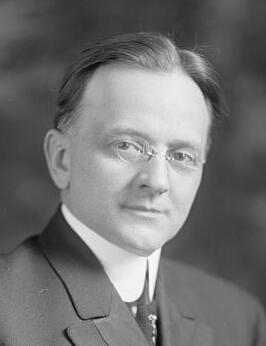
Here you will find contact information for Representative William Henry Hinebaugh, including email address, phone number, and mailing address.
| Name | William Henry Hinebaugh |
| Position | Representative |
| State | Illinois |
| District | 12 |
| Party | Progressive |
| Status | Former Representative |
| Term Start | April 7, 1913 |
| Term End | March 3, 1915 |
| Terms Served | 1 |
| Born | December 16, 1867 |
| Gender | Male |
| Bioguide ID | H000633 |
About Representative William Henry Hinebaugh
William Henry Hinebaugh (December 16, 1867 – September 22, 1943) was a U.S. Representative from Illinois and a prominent jurist and attorney whose career spanned the late nineteenth and early twentieth centuries. He was born on a farm near Marshall, Calhoun County, Michigan, where he spent his early years in a rural setting typical of the post–Civil War Midwest. He attended the common schools and later Litchfield High School in Litchfield, Michigan, reflecting a conventional educational path for a young man of his era who aspired to professional life.
Hinebaugh pursued further education at the Michigan State Normal School at Ypsilanti, an institution devoted to training teachers and now known as Eastern Michigan University. He subsequently attended the University of Michigan at Ann Arbor, one of the leading public universities in the country, where he continued his preparation for a professional career. This combination of normal school and university training provided him with a solid academic foundation and exposed him to the broader intellectual and political currents of the time.
In 1891 Hinebaugh moved to Illinois and settled in Ottawa, LaSalle County, where he read law in the traditional manner then common in the legal profession. He was admitted to the bar in 1893 and commenced the practice of law in Ottawa. His abilities were soon recognized locally, and in December 1900 he was appointed assistant prosecuting attorney of LaSalle County, Illinois. In this role he gained experience in criminal law and public prosecution, which helped establish his reputation as a capable lawyer and public servant.
Hinebaugh’s judicial career began when he was elected judge of the La Salle County Court, a position he held from 1902 to 1912. During this decade on the bench he presided over a wide range of civil and criminal matters at the county level. From 1908 to 1910 he served as president of the State Association of County Judges of Illinois, a post that indicated his standing among his peers and his influence in shaping the administration of justice in the state’s county courts. At the same time, he was active in partisan politics. He was elected and reelected chairman of the Republican county central committee in LaSalle County, playing a key role in organizing and directing local Republican campaigns.
The political realignments of the Progressive Era had a direct impact on Hinebaugh’s career. In July 1912 he resigned as chairman of the Republican county central committee to join the newly formed Progressive Party, reflecting his alignment with the reform movement associated nationally with Theodore Roosevelt. Running under the Progressive banner, Hinebaugh was elected as a Progressive to the Sixty-third Congress and served as a Representative from Illinois from March 4, 1913, to March 3, 1915. His single term in the U.S. House of Representatives occurred during a significant period in American history marked by debates over tariff reform, banking and currency legislation, and broader social and political reforms. As a member of the House of Representatives, he participated in the legislative process and represented the interests of his Illinois constituents within the framework of Progressive Party principles.
Hinebaugh was an unsuccessful candidate for reelection in 1914 to the Sixty-fourth Congress, as the Progressive Party’s influence waned and many of its supporters returned to the major parties. After leaving Congress in March 1915, he resumed the practice of law in Ottawa, Illinois, returning to the profession in which he had first made his name. His legal and public experience soon led to further responsibilities at the state level.
From 1916 to 1922 Hinebaugh served as assistant attorney general of Illinois, a position that placed him in the forefront of the state’s legal affairs during a period that encompassed World War I and the early years of Prohibition. In this capacity he was involved in representing the state’s interests in litigation and advising state officials on legal matters. After his service as assistant attorney general, he entered the field of insurance and corporate law. He became president and general counsel of the Central Life Insurance Company of Illinois and resided in Chicago while holding these positions, combining executive leadership with legal oversight in the growing life insurance industry.
In 1933 Hinebaugh returned to his native state of Michigan, moving to Albion, where he continued the practice of law. He remained professionally active there until his death in Albion on September 22, 1943. William Henry Hinebaugh was interred in Mount Hope Cemetery in Litchfield, Michigan, bringing his life full circle to the community where he had received part of his early education and with which he maintained a lasting connection.