Representative William Cannon Houston
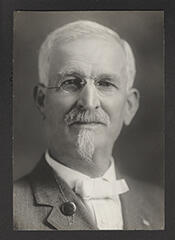
Here you will find contact information for Representative William Cannon Houston, including email address, phone number, and mailing address.
| Name | William Cannon Houston |
| Position | Representative |
| State | Tennessee |
| District | 5 |
| Party | Democratic |
| Status | Former Representative |
| Term Start | December 4, 1905 |
| Term End | March 3, 1919 |
| Terms Served | 7 |
| Born | March 17, 1852 |
| Gender | Male |
| Bioguide ID | H000829 |
About Representative William Cannon Houston
William Cannon Houston (March 17, 1852 – August 30, 1931) was an American politician and a member of the United States House of Representatives for the 5th congressional district of Tennessee. A Democrat, he served as a Representative from Tennessee in the United States Congress from 1905 to 1919, contributing to the legislative process during seven consecutive terms in office and representing his constituents during a significant period in American political and social history.
Houston was born on March 17, 1852, in Shelbyville, Bedford County, Tennessee. In 1858 he moved with his mother to Woodbury, in Cannon County, Tennessee. He attended the local schools in Woodbury and later studied at schools in Sweetwater, Tennessee. As a young man he engaged in agricultural pursuits, reflecting the predominantly rural character of his region, and later entered the field of journalism through the publication of a newspaper, an experience that helped establish his public profile and interest in political affairs.
Houston’s formal political career began in state government. He was elected to the Tennessee House of Representatives, serving from 1877 to 1879 and again from 1881 to 1885. During this period he studied law, was admitted to the bar in 1878, and commenced the practice of law in Woodbury, Tennessee. His growing influence within the Democratic Party was evident in his service on the Democratic state executive committee in 1888 and his role as chairman of the Democratic state convention that same year. These positions placed him at the center of party organization and strategy in Tennessee during the late nineteenth century.
In addition to his legislative and party work, Houston pursued a judicial career. He was elected judge of the eighth judicial circuit of Tennessee in 1894 and was re-elected in 1902. He served on the bench until his election to Congress, presiding over a broad range of civil and criminal matters and gaining a reputation for legal competence and public service. His combined experience as legislator, party leader, lawyer, and judge provided a strong foundation for his subsequent national legislative career.
Houston was elected as a Democrat to the Fifty-ninth and the six succeeding Congresses, serving in the U.S. House of Representatives from March 4, 1905, to March 3, 1919. As a member of the House of Representatives, he participated actively in the democratic process and represented the interests of his constituents in Tennessee’s 5th congressional district through a period that encompassed the Progressive Era and World War I. During his tenure he held important committee leadership posts: he served as chairman of the United States House Committee on the Census during the Sixty-second Congress, overseeing matters related to the collection and use of national demographic data, and later as chairman of the United States House Committee on Territories during the Sixty-third through Sixty-fifth Congresses, where he was involved in legislation affecting the governance and development of U.S. territories. He was not a candidate for renomination in 1918, thereby concluding his seven terms in the House.
After leaving Congress, Houston remained engaged in national Democratic politics. He served as a delegate to the Democratic National Convention in 1920, participating in the selection of the party’s presidential nominee and the formulation of the party platform in the immediate post–World War I era. He also continued his longstanding connections to his home community in Cannon County and to his agricultural interests.
William Cannon Houston died on his Beaver Dam Plantation near Woodbury, Tennessee, on August 30, 1931. He was interred at Riverside Cemetery near Woodbury, reflecting his lifelong ties to the region where he had grown up, practiced law, and built his political career. His family continued to be active in public and economic life; his son, Frank K. Houston, became a banking executive, extending the family’s influence into the financial sector.