Representative William Edgar Hull
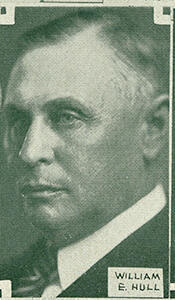
Here you will find contact information for Representative William Edgar Hull, including email address, phone number, and mailing address.
| Name | William Edgar Hull |
| Position | Representative |
| State | Illinois |
| District | 16 |
| Party | Republican |
| Status | Former Representative |
| Term Start | December 3, 1923 |
| Term End | March 3, 1933 |
| Terms Served | 5 |
| Born | January 13, 1866 |
| Gender | Male |
| Bioguide ID | H000946 |
About Representative William Edgar Hull
William Edgar Hull was an American politician who served as a Representative from Illinois in the United States Congress from 1923 to 1933. A member of the Republican Party, he held office during a significant period in American history that encompassed the later years of the Roaring Twenties and the onset of the Great Depression. Over the course of five consecutive terms, Hull contributed to the legislative process in the House of Representatives and took part in the evolving national debate over economic policy, social change, and the role of the federal government in the lives of citizens. As a congressman, he was responsible for representing the interests of his Illinois constituents in Washington, D.C., participating in committee work, floor debates, and the formulation of federal law.
Hull’s early life and education laid the foundation for his later public service, although the specific details of his birth, family background, and schooling are not recorded in the surviving material. He emerged from this formative period with the skills and civic awareness necessary to enter public life in Illinois. His education, formal or otherwise, prepared him to navigate the legal, economic, and political questions that would confront the nation during the 1920s and early 1930s, and to engage effectively in the democratic process on behalf of his district.
Hull’s career prior to entering Congress is not documented in the available sources, but by the early 1920s he had become sufficiently prominent in Illinois public affairs to secure election to the U.S. House of Representatives. His rise to national office reflected both his standing within the Republican Party and the confidence of voters who entrusted him with federal legislative responsibilities. In this capacity, he joined a generation of lawmakers who would confront the challenges of post–World War I adjustment, rapid industrial expansion, and growing regional and urban–rural tensions across the United States.
Elected as a Republican, William Edgar Hull began his congressional service in 1923, taking his seat in the House of Representatives as part of the Sixty-eighth Congress. He would be re-elected four times, serving continuously through 1933. During these five terms, he participated in the work of the House at a time when the federal government was grappling with issues such as tariff policy, agricultural relief, banking and financial regulation, and the appropriate federal response to economic volatility. Hull’s role in Congress required him to balance national considerations with the particular needs of his Illinois constituents, ensuring that their concerns were heard in legislative deliberations. His service coincided with the stock market crash of October 1929 and the early years of the Great Depression, when members of Congress faced mounting pressure to address unemployment, failing banks, and widespread economic distress.
Throughout his decade in office, Hull took part in the democratic process that underpins the American system of government. He contributed to the shaping of federal policy through votes, committee activities, and engagement with colleagues across party lines. While the surviving record does not detail specific bills he sponsored or individual speeches he delivered, his repeated re-election suggests that his constituents regarded him as an effective advocate for their interests during a turbulent era. His tenure came to an end in 1933, as the nation transitioned into the New Deal period under President Franklin D. Roosevelt, marking the close of Hull’s direct role in federal legislative affairs.
Following his departure from Congress, William Edgar Hull entered the later phase of his life outside of elected office. The extant sources do not document his subsequent professional activities, personal endeavors, or the date and place of his death. Nonetheless, his decade of service in the U.S. House of Representatives remains a matter of public record, situating him among the many legislators who helped steer the country through the profound economic and social changes of the early twentieth century.