Representative William Darius Jamieson
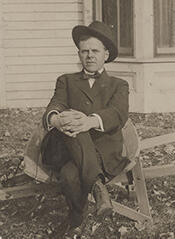
Here you will find contact information for Representative William Darius Jamieson, including email address, phone number, and mailing address.
| Name | William Darius Jamieson |
| Position | Representative |
| State | Iowa |
| District | 8 |
| Party | Democratic |
| Status | Former Representative |
| Term Start | March 15, 1909 |
| Term End | March 3, 1911 |
| Terms Served | 1 |
| Born | November 9, 1873 |
| Gender | Male |
| Bioguide ID | J000055 |
About Representative William Darius Jamieson
William Darius Jamieson (November 9, 1873 – November 18, 1949) was an American newspaper publisher, lawyer, and Democratic politician who represented Iowa’s 8th congressional district in the United States House of Representatives from 1909 to 1911. A member of the Democratic Party, he was the only Democrat elected from that district in its ninety-year history and served a single term in Congress during a period of significant political realignment in the early twentieth century.
Jamieson was born near Newton, Jasper County, Iowa. He attended the public schools of his native state and, while still a young man, entered the newspaper business, a field that would shape much of his professional and political life. He studied law at the National University Law School in Washington, D.C., gaining formal legal training that complemented his work as a journalist and later informed his public service and legal practice.
Jamieson’s early career was rooted in Iowa journalism. He edited and published the Ida Grove Pioneer in 1893 and 1894, establishing himself in the newspaper trade before moving on to other publications. By the end of the decade he had become editor and publisher of the Columbus Junction Gazette, a position he held from 1899 to 1901. In 1901 he moved to Shenandoah, Iowa, where he edited and published the Shenandoah World from 1901 to 1916. He was also editor of the Hamburg Democrat, extending his influence across several communities in southwestern Iowa. Through these newspapers he became a prominent local voice on political and civic affairs, building the public profile that would support his entry into elective office.
Jamieson’s political career began in state government. In 1906 he was elected as a Democrat to the Iowa State Senate, representing Page and Fremont counties in southwestern Iowa, both of which were traditionally Republican-leaning. His election in such a district underscored his personal appeal and the effectiveness of his local political organization. Midway through his four-year Senate term, he sought higher office, becoming a candidate for the United States House of Representatives from Iowa’s 8th congressional district in 1908.
In the 1908 election, held in a year of strong Republican victories in Iowa led by presidential candidate William Howard Taft, Jamieson mounted a successful challenge to longtime Republican Congressman William P. Hepburn, a Civil War veteran and influential political figure more than twice his age. Jamieson won majorities in eight of the district’s eleven counties, an upset widely attributed to “purely local conditions and local strife,” including public anger over bank failures and dissatisfaction with Hepburn’s choices for local postmasters. At thirty-five years old, Jamieson’s victory marked a rare Democratic breakthrough in a strongly Republican district and secured him a seat in the Sixty-first Congress.
As a member of the U.S. House of Representatives from 1909 to 1911, Jamieson participated in the legislative process during a significant period in American history, representing the interests of his constituents in Iowa’s 8th district. Serving in the Sixty-first Congress, he contributed to debates and legislation characteristic of the Progressive Era, while navigating the political challenges of holding a Democratic seat in a predominantly Republican region. Citing health reasons and the financial burdens associated with maintaining his seat, he declined to be a candidate for renomination in 1910, thus limiting his congressional service to a single term. After leaving Congress, he returned to Shenandoah and resumed his newspaper activities, continuing his engagement in public affairs through journalism.
Jamieson remained active in public service and national politics after his congressional term. He was appointed Postmaster of Shenandoah on May 29, 1915, serving in that federal position until his resignation on September 1, 1916. He then returned to Washington, D.C., where he became assistant treasurer of the Democratic National Committee in 1916 and subsequently served as its director of finance from 1917 to 1920. In these roles he was involved in the financial and organizational work of the Democratic Party at the national level during the World War I era. He also engaged in the practice of law in Washington, drawing on his earlier legal studies. In 1920 he served as a delegate at large to the Democratic National Convention, further underscoring his continuing prominence within the party.
In his later years, Jamieson combined his political experience and journalistic background in a syndicated writing venture. Beginning in 1925, he was editor of “The Window Seat,” a weekly syndicate letter for country newspapers, a position he held until his death. Through this work he maintained a voice in public discourse and rural journalism for nearly a quarter century. William Darius Jamieson died in Washington, D.C., on November 18, 1949. He was interred in Fort Lincoln Cemetery, leaving a legacy as a distinctive Democratic figure in Iowa politics, a one-term congressman from a historically Republican district, and a lifelong newspaperman and party organizer.