Senator William Ezra Jenner
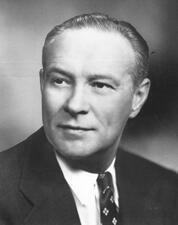
Here you will find contact information for Senator William Ezra Jenner, including email address, phone number, and mailing address.
| Name | William Ezra Jenner |
| Position | Senator |
| State | Indiana |
| Party | Republican |
| Status | Former Representative |
| Term Start | January 1, 1944 |
| Term End | January 3, 1959 |
| Terms Served | 3 |
| Born | July 21, 1908 |
| Gender | Male |
| Bioguide ID | J000093 |
About Senator William Ezra Jenner
William Ezra Jenner (July 21, 1908 – March 9, 1985) was an American lawyer and Republican politician from Indiana who served in the United States Senate during a pivotal era in mid‑twentieth‑century American politics. A prominent conservative and an ardent supporter of McCarthyism, he was an Indiana state senator from 1934 to 1942, and a U.S. senator from 1944 to 1945 and again from 1947 to 1959. Over the course of three terms in the Senate, he participated actively in the legislative process, represented the interests of his Indiana constituents, and became nationally known for his militant anti-communist and isolationist views.
Jenner was born in Marengo, Crawford County, Indiana, on July 21, 1908, to L. L. “Woody” Jenner and Jane McDonald Jenner. Raised in southern Indiana, he attended local schools before enrolling at Lake Placid Preparatory School in Lake Placid, New York. He then attended Indiana University at Bloomington, from which he graduated in 1930. Seeking a legal education while supporting himself, Jenner worked as an elevator operator in the old House Office Building in Washington, D.C., while taking night classes at George Washington University Law School. He ultimately completed his legal training at Indiana University School of Law–Bloomington, from which he received his law degree. In 1933, he married Janet Paterson Cuthill (1908–2002); the couple later had a son, William Edward Jenner (1942–2019).
After his admission to the bar, Jenner began practicing law in Paoli, Indiana, and later in Shoals, Indiana. His early legal career in these small communities helped establish his reputation as a capable attorney and provided a base for his entry into public life. Maintaining close ties to his home region, he combined legal practice with increasing involvement in Republican Party politics, positioning himself as a rising figure in Indiana’s conservative political circles during the early years of the Great Depression.
Jenner’s formal political career began in 1934, when he was elected to the Indiana State Senate. He served in that body from 1934 to 1942, quickly moving into leadership positions. He was minority leader from 1937 to 1939, and then majority leader and president pro tempore from 1939 to 1941, roles that gave him significant influence over the state’s legislative agenda. In 1940, he sought higher office as a candidate for governor of Indiana, finishing second at the Republican state convention. With the onset of World War II, Jenner resigned his state senate seat in 1942 to enter military service. He joined the U.S. Army Air Corps as a first lieutenant and was discharged in 1944 with the rank of captain.
One month after his discharge from the Army Air Corps in 1944, Jenner was elected to the United States Senate to fill the vacancy caused by the death of Senator Frederick Van Nuys. He served the remaining months of Van Nuys’s term from November 14, 1944, to January 3, 1945, and was at that time the first veteran of World War II elected to the Senate and its youngest member. He did not seek election to the full six‑year term beginning in 1945. Instead, he returned to Indiana politics and, in 1946, again sought a Senate seat. At the Republican state convention that year he defeated Congressman Charles M. La Follette by a vote of 1,994 to 105 for the party’s nomination and went on to win the general election by more than 150,000 votes. In 1948 he made a second bid for the governorship of Indiana, winning a plurality on the first ballot at the Republican state convention but losing the nomination on the second ballot to Holbart Creighton by a vote of 931 to 885. Jenner was re‑elected to the Senate in 1952, extending his service in that body until January 3, 1959; in 1958 he chose not to seek re‑nomination.
During his years in Congress, Jenner’s service coincided with World War II’s aftermath, the onset of the Cold War, and the domestic anti-communist crusades of the late 1940s and 1950s. As a senator from Indiana, he participated in the democratic process, contributed to the legislative work of the chamber, and represented the interests of his constituents. He served as chairman of the Senate Committee on Rules and Administration during the Eighty‑Third Congress (1953–1955), a position that gave him an important role in overseeing Senate procedures and internal administration. He was also a member of the Senate Subcommittee on Internal Security, from which he advanced his strong anti-communist agenda. On domestic legislation, he took part in major debates of the era; notably, he voted in favor of the Senate amendment to the Civil Rights Act of 1957 on August 7, 1957, although he did not vote on the House amendment to the bill on August 29, 1957.
Jenner became nationally known as a close ally and strong supporter of Senator Joseph R. McCarthy and a leading practitioner of McCarthyism. Along with McCarthy, Herman Welker of Idaho, and George W. Malone of Nevada, he formed part of a core group of isolationist, militantly anti-communist Republican senators. In 1950, when McCarthy charged that numerous State Department employees were secret Communists, Jenner endorsed those accusations during the Tydings Committee investigation, denouncing what he called “the most scandalous and brazen whitewash of treasonable conspiracy in our history” and asking, “Considering the fact that we are now at war… how can we get the Reds out of Korea if we cannot get them out of Washington?” He was a strident opponent of General George C. Marshall, whom President Harry S. Truman nominated as Secretary of Defense in 1950. During the confirmation debate, Jenner delivered an hour‑long attack not only on Marshall but also on Truman and Secretary of State Dean Acheson, accusing the administration of leaving “bloody tracks of treason” and calling Marshall “a living lie” who was joining “this criminal crowd of traitors and Communist appeasers.” He blamed Marshall for the Pearl Harbor attack, for aiding the Soviet Union through Lend‑Lease, for the outcome at Yalta, for the “loss” of China, and for including an offer of aid to the Soviet Union in the Marshall Plan. When informed of Jenner’s speech, Marshall reportedly replied, “Jenner? Jenner? I do not believe I know the man.”
Jenner’s rhetoric extended beyond individual officials to sweeping charges about the federal government. In 1951, after President Truman relieved General Douglas MacArthur of command in Korea, Jenner declared on the Senate floor that “this country today is in the hands of a secret inner coterie, which is directed by agents of the Soviet Government,” and called for Truman’s impeachment to expose what he termed a “secret invisible government.” He introduced legislation to strip the Supreme Court of jurisdiction “in all the areas where it had interfered with the anticommunist program,” a measure that Senate Majority Leader Lyndon B. Johnson helped to defeat; the proposal was ultimately tabled by a vote of 49–41. Jenner also claimed in 1952 that the United Nations had infiltrated the American educational system. When the Senate moved to censure McCarthy in 1954, Jenner opposed the action and delivered a speech suggesting that the censure resolution itself “was initiated by the Communist conspiracy.” Throughout his tenure, he was a consistent opponent of foreign aid, U.S. participation in the North Atlantic Treaty Organization, and broader American involvement in foreign affairs, positions that placed him firmly in the isolationist wing of the Republican Party. His prominence on the far right led some conservative activists to urge him to run for president as a third‑party candidate.
After leaving the Senate in January 1959, Jenner returned to private life in Indiana. He resumed the practice of law in Indianapolis and became the owner of the Seaway Corporation, a land development company. In addition to his business interests, he owned farms in Indiana and Illinois, maintaining his longstanding connection to the agricultural communities of his home state. He remained a figure of interest to conservative circles, though he no longer held public office.
William Ezra Jenner died at age 76 on March 9, 1985, of a respiratory illness at Dunn Memorial Hospital in Bedford, Indiana. He was interred at Crest Haven Memorial Gardens in Bedford. His long career in state and national politics, marked by leadership roles in the Indiana Senate, three terms in the United States Senate, and a prominent place in the anti-communist politics of the early Cold War, left a distinct imprint on mid‑twentieth‑century American political history.