Representative William J. Keating
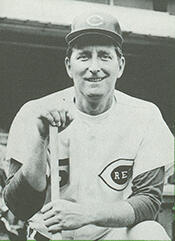
Here you will find contact information for Representative William J. Keating, including email address, phone number, and mailing address.
| Name | William J. Keating |
| Position | Representative |
| State | Ohio |
| District | 1 |
| Party | Republican |
| Status | Former Representative |
| Term Start | January 21, 1971 |
| Term End | January 3, 1975 |
| Terms Served | 2 |
| Born | March 30, 1927 |
| Gender | Male |
| Bioguide ID | K000037 |
About Representative William J. Keating
William John Keating (March 30, 1927 – May 20, 2020) was an American lawyer, businessman, and Republican Party politician who represented Ohio in the United States House of Representatives from 1971 to 1974. Born in Cincinnati, Ohio, he was the son of Adele (née Kipp) and Charles Humphrey Keating. He grew up in a family that would become widely known in business, law, athletics, and public life, and he maintained deep ties to his native city throughout his career.
Keating attended St. Xavier High School in Cincinnati, graduating in 1945. During his youth and early adulthood he was heavily involved in competitive swimming, a sport in which he excelled and for which he would later be inducted into the athletic halls of fame at both St. Xavier High School and the University of Cincinnati. His family shared this athletic distinction: his brother Charles H. Keating Jr., his son Bill Keating, and his nephew Charles Keating III were also honored in the halls of fame at St. Xavier and their respective universities. Keating’s extended family later included his great-nephew, Chief Petty Officer Charles Keating IV, a Navy SEAL who was killed in combat with ISIS in Iraq in 2016 and was posthumously awarded the Navy Cross for his actions.
Following his graduation from high school, Keating served in the United States Navy during World War II. After his military service, he returned to Cincinnati and pursued higher education at the University of Cincinnati, where he received his bachelor’s degree. He continued his studies at the University of Cincinnati College of Law, earning a law degree that laid the foundation for his legal and political career. Over the course of his life, his professional and civic contributions were recognized by several institutions of higher learning, which awarded him honorary degrees: the University of Cincinnati conferred upon him honorary Doctor of Laws (LL.D.) and Doctor of Humane Letters (D.H.L.) degrees, Xavier University awarded him an honorary LL.D., and the College of Mount St. Joseph granted him an honorary D.H.L.
Keating began his professional career in public service and the law. He served as an assistant Ohio attorney general, gaining early experience in state legal affairs. He then moved onto the bench, first as a Cincinnati Municipal Court judge and subsequently as a judge of the Hamilton County Court of Common Pleas, serving on that court from 1964 to 1967. His judicial service coincided with a period of social and political change in Ohio and the nation, and it helped establish his reputation as a capable and respected legal figure. In 1967, he transitioned from the judiciary to elective office at the local level, winning a seat on the Cincinnati City Council, where he served from 1967 to 1970 and participated in municipal governance during a time of urban development and civic reform.
Building on his local and judicial experience, Keating was elected as a Republican to the United States House of Representatives, representing Ohio’s 1st congressional district. He served in Congress from 1971 to 1974, encompassing two terms in office. His tenure in the House of Representatives occurred during a significant period in American history marked by the Vietnam War, domestic unrest, and the unfolding Watergate scandal. As a member of the House, William John Keating contributed to the legislative process, participated in the democratic deliberations of the chamber, and represented the interests of his Cincinnati-area constituents. His service in Congress reflected his broader commitment to public life and the Republican Party during an era of shifting political alignments.
In 1974, Keating resigned from Congress to pursue a leadership role in the newspaper industry, becoming president and chief executive officer of The Cincinnati Enquirer. Parallel to his public service, he had been a founding member of the Cincinnati law firm Keating, Muething & Klekamp, which became a prominent regional firm. His move into newspaper management marked the beginning of a second major phase of his career in business and media. He later rose to national prominence in the industry as president of the Newspaper Division of Gannett Company, Inc., one of the largest newspaper publishers in the United States. He also served as chairman of the board of the Associated Press, playing a key role in overseeing one of the world’s leading news organizations.
In the later stages of his business career, Keating continued to hold significant leadership positions in American journalism. He served as chief executive officer of the Detroit Newspaper Partnership, a joint operating arrangement between The Detroit News and the Detroit Free Press, at a time when major metropolitan newspapers were adapting to economic and technological change. His work in this capacity involved managing complex business operations and helping to sustain major city newspapers in a challenging media environment. Throughout his legal, political, and business endeavors, Keating remained closely associated with his hometown institutions and alma maters, which recognized his achievements in law, public service, athletics, and civic leadership.
William John Keating died on May 20, 2020. His life spanned service in the United States Navy during World War II, a distinguished legal and judicial career, elective office at the local and national levels, and influential leadership in the American newspaper industry.