Representative William Kent
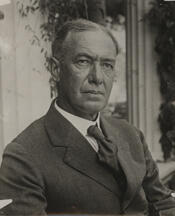
Here you will find contact information for Representative William Kent, including email address, phone number, and mailing address.
| Name | William Kent |
| Position | Representative |
| State | California |
| District | 1 |
| Party | Independent |
| Status | Former Representative |
| Term Start | April 4, 1911 |
| Term End | March 3, 1917 |
| Terms Served | 3 |
| Born | March 29, 1864 |
| Gender | Male |
| Bioguide ID | K000127 |
About Representative William Kent
William Kent (c. 1685 – 12 April 1748) was an English architect, landscape architect, painter, furniture designer, and, in a wholly separate historical context, the name borne by an American politician who served as a Representative from California in the United States Congress from 1911 to 1917. The English designer William Kent was born in Bridlington, East Riding of Yorkshire, and was baptised there on 1 January 1686 under the name William Cant, the son of William and Esther Cant (née Shimmings). His early years in Yorkshire were modest, and he first entered working life not in the great houses and gardens with which he would later be associated, but as a sign and coach painter, learning practical skills in drawing, ornament, and finish that would underpin his later work in the decorative arts and architecture.
Encouraged by his employer and supported by a group of Yorkshire gentlemen who recognised his promise, Kent was sent to Italy to refine his artistic education. He sailed from Deal, Kent, on 22 July 1709, arrived at Livorno on 15 October, and by 18 November 1709 was in Florence, where he stayed until April 1710 before proceeding to Rome. In Rome he studied painting, design, and architecture, and in 1713 he was awarded the second medal in the second class for painting in the annual competition of the Accademia di San Luca for his work A Miracle of S. Andrea Avellino. During these formative years he encountered influential patrons and connoisseurs, including Thomas Coke (later 1st Earl of Leicester), with whom he toured northern Italy in the summer of 1714, and Cardinal Pietro Ottoboni in Rome, for whom he apparently painted, though no records of the works survive. Most consequential was his meeting with Richard Boyle, 3rd Earl of Burlington, whose patronage would shape Kent’s career in England.
Kent remained in Italy, principally in Rome, until the autumn of 1719, when he left for the last time. He met Lord Burlington briefly at Genoa, then travelled on to Paris, where Burlington later joined him for the final journey back to England before the end of 1719. On his return, Kent’s career as a painter advanced rapidly: he displaced Sir James Thornhill in decorating the new state rooms at Kensington Palace in London, executing painted ceilings and interiors, and he assisted Burlington in the decoration of Chiswick House and Burlington House. Although he had begun as a painter and was eventually appointed Principal Painter in Ordinary (court painter), contemporaries such as Horace Walpole later judged him “below mediocrity” in painting, while recognising his far greater originality and influence in architecture and garden design.
Kent’s architectural career began relatively late, in the 1730s, but he quickly became a central figure in the revival and adaptation of the Palladian style in England. Under Burlington’s auspices he edited The Designs of Inigo Jones…, published in 1727, which combined Jones’s work with additional designs in the Palladian and Jonesian taste by Burlington and Kent himself. Through Burlington’s influence at the Board of Works, Kent secured important public commissions in London, including the Royal Mews at Charing Cross (1731–1733, later demolished in 1830), the Treasury buildings in Whitehall (1733–1737), and the Horse Guards building in Whitehall (designed shortly before his death and constructed between 1750 and 1759). These neo-antique buildings drew as much from the architecture of Raphael and Giulio Romano as from Andrea Palladio. In country house work he designed interiors for Houghton Hall in Norfolk (c. 1725–1735) and collaborated with Thomas Coke at Holkham Hall, Norfolk, where Palladian ideals found one of their most complete English expressions. He also produced notable Baroque interiors, such as the staircase and parade rooms at 44 Berkeley Square in London, and provided sympathetic but not archaeologically exact Gothic designs for Westminster Hall, Gloucester Cathedral, and York Minster.
As a landscape designer, Kent was one of the principal originators of the English landscape garden, a “natural” style that revolutionised the layout of estates in contrast to earlier formal geometries. From about 1730 he worked at Chiswick House and at Stowe in Buckinghamshire, and he designed elements of Alexander Pope’s villa garden at Twickenham and gardens for Queen Caroline at Richmond. His work at Rousham House in Oxfordshire is especially celebrated: there he created a sequence of Arcadian scenes punctuated by temples, cascades, grottoes, Palladian bridges, exedra, and carefully framed views, sometimes even using dead trees to achieve a desired mood. Although his horticultural and technical knowledge was limited compared with contemporaries such as Charles Bridgeman, Kent’s naturalistic compositions at Claremont (Surrey), Stowe, and Rousham—often elaborating Bridgeman’s earlier schemes—were foundational for the later achievements of Lancelot “Capability” Brown. In parallel, Kent designed stately furniture and interiors for Hampton Court Palace (from 1732), Chiswick House (1729), Holkham Hall, Houghton Hall, Devonshire House in London, Rousham, and Ditchley Park in Oxfordshire, and he created the royal state barge for Frederick, Prince of Wales (1732). His versatility extended to funerary monuments, including designs for memorials in Chester Cathedral, York Minster, Westminster Abbey, Kirkthorpe church, and the chapel at Blenheim Palace, and in 1733 he was commissioned by William Cavendish, 3rd Duke of Devonshire, to design what is regarded as the first baby carriage on wheels, drawn by a goat or small pony.
In a completely different national and historical setting, the name William Kent is also associated with service in the United States House of Representatives. William Kent served as a Representative from California in the United States Congress from 1911 to 1917. A member of the Independent Party, he held office for three consecutive terms during a significant period in American history marked by Progressive Era reforms, debates over economic regulation, and evolving national and international responsibilities. As a member of the House of Representatives, William Kent participated in the democratic process and contributed to the legislative work of Congress, representing the interests and concerns of his California constituents while operating outside the strict discipline of the major parties.
The congressional career of the American William Kent unfolded against a backdrop of social change, industrial growth, and increasing federal involvement in economic and conservation policy. Serving from Washington, D.C., he engaged in the legislative process that shaped national responses to these developments between 1911 and 1917. His status as an Independent reflected both personal conviction and the broader ferment of the era, in which questions of political realignment, regulatory authority, and representative responsibility were widely contested. Through three terms in office, he took part in debates, committee work, and votes that affected both California and the wider United States, embodying the representative role at a time when Congress was central to defining the trajectory of American public life.
William Kent, the English designer, died in London on 12 April 1748, having achieved a reputation in his own age so extensive that he was asked to design “all things,” even ladies’ birthday dresses, which he ornamented with the five classical orders of architecture—eccentricities that drew the satire of William Hogarth in 1725. Horace Walpole’s later summation—calling him “a painter, an architect, and the father of modern gardening,” mediocre in the first role but a restorer and inventor in the others—has strongly influenced his historical reputation. The American William Kent concluded his congressional service in 1917, at the close of his third term, after which the record notes his prior contribution to the legislative process but does not, in the material at hand, detail his subsequent activities or date of death. Together, the careers associated with the name William Kent illustrate how individuals in different centuries and countries could, in their respective spheres—design and politics—shape the built environment, the landscape, and the public life of their nations.