Representative William Kettner
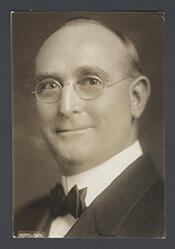
Here you will find contact information for Representative William Kettner, including email address, phone number, and mailing address.
| Name | William Kettner |
| Position | Representative |
| State | California |
| District | 11 |
| Party | Democratic |
| Status | Former Representative |
| Term Start | April 7, 1913 |
| Term End | March 3, 1921 |
| Terms Served | 4 |
| Born | November 20, 1864 |
| Gender | Male |
| Bioguide ID | K000155 |
About Representative William Kettner
William Kettner (November 20, 1864 – November 11, 1930) was an American Democratic politician from San Diego, California, who served as a Representative from California in the United States Congress from 1913 to 1921. A member of the Democratic Party, he served four consecutive terms in the House of Representatives during a significant period in American history and is widely credited with bringing many United States Navy facilities to San Diego. His efforts in Congress contributed substantially to the development of San Diego as a major naval and military center, earning him the nickname the “Million Dollar Congressman.”
Kettner was born on November 20, 1864, in Ann Arbor, Michigan, to John F. and Frederika Kettner, both German immigrants. In 1873 his parents moved the family to St. Paul, Minnesota. His formal education was cut short when his father died around the time Kettner was thirteen years old, forcing him to leave school and enter the workforce. As a youth he worked first as a bellboy and later drove a dray horse, gaining early experience in hard physical labor and practical business dealings that would shape his later career and political style.
At the age of twenty-one, in the mid-1880s, Kettner moved to California, arriving in San Diego during an economic boom in the late 1880s. He worked at various odd jobs around the state, gradually establishing himself in business. In 1893 he married Ida B. Griffs in Visalia, California, where he entered the real estate and insurance business. The marriage ended in divorce in 1904. In 1905 he married Marion Morgan, and the couple continued to reside in Visalia until 1907, when they relocated to San Diego. There Kettner established an insurance business and later expanded his interests into real estate and banking, becoming an increasingly prominent figure in the city’s commercial life.
Kettner’s political trajectory was closely tied to San Diego’s aspirations as a port city. In 1908 the U.S. Navy’s Great White Fleet made its first U.S. stop on its round-the-world cruise in San Diego. Kettner, inspired by the visit and the possibilities it suggested for the city’s future, volunteered to organize the local reception festivities for the fleet. His success in that role enhanced his public profile and deepened his commitment to promoting San Diego as a naval center. He subsequently became a member of the board of the San Diego Chamber of Commerce and served as its director, using that platform to advocate for federal investment in the region’s harbor and military infrastructure.
In the context of the political realignments of the early twentieth century, Kettner emerged as a viable congressional candidate despite his party affiliation in a traditionally Republican district. He was first elected to the House of Representatives in 1912 as a Democrat from California, at a time when Theodore Roosevelt’s split with the Republican Party into “stand-patters” and Progressives had thrown national and local Republican politics into turmoil. Kettner’s popularity within the business community and the Chamber of Commerce, together with cross-party support, helped him overcome partisan barriers. Many Republicans, including the conservative San Diego Union, endorsed him, and his campaign was bolstered by the slogan “Why not Kettner?” He won his first race by approximately 3,500 votes. He was re-elected in 1914 by about 24,000 votes, again in 1916 by about 9,000 votes, and in 1918 he ran unopposed. His congressional district at that time encompassed a large area of Southern California, including ten counties, and he consistently promoted the interests of San Diego and the broader region.
During his four terms in Congress, from 1913 through 1921, Kettner participated fully in the legislative process and represented the interests of his constituents during a period that included World War I and major national debates over military preparedness and infrastructure. Even before he was formally sworn in as a member of Congress, he successfully lobbied for a federal appropriation to dredge San Diego Bay so that large naval and commercial vessels could enter the harbor. Throughout his tenure he devoted substantial effort to securing naval bases and related facilities for San Diego. Working closely with officials in the Navy Department, he helped obtain federal commitments for what became Camp Kearny (on the site now occupied by Marine Corps Air Station Miramar), Naval Base San Diego, Naval Medical Center San Diego, Naval Training Center San Diego, Naval Air Station North Island, and the Broadway Naval Supply Depot. These installations would later make the military, for a time, the largest employer in San Diego County and permanently transform the city’s economic base.
Kettner was known in Washington and in San Diego for his warm, personal style of politics. He addressed colleagues as “brother,” a habit that earned him the nickname “Brother Bill” both in his home district and in the capital. He was adept at personal lobbying, frequently entertaining fellow members of Congress and federal officials at dinners and presenting them with California products such as oranges and wine. Among his important relationships was his friendship with Franklin D. Roosevelt, then Assistant Secretary of the Navy. Roosevelt visited San Diego during the 1915 Panama–California Exposition and was impressed with the city’s potential as a naval base. He supported Kettner’s efforts to expand naval facilities in the region during his tenure at the Navy Department and later, indirectly, as President of the United States, further validating Kettner’s early vision for San Diego’s military future.
Kettner stepped down as a congressman in 1920, choosing not to seek re-election, citing poor health and financial difficulties associated with a downturn in his insurance business. His formal service in Congress concluded in March 1921, after which he returned to private life in San Diego. In 1923 he published a congressional autobiography, “Why It Was Done and How,” compiled by Mary B. Steyle, which included his portrait and offered his own account of his legislative work and the development of San Diego’s naval facilities. Reflecting his outlook on public service, he expressed the belief that “most people have a longing to do something for their fellowman, in order that it may be said when they have passed on that their lives have not been spent in vain.”
In recognition of his contributions to the city and its harbor, San Diego honored Kettner in several ways. In 1919 the city named a fireboat the Bill Kettner, which remained in use until 1961. In 1930, the year of his death, Arctic Street in San Diego was renamed Kettner Boulevard in his honor, commemorating his role in shaping the city’s maritime and military identity. William Kettner died in San Diego on November 11, 1930, and was buried at Greenwood Memorial Park, beside his mother, who had died in 1912. His life and career have been the subject of subsequent historical studies and local histories, which have emphasized his central role in the early twentieth-century development of San Diego and his distinctive style of personal, regionally focused congressional service.